

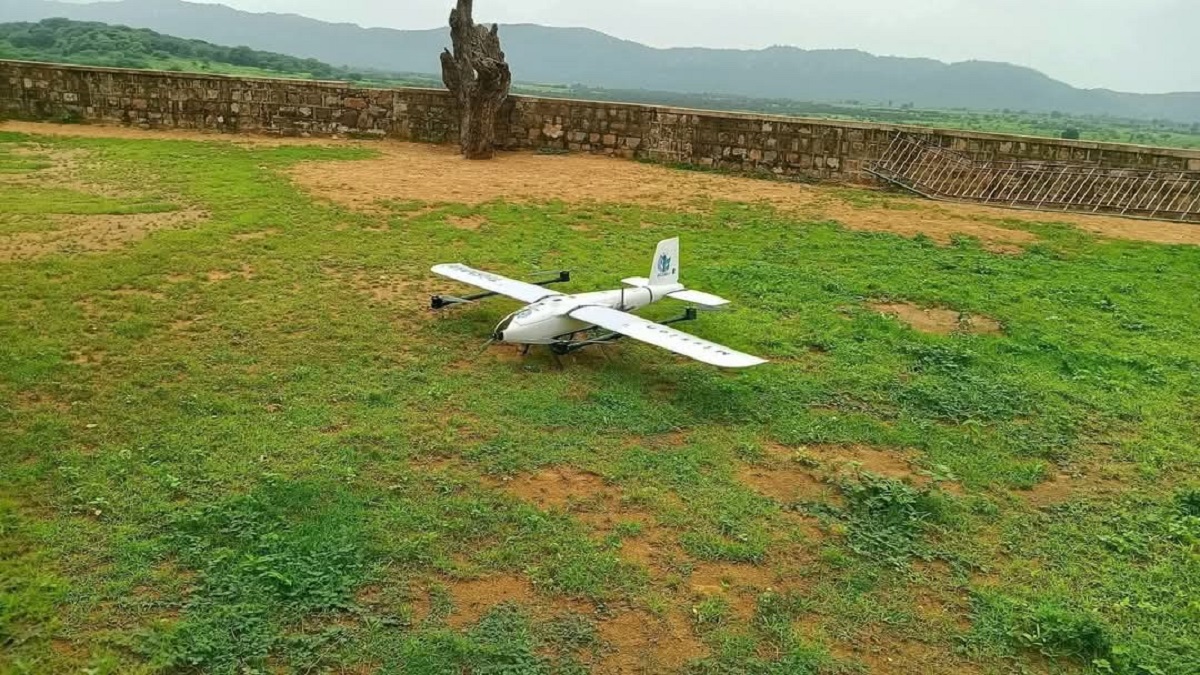

Rajasthan successfully carried out India’s first artificial rain experiment using drones. State agriculture minister Kirodi Lal Meena opened the new initiative, which uses unmanned aerial vehicles (UAVs) instead of traditional planes to seed clouds, near Jaipur’s Ramgarh Dam at 2 p.m.
The Rajasthan agriculture department and the technology company GenX AI, which has offices in the U.S. and Bengaluru, are working together on the pilot project. The experiment used about 60 drones that could spray particular chemicals, such silver iodide or sodium chloride, into the clouds. These particles act as a catalyst, making water droplets form and starting rain.
This drone-based method is a novel way to seed clouds that gives you more exact and localized control over the process. Compared to large-scale operations utilizing planes, drones are seen as a better way to target specific locations that are likely to have droughts.
The experiment was supposed to happen on July 31, but it was moved because of strong weather warnings. In the meantime, experts ran several tests to make sure the procedure was ready and safe. The project had gotten all the permits it needed from important groups, such as the Directorate General of Civil Aviation (DGCA), the India Meteorological Department, and local district authorities.
If this pilot initiative works, it might lead to a new era of climate change and water conservation in India, especially in dry areas like Rajasthan. Using AI-controlled drones for “precision-based cloud seeding” could be a useful way to help farmers and lessen the effects of drought.