

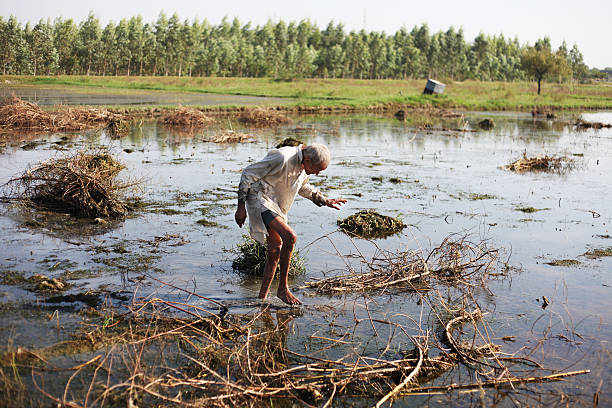

NEW DELHI— The important agricultural sector in India is in a lot of trouble since heavy rains and flooding have destroyed crops in several key food-bowl regions just weeks before they were supposed to be harvested. The widespread damage could disrupt supply lines and drive up prices, which raises fears about a possible rise in food inflation.
The India Meteorological Department (IMD) says that this year’s monsoon has been quite strong, bringing 8.3% more rain than the norm for the last 50 years. This year, there have been a lot more “western disturbances,” which are storm systems that start in the Mediterranean. These have caused more rain to fall in the grain baskets of Punjab, Haryana, Uttar Pradesh, and Madhya Pradesh. Jammu has had the most rain since 1950, with more than 612mm falling.
Things are especially bad in Punjab. Agriculture has been affected in at least 8–10 districts because of heavy rain in the higher catchment areas of the Beas and Ravi rivers. Experts’ first estimates say that the state’s farmers have lost up to ₹1,000 crore because their maize, paddy, and cotton crops were damaged.
On Wednesday, Union Agriculture Minister Shivraj Singh Chouhan talked to Chief Minister Bhagwant Mann and said he will visit Punjab on Thursday to look at the issue. A government official in New Delhi said that they can’t start counting all the agriculture losses until the rain stops.
Interventions in the market are already happening because of the damage to crops. On Thursday, Union Food Minister Prahlad Joshi will start selling onions from the government’s buffer supply at stores to try to keep vegetable prices from going up too much.
A recent study by the Reserve Bank of India (RBI) found that changes in rainfall can cause vegetable prices to rise by roughly 1.24 percentage points. This is a very important issue because food costs make up a large 24.38% of the country’s wholesale inflation basket. In July, consumer prices hit an eight-year low, but analysts are now warning that the bad weather could change this trend.
Climate change is being blamed for the strange and violent storms this year, which puts the jobs of hundreds of millions of farmers at risk. Satyadev Patel, a farmer from Vadodara in Gujarat, said, “My cotton crop was weeks away from harvest, but storms blew them away.” I am wrecked.
The agricultural catastrophe caused by climate change adds to India’s already struggling economy. Almost half of the country’s fifth-largest economy depends on agriculture income, and new tariffs from the U.S. are making things much worse for India’s export sector.