


The political atmosphere in the national capital intensified on Tuesday as the government tabled the Viksit Bharat–Guarantee for Rozgar and Ajeevika Mission (Gramin) (VB-G RAM G) Bill, 2025, in the Lok Sabha. The bill, introduced by Union Minister Shivraj Singh Chouhan, seeks to replace the landmark MGNREGA scheme, sparking a fierce backlash from the Opposition over the removal of Mahatma Gandhi’s name and changes to the funding structure.
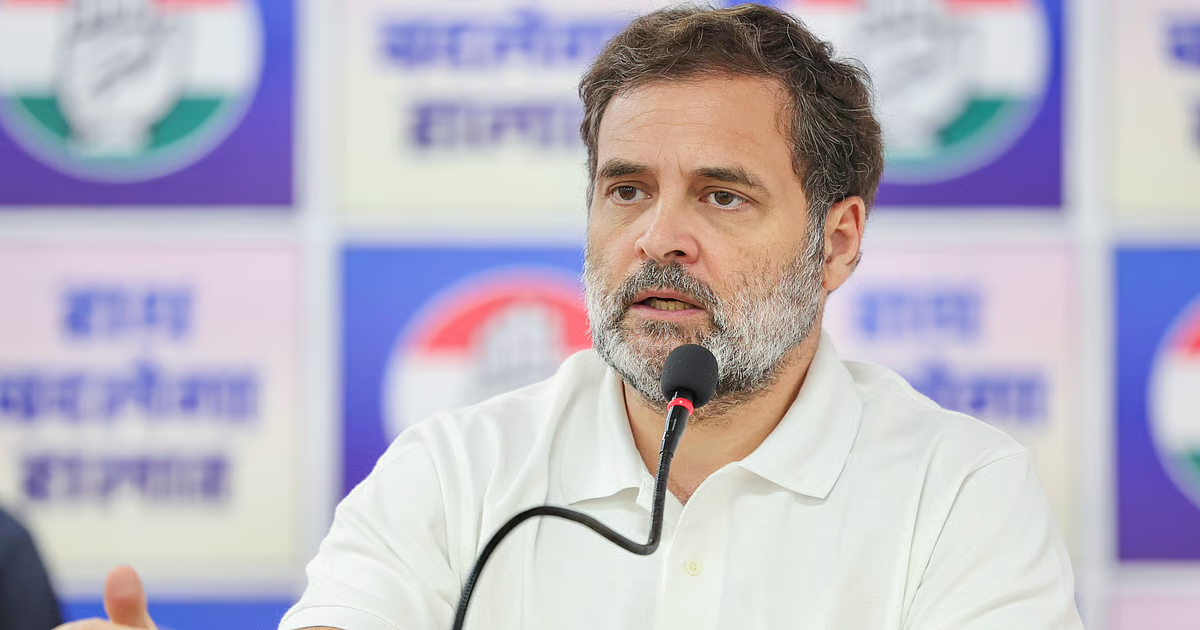
Leader of Opposition (LoP) Rahul Gandhi led the charge, accusing Prime Minister Narendra Modi of harboring a “deep hatred” for the rights of the poor and the ideals of the Mahatma.
Key Criticisms by the Opposition
Opposition leaders, including Rahul Gandhi and Priyanka Gandhi Vadra, held protests within the Parliament complex, raising several concerns:
- Removal of ‘Gandhi’ Name: Rahul Gandhi termed the move a “direct insult” to the dream of village self-rule.
- Centralized Control: The LoP alleged the new bill transforms a rights-based scheme into a tool of central control, where rules and budgets will be dictated by New Delhi rather than local Panchayats.
- Financial Burden on States: The bill proposes a 60:40 fund-sharing ratio, forcing states to bear 40% of the costs. Gandhi warned this would lead to employment being denied once state funds are exhausted.
- A “Lifeline” at Risk: The Congress party emphasized that MGNREGA acted as an economic shield during the COVID-19 pandemic and remains a vital safety net for millions.
What is the VB-G RAM G Bill?
The government maintains that the overhaul is necessary to align rural employment with the Viksit Bharat (Developed India) 2047 goal.
| Feature | MGNREGA (Old) | VB-G RAM G (Proposed) |
| Work Guarantee | 100 Days | 125 Days |
| Funding (Wages) | 100% Central Government | 60:40 (Centre:State) |
| Focus Area | General rural labor | Durable assets (Water, Climate, Infra) |
| Planning | Localized | Integrated with PM Gati-Shakti |
Government officials state that the new Act will focus on high-impact infrastructure and water security, moving away from “scattered” work categories to a more robust national strategy. For North-Eastern and Himalayan states, the funding ratio will remain at 90:10.
Political Standoff
The Congress party has vowed to oppose the “anti-people” bill in both houses of Parliament. The debate reflects a fundamental disagreement over whether rural welfare should remain a demand-driven right supported largely by the Centre or transition into a co-funded mission focused on long-term infrastructure development.