

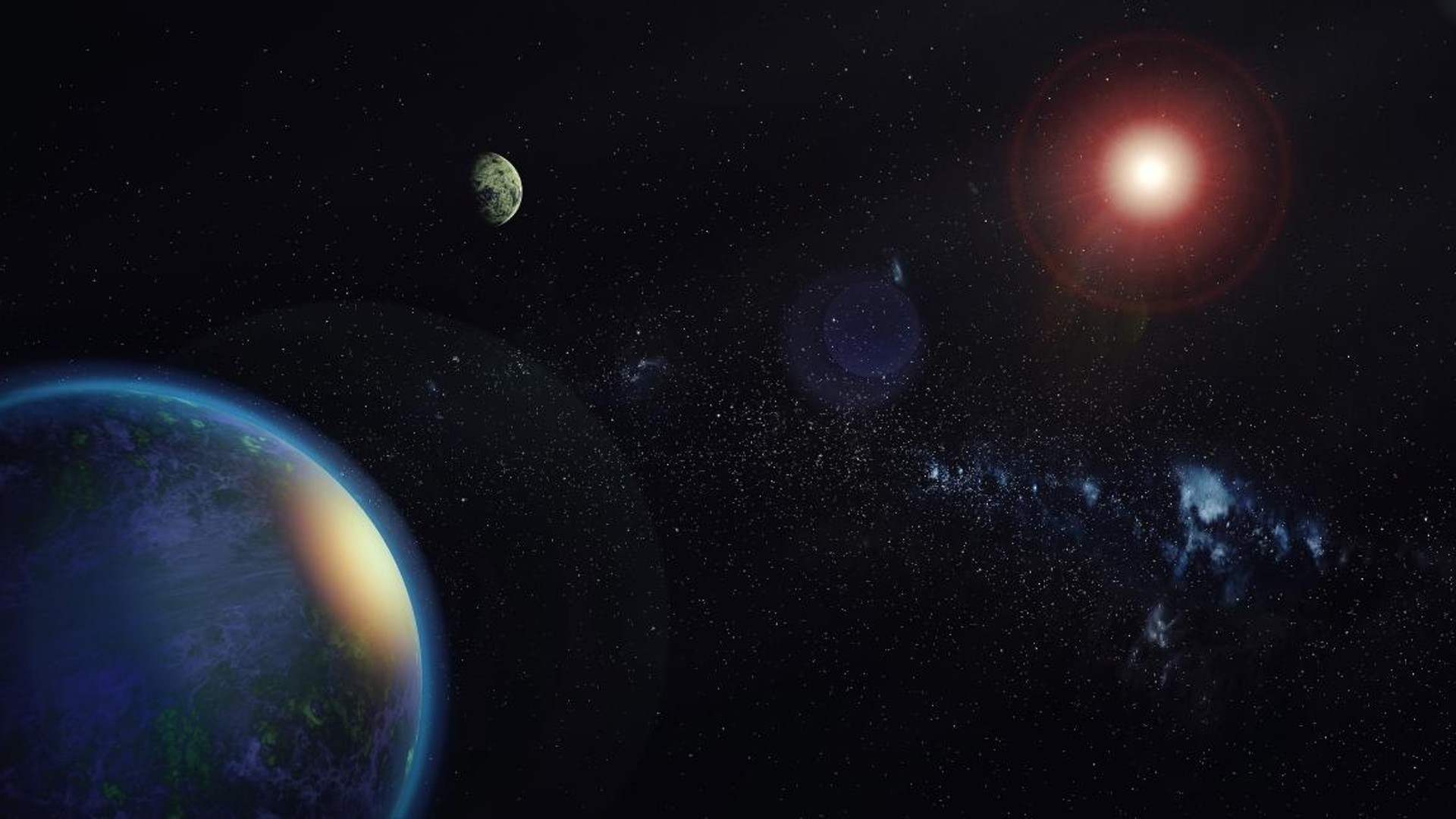

The “Goldilocks zone” is the narrow band around a star where a planet’s surface is warm enough to have liquid water. This is where scientists have long looked for alien life. But recent research is opening up a lot more options. Scientists now suggest a new “radiolytic habitable zone” where cosmic rays, not sunlight, might power life far below the surface of frozen worlds.
This interesting new study implies that cosmic rays, which are high-energy particles from supernovas and faraway stars, might be able to get through the surfaces of planets like Mars and moons like Europa and Enceladus. Radiolysis is the process by which these strong particles may divide water molecules that were buried deep beneath. This reaction makes hydrogen, oxygen, and electrons that are full of energy. This means that there is a hidden oasis of chemical energy that may support life without any light from a star.
Using radiation as a power source
Earth’s dense atmosphere and strong magnetic field primarily prevent cosmic rays, which are made up of electrons, protons, and atomic nuclei. But on planets and moons with little to no protection, like Mars and the icy moons, these rays can readily cut through the thin atmosphere or vacuum and get deep into the ice and rock.
When these particles hit water or ice, they break apart the molecules, releasing the building blocks of life: hydrogen, oxygen, and free electrons. This isn’t just a theory; certain microorganisms on Earth already use a technique like this. A type of bacteria found 2.8 kilometers below the surface in a South African gold mine, for instance, lives completely on hydrogen that is released when radioactive materials break down naturally.
Searching for Life in More Places
According to the new study’s models, Saturn’s ice moon Enceladus has the highest “radiolytic potential” for hosting life, followed by Mars and Jupiter’s moon Europa. The effects are tremendous for operations that will happen in the future. For example, NASA’s Europa Clipper spacecraft and powerful telescopes like ALMA will soon be looking for molecular indications of life on these frozen worlds. This new theory helps scientists know what to look for and where to look.
What makes this even more interesting is that cosmic ray hits might be able to directly make complex chemical molecules, such amino acid precursors, inside the ice itself. This means that radiation could not only provide life energy, but it could also be the thing that starts it. This revelation means that even a renegade planet drifting alone in the depths of space could have a biosphere concealed deep beneath its frozen surface. Cosmic rays travel over the entire galaxy.
Dimitra Atri, an astronomer and co-author of the study, says, “life might be able to survive in more places than we ever thought.” This means that there could be hidden biospheres in many cold, dark areas in the cosmos.