

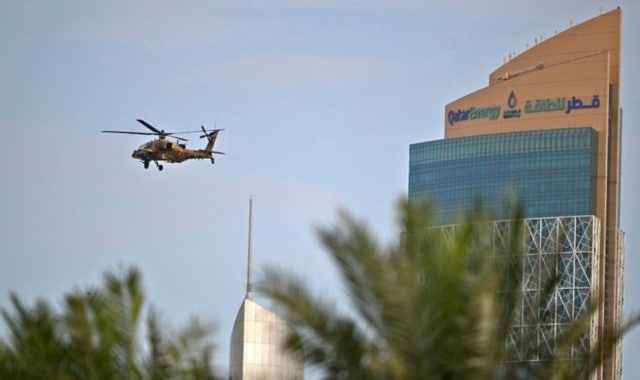

The situation in the Persian Gulf has reached a critical tipping point following a series of military and technical disasters. On Sunday, March 22, 2026, Qatar’s Ministry of Interior confirmed that six people are dead and one remains missing after a helicopter crashed in territorial waters.
While the Ministry of Defence attributed the crash to a “technical malfunction” during routine duty, the incident occurred against a backdrop of unprecedented regional violence as the 2026 Iran War enters its fourth week.
The Helicopter Crash & Recovery
- The Toll: Seven people were on board; six bodies have been recovered, and an intensive search is underway for the final individual.
- The Cause: Officials maintain it was a mechanical failure, though the crash happened in waters that have seen heavy activity from both Qatari and Iranian forces in recent days.
- National Security: Qatar has intercepted 98 out of 101 ballistic missiles detected since the conflict escalated, highlighting the extreme pressure on their military hardware and personnel.
Energy Infrastructure Under Siege
The crash is overshadowed by a massive Iranian offensive targeting the “economic lifelines” of the Gulf.
- Ras Laffan Strike: Iranian missiles recently caused “extensive damage” to the Ras Laffan LNG facility, the heart of global gas supply. This was a direct retaliation for Israeli strikes on Iran’s South Pars gas field.
- Force Majeure: QatarEnergy has declared a state of emergency, disrupting roughly 20% of global LNG trade.
- Regional Shutdowns: Beyond Qatar, the UAE’s Habshan gas complex and Bab oil field have also been targeted or shut down due to missile debris, cutting production in one of the world’s largest oil-producing nations by over 50%.
The Global Stakes
With Brent crude hovering near $112 a barrel and LNG supplies to India and Europe severely throttled, the conflict has moved from a “shadow war” to a direct assault on the world’s energy security. President Trump has recently warned Tehran that any further strikes on Qatari “innocents” or infrastructure will result in the total “obliteration” of Iran’s energy grid.