

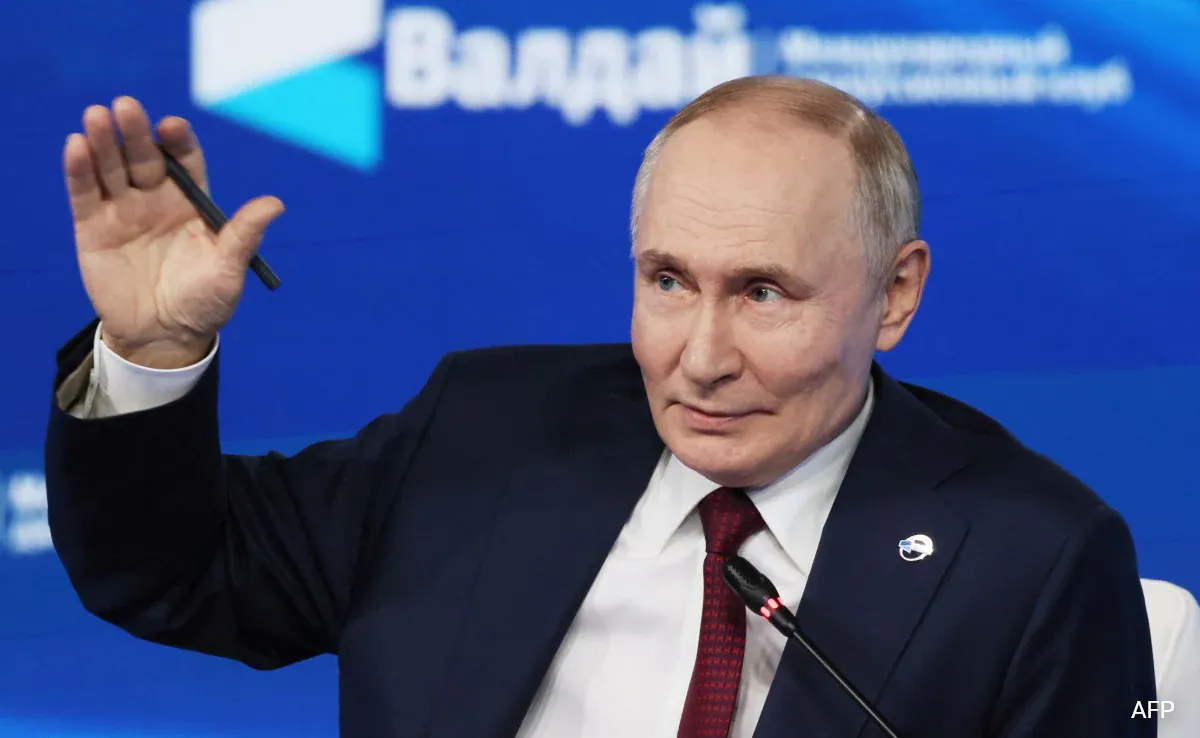

Tajikistan’s Dushanbe: Russian President Vladimir Putin on Thursday admitted that Russia was involved in the crash of an Azerbaijani passenger airliner in 2024 that killed 38 people. This was the first time he ever said this.
Putin called the crash a “tragedy” while speaking with Azerbaijan’s President Ilham Aliyev in Dushanbe, Tajikistan’s capital, where both leaders were at a summit of Soviet nations. He also said that Russian air defense missiles were used to shoot down Ukrainian drones on the same day.
Putin said that the drones blew up “a few meters away” from the Azerbaijani plane, which led to the death. “It was an unintended and tragic result of defensive actions,” Putin stated. He also added that Russia will pay the families of the victims and make sure that the conduct of the officials involved would be evaluated by the law.
But President Ilham Aliyev said that Moscow was trying to downplay or “hush up” the tragedy and called for complete openness and responsibility.
The passenger plane from Azerbaijan Airlines crashed on December 25, 2024, while flying from Baku to Grozny, the capital of Russia’s Chechnya province. There were 67 persons on board. The Azerbaijani government said that Russian air defense fire damaged the jet by mistake. The jet then tried to make an emergency landing in western Kazakhstan but crashed, killing 38 people on board.
The catastrophe was a big blow to Russia-Azerbaijan relations, which had been marked by friendly diplomatic and commercial ties before. Things got worse in the middle of 2025 when ethnic Azerbaijanis who were being held in a Russian city died and Russian citizens were arrested in Azerbaijan in response.
Putin’s public admission is seen as a way to improve strained relations between the two countries and show that Moscow is still committed to “justice and accountability.” The situation also highlights the larger instability in the region caused by the ongoing conflict between Russia and Ukraine, where mistakes and unplanned engagements continue to put civilian lives at risk.