

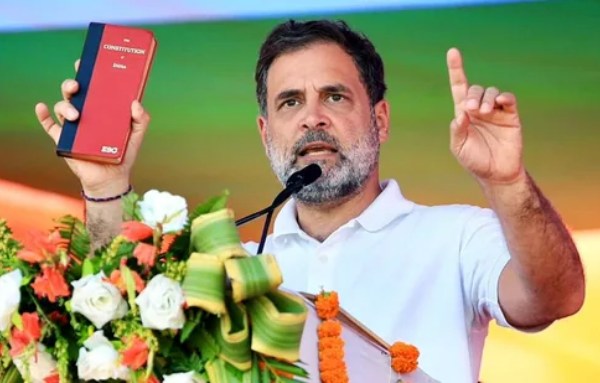

A defamation case filed against the Leader of Opposition in Lok Sabha, Rahul Gandhi, faced a significant procedural hurdle in a Pune court when the primary evidence submitted—a Compact Disc (CD)—was found to be blank.
The case was filed by Satyaki Savarkar, the grand-nephew of Hindu ideologue Vinayak Damodar Savarkar, pertaining to an alleged defamatory speech made by Rahul Gandhi about V. D. Savarkar in London in 2023.
The ‘Blank CD’ Evidence Tangle
The issue came to light on November 14 during Satyaki Savarkar’s examination-in-chief before Judicial Magistrate (First Class) Amol Shinde.
- No Data Found: The CD, which was supposed to contain the video of the alleged defamatory speech, could not be played after it was found to have no data.
- Complainant’s Claim: Advocate Sangram Kolhatkar, representing Satyaki, claimed that the CD was submitted as evidence when the case was registered in 2023. At that time, before a different judge, the video in the CD was playing when submitted alongside the YouTube URL of the speech, according to a media report. “Now, the CD shows no data,” Kolhatkar stated.
- Second CD Rejected: On Thursday, Satyaki requested to play an additional CD he provided to the court, but the request was rejected on the grounds that “there was no such CD on record.”
YouTube Video Rejected Under Evidence Act
Following the failure to present the CD evidence, Satyaki’s advocate requested the special court for cases against MPs and MLAs to play the video directly using the original YouTube URL of the alleged speech.
- Opposition: Rahul Gandhi’s lawyer, Milind Pawar, opposed the application.
- The Court’s Ruling: Magistrate Amol Shinde dismissed the request, citing Section 65B of the Indian Evidence Act. The court reasoned that while the complainant had filed a certificate under Section 65B to authenticate the original CD (electronic record), that same certificate could not be applied to the YouTube URL itself. The court concluded that since the URL was not backed by a proper certificate under Section 65B, it could not be accepted as admissible evidence.
The ruling creates a procedural roadblock for the complainant in proving the content of the alleged defamatory speech.