

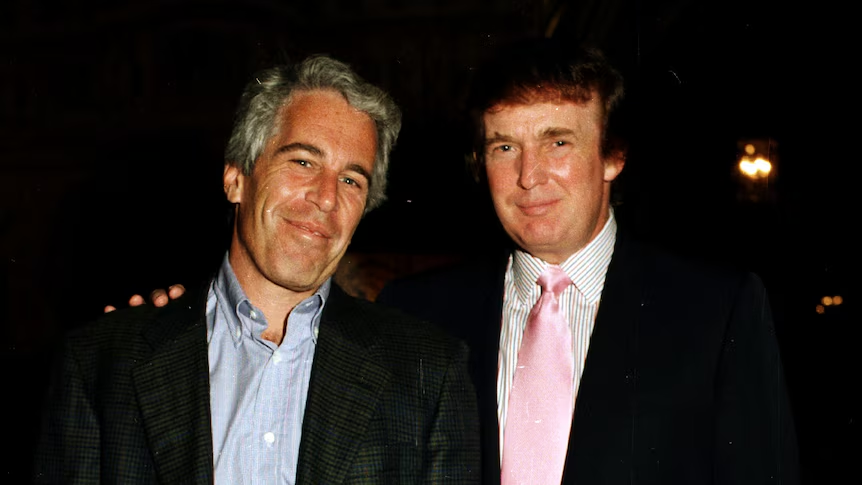

On February 17, 2026, President Donald Trump addressed the media aboard Air Force One, firmly distancing himself from late financier Jeffrey Epstein following the massive release of records mandated by the Epstein Files Transparency Act.

Trump told reporters that he has “nothing to hide” and claimed the latest release of approximately 3.5 million pages proves he has been “totally exonerated.” While the documents include thousands of mentions of the President, the Department of Justice (DOJ) clarified that many of these are benign or based on unverified, “sensationalist” tips submitted to the FBI years ago.
The Current Narrative: Trump’s Defense
The White House and the President’s legal team have moved quickly to frame the document release as a victory for transparency:
- The “Creep” Clause: Press Secretary Karoline Leavitt reiterated that Trump kicked Epstein out of Mar-a-Lago in the early 2000s because he was a “creep.”
- Strategic Disconnect: Trump claims the relationship ended after Epstein allegedly tried to recruit a Mar-a-Lago employee for his illicit operations.
- Political Exoneration: Deputy Attorney General Todd Blanche stated that the DOJ did not find “credible information to merit further investigation” into misconduct allegations against the President found in the files.
What’s Actually in the 2026 Files?
While the President maintains he is cleared, the sheer volume of the data has kept analysts busy:
- Mentions: Experts estimate Trump’s name appears over 1 million times in unredacted databases (though many are news clippings or duplicates).
- Flight Logs: The records reveal Trump flew on Epstein’s private jet more frequently in the 1990s than previously known, including at least eight specific trips.
- The “No Handshake” Evidence: The files confirm Trump was one of the first people to call Florida police in 2005 to express relief that they were investigating Epstein, telling the then-police chief, “Thank goodness you’re stopping him.”