

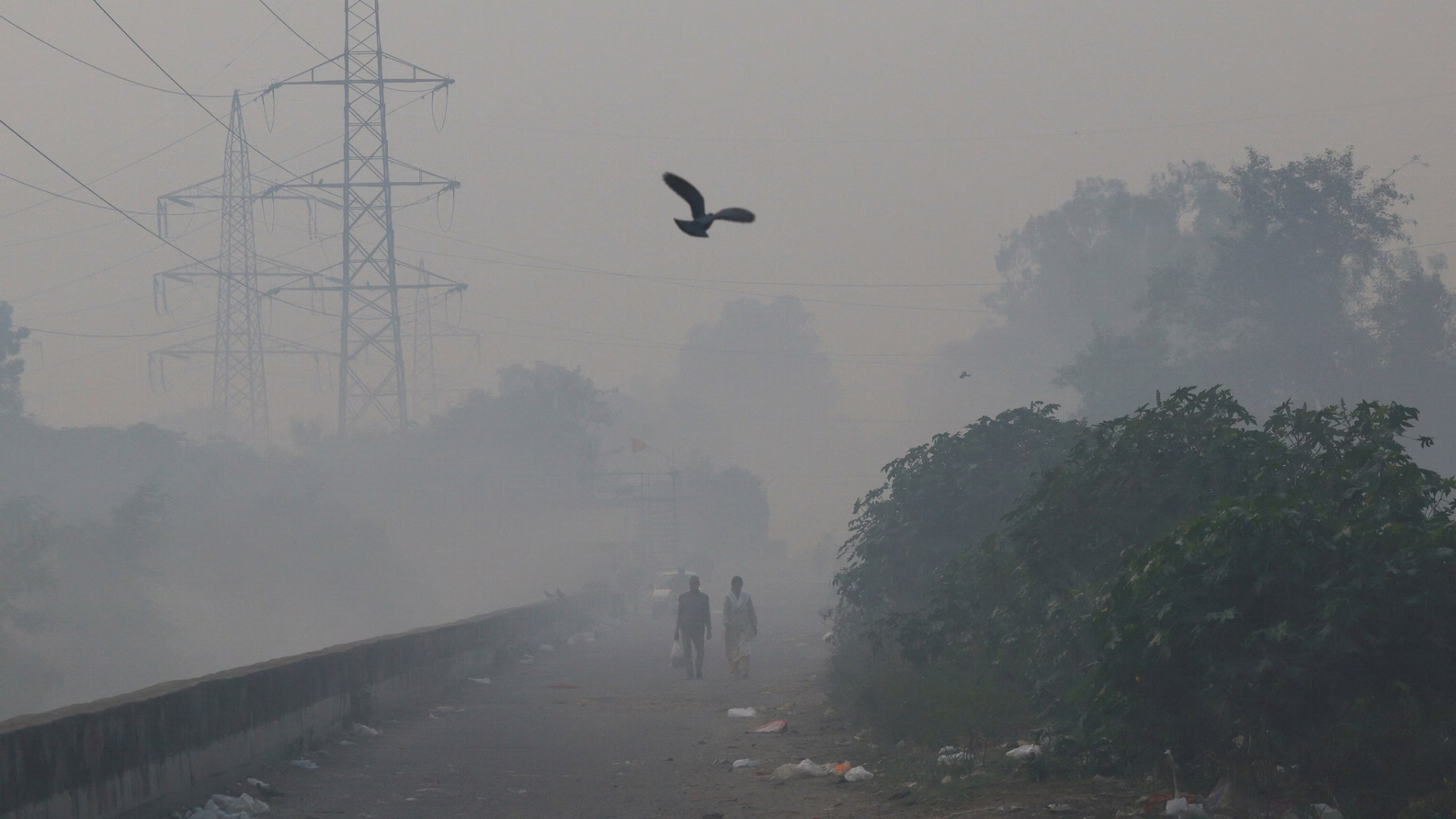

Delhi woke up to a dense, toxic grey haze and stinging air on Tuesday, the day after Diwali, as widespread violations of firecracker restrictions sent the city’s air quality plunging into the “severe” category. India’s air pollution crisis has drawn global attention, with the capital city now ranking as the world’s most polluted on a list compiled by Swiss air quality firm, IQAir.
The overall Air Quality Index (AQI) for Delhi stood at 350 in the “very poor” category as of 8 a.m. Tuesday. However, readings at key monitoring stations soared far higher, entering the dangerous ‘severe’ zone (AQI over 401) in areas such as Bawana, Jahangirpuri, Wazirpur, Alipur, and Burari Crossing. Data from the Central Pollution Control Board (CPCB) further showed that 35 of Delhi’s 38 monitoring stations were in the “red zone,” signaling “very poor” to “severe” conditions.
Minister and Activist Share Blame and Alarm
Delhi Environment Minister Ashish Sood addressed the alarming pollution levels, distributing the blame between the public and external factors. He cited extreme early morning AQI readings, including 943 in Anand Vihar and 390 in Shahdara at 5 a.m., but maintained that “Only firecrackers are not responsible for pollution in Delhi.”
Minister Sood criticized residents for failing to adhere to the Supreme Court’s order, stating, “I believe people should have followed the Supreme Court’s order to burst crackers before 10 p.m.” He also pointed to regional causes, adding that adjacent states “have a role to play” since “Delhi has no weather of its own” and many factors determine its pollution levels.
Environmentalists warned that this crisis is a predictable consequence of policy failure. Bhavreen Kandhari, an environmental activist, called the situation a “wake-up call,” noting, “Today’s smog isn’t just clouding the sky, it is choking our children’s lungs.” She highlighted the severe public health risk, especially for children, given that respiratory infections already account for 70% of communicable diseases in India.
Court Orders Flouted and National Pollution Crisis
The severe air quality spike follows the flouting of a Supreme Court order that had permitted the use of “green firecrackers” in Delhi-NCR only between 8 p.m. and 10 p.m. on Diwali (October 18 to 21). Residents across the capital ignored these time restrictions, with fireworks continuing late into the night.
The annual Diwali pollution surge coincides with the winter season when factors like crop residue burning in neighboring Punjab and Haryana, combined with stagnant weather patterns, trap pollutants over the region.
The pollution crisis is not isolated to Delhi. The IQAir list revealed a broader South Asian problem, with two other Indian cities and two Pakistani cities making the top 10 list of the world’s most polluted:
| Rank | City | Country | AQI Status (CPCB Scale) |
| 1 | Delhi | India | Very Poor to Severe (350+ overall) |
| 2 | Lahore | Pakistan | – |
| 4 | Karachi | Pakistan | – |
| 5 | Mumbai | India | – |
| 8 | Kolkata | India | – |
The data confirms that the capital is once again paying the price for policy failure and weak enforcement, with drastically reduced visibility and air smelling of burnt chemicals forcing tourists and residents alike to express shock and concern.