

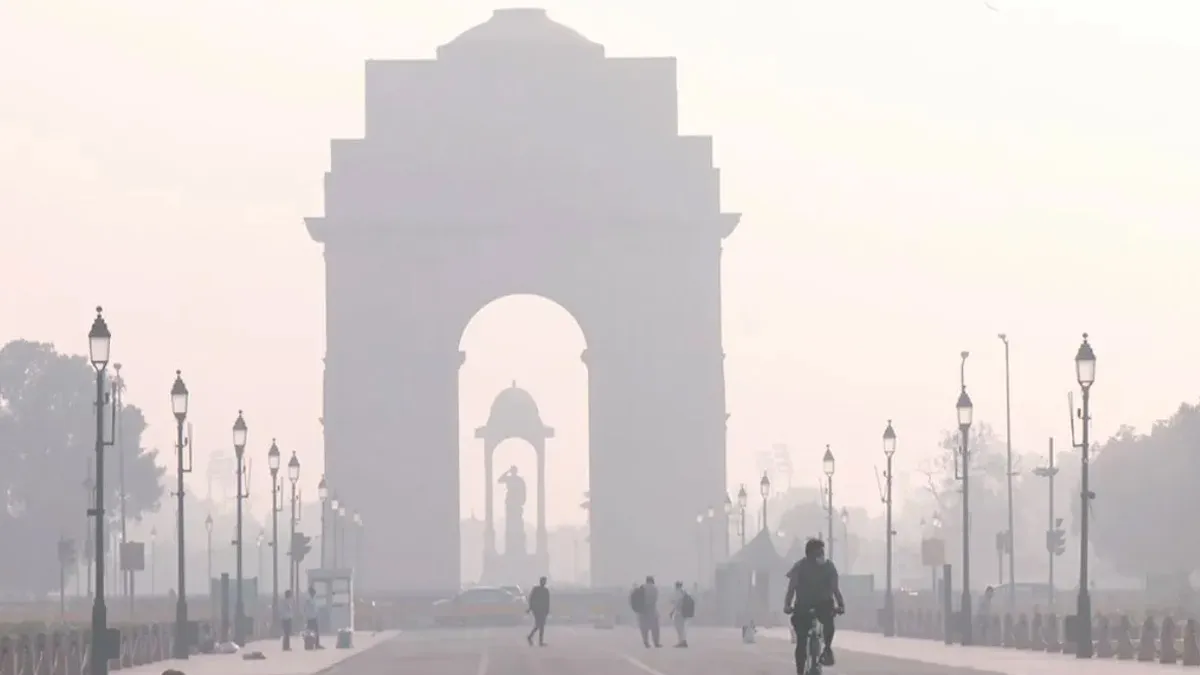

NEW DELHI, October 21, 2025 — The National Capital Region (NCR) woke up to a thick, suffocating blanket of smog on Tuesday, a day after Diwali celebrations, as air quality levels plunged sharply into the ‘Very Poor’ and, in some areas, ‘Severe’ categories. The drastic deterioration has triggered widespread complaints of breathing difficulties and eye irritation among residents, underscoring the city’s recurrent post-festival pollution crisis.
According to data released by the Central Pollution Control Board (CPCB), the overall Air Quality Index (AQI) for Delhi stood at a concerning 359 as of 10 AM on Tuesday. This places the city firmly in the ‘Very Poor’ bracket. Worse still, several monitoring stations, including Bawana (432), Jahangirpuri (405), Ashok Vihar (408), and Wazirpur (408), reported AQI levels in the ‘Severe’ category (401-500), marking them as immediate pollution hotspots.
The CPCB defines an AQI between 301 and 400 as ‘Very Poor,’ warning that it can lead to respiratory illness upon prolonged exposure. An AQI in the ‘Severe’ range affects healthy people and seriously impacts those with existing diseases.
Citizens Express Distress and Frustration
On-ground reports reveal the immediate health impact on Delhiites. Residents across the city reported facing issues like irritation in the eyes and noticeable breathing difficulties, especially during morning outdoor activities.
“There are difficulties in breathing during running time. I cannot breathe properly,” shared Ashish Ranjan, a local runner at Kartavya Path. Another resident, Sagar, voiced a common sentiment of frustration, holding fellow citizens accountable for the quality dip. “Everyone blames politicians, but the people themselves are like this. You’ll get firecrackers, but it’s up to you whether to burst them or not. Then they’ll complain that the government isn’t doing anything.” This sentiment was echoed by Surender Gupta, who noted a significant increase in problems compared to the previous year.
Regulatory Measures and Firecracker Violations
The current hazardous air quality comes despite the Supreme Court relaxing its earlier blanket prohibition to permit the sale and use of certified green firecrackers during specific hours—6 AM to 7 AM and 8 PM to 10 PM—between October 18 and 21. The relaxation was granted with strict conditions, including a ban on firecrackers from outside Delhi-NCR and a halt on e-commerce sales.
However, reports indicate that firecrackers were burst well past the mandated two-hour limit on Diwali night, significantly contributing to the pollution spike when combined with other regional factors like seasonal stubble burning and stagnant winter weather conditions.
In anticipation of the festive pollution surge, the Commission for Air Quality Management (CAQM) had already imposed Stage II of the Graded Response Action Plan (GRAP) across the National Capital Region (NCR) on Sunday. GRAP Stage II mandates intensified anti-pollution measures, including mechanical sweeping of roads, increased water sprinkling with dust suppressants, and strict enforcement of dust control at construction and demolition sites.
Looking Ahead
The post-Diwali smog signals the beginning of the annual winter pollution crisis in Delhi. With a challenging forecast, authorities face the difficult task of enforcing pollution control norms and the Graded Response Action Plan to prevent the air quality from sliding further into the ‘Severe Plus’ category in the coming days.