

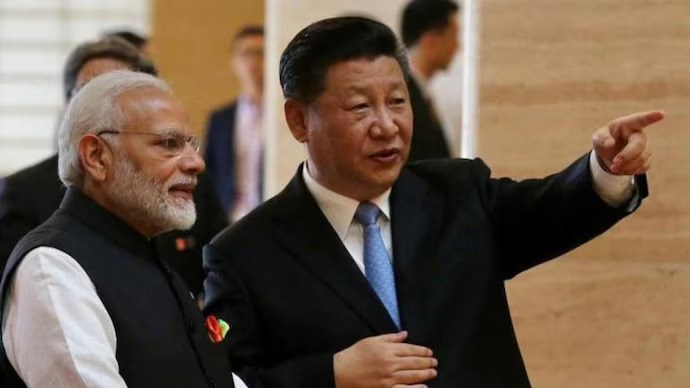

NEW DELHI: On Sunday afternoon, Indian Prime Minister Narendra Modi and Chinese President Xi Jinping will meet in the northern Chinese city of Tianjin, which is next to the Shanghai Cooperation Organization (SCO) Summit. The high-stakes summit, which will be Modi’s first trip to China since the border impasse began in 2020, is anticipated to focus on strengthening the recent thaw in relations between the two countries and promoting economic cooperation in a world that is becoming more unstable.
Sources who know about the talks said that one of the main things on the two leaders’ minds will be “active management of the border” to keep the peace for good. The military standoff that started in April-May 2020 and caused ties to hit an all-time low since the 1962 border war seems to have calmed down. Both parties have made a lot of progress in mending their relations. Recent steps to establish trust include the return of the Kailash Mansarovar Yatra to Tibet and the reissuance of tourist permits to Chinese citizens.
It seems like India wants to go forward with the normalization process one step at a time. Both Beijing and New Delhi agree that keeping the peace on the border is very important for any future development. Sources say that the boundaries have remained “broadly stable” since the events of 2020, and this meeting is a chance to build on that shaky stability.
The leaders will also talk about the problems with the global economy that are caused by the Trump administration’s protectionist trade policies in the United States. India and China are both emerging economies that have been hurt by recent US tariff increases. They both want to keep the global economy steady. The US just raised tariffs on most Indian items to 50% and said it would raise charges on Chinese goods to as much as 200%.
The US’s geo-economic pressure seems to have given India and China a fresh reason to work together more closely. “Recent events have made the need for multipolarity even stronger,” said one source. India’s top aim is still growth and development, and at a time when established markets are quite uncertain, “a growing China can be a contributor.”
Chinese Foreign Minister Wang Yi recently visited India to talk with National Security Adviser Ajit Doval. He told his Indian counterparts that Beijing would deal with concerns about its recent export restrictions on important goods like fertilizers and rare earth minerals. This is a topic that the two leaders are likely to talk about.
The Tianjin meeting is a very important time for the two Asian giants’ relationship. They want to move past their previous problems and find common ground in a world that is becoming more complicated and difficult.