

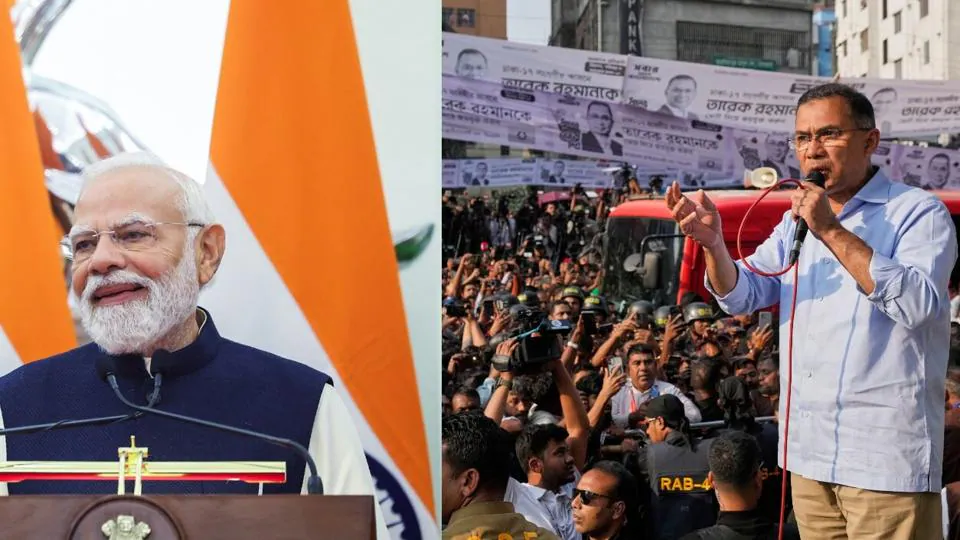

In a significant diplomatic overture, Bangladesh’s interim Chief Adviser Muhammad Yunus has formally invited Prime Minister Narendra Modi to the swearing-in ceremony of Prime Minister-elect Tarique Rahman on Tuesday, February 17, 2026.
The ceremony, scheduled for the afternoon at the South Plaza of the National Parliament in Dhaka, marks the return of the Bangladesh Nationalist Party (BNP) to power after two decades.
Will PM Modi Attend?
Despite the high-stakes nature of the invitation, reports indicate that PM Modi is unlikely to travel to Dhaka for the event due to a prior high-level commitment.
- The Conflict: PM Modi is scheduled to hold a bilateral meeting with French President Emmanuel Macron in Mumbai on February 17. Macron is visiting India for the AI Impact Summit.
- India’s Representation: New Delhi is expected to send a senior functionary to represent the country. Likely candidates include Vice President Jagdeep Dhankhar or External Affairs Minister S. Jaishankar.
- Diplomatic Strategy: Analysts suggest India is taking a “cautious but constructive” approach, wanting to reset ties with the BNP while avoiding the optics of sharing a stage with Pakistan’s Prime Minister, Shehbaz Sharif, who has confirmed his attendance.
The Guest List: 13 Nations Invited
The interim government has invited a broad range of regional and international leaders, signaling a shift toward multilateralism.
| Category | Invited Countries |
| South Asia (SAARC) | India, Pakistan, Sri Lanka, Nepal, Maldives, Bhutan |
| Strategic Partners | China, Turkiye, Saudi Arabia, UAE, Qatar |
| Southeast Asia | Malaysia, Brunei |
Recalibrating India-Bangladesh Ties
Following the BNP’s landslide victory (securing over 200 seats), both sides have expressed a desire for a “balanced” relationship:
- “Bangladesh First”: Tarique Rahman has stated that foreign policy will be driven by the interests of the Bangladeshi people, rather than being “country-centric.”
- Economic Stability: BNP advisers have reached out to New Delhi to ensure that trade, particularly in the textile and energy sectors, remains uninterrupted despite the political shift.
- The Hasina Factor: The sensitive issue of ousted PM Sheikh Hasina’s extradition from India remains a potential point of friction, with BNP leaders already signaling they will pursue the matter formally.