

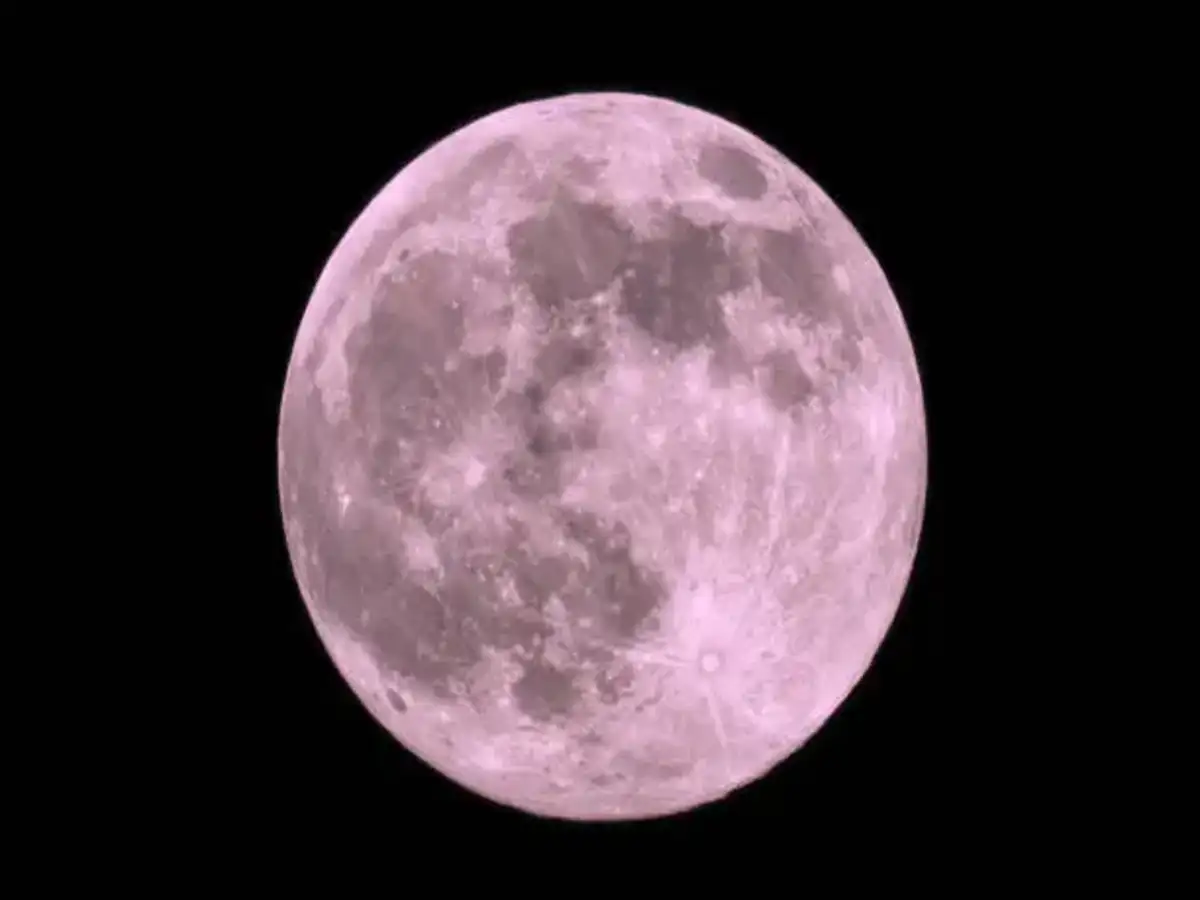

Skywatchers are in for a celestial treat as April’s full moon, popularly known as the Pink Moon, is set to rise on the night of April 1–2, marking the first full moon of spring in 2026.
Despite its name, the moon won’t appear pink. Instead, it may take on a faint orange or golden hue, especially when seen near the horizon.
Why Is It Called the ‘Pink Moon’?
The name “Pink Moon” comes from seasonal blooms of wildflowers, particularly Phlox, that blossom in North America during early spring. The term reflects nature’s transition into a new season rather than the moon’s actual colour.
When the moon is closer to the horizon, Earth’s atmosphere scatters shorter wavelengths of light, allowing warmer tones like orange and red to dominate—giving the moon its subtle glow.
Spiritual and Cultural Significance
The Pink Moon is often associated with renewal, growth, and fresh beginnings. In many cultures, it is considered an ideal time for reflection, setting intentions, and reconnecting with nature.
It is also known as the Paschal Moon, which plays a crucial role in determining the date of Easter in the Western calendar. In 2026, Easter will be observed on April 5.
What Is a Full Moon?
According to NASA, a full moon occurs when the Moon is positioned directly opposite the Sun relative to Earth. This alignment allows the entire sunlit side of the Moon to be visible from Earth.
A full moon typically rises around sunset and sets at sunrise, making it visible throughout the night.
When to Watch the Pink Moon in 2026
The peak of the Pink Moon will occur at:
- 10:12 PM EDT on April 1
- 02:11 UTC on April 2
For viewers in India, the moon will be visible throughout the night—rising in the east around sunset and setting in the west by sunrise.
Best Tips to Watch the Pink Moon
- Look toward the eastern horizon at sunset for the best initial view
- The moon will appear brightest around midnight
- Try spotting it near the constellation Virgo for easier identification
- Choose a location with minimal light pollution for a clearer view