

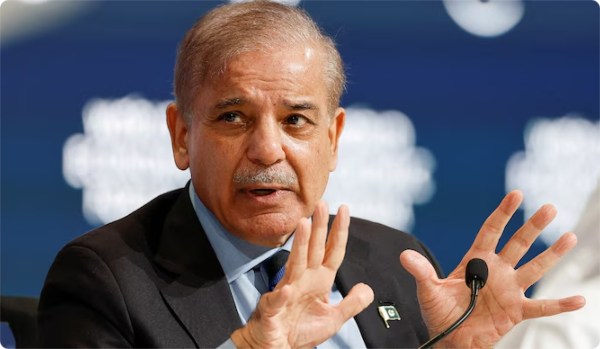

ISLAMABAD – On Tuesday, Pakistani Prime Minister Shehbaz Sharif made a new threat to India, saying that any attempt to stop Pakistan’s water supply would not be accepted. Sharif said at a ceremony in Islamabad, “I want to tell the enemy today that if you threaten to hold our water, then keep this in mind: you can’t take even one drop of Pakistan.” He said that if India tried to do something like that, “you will be left holding your ears.”
Sharif said this after India took action against the Pahalgam terror assault on April 22 that murdered 26 innocent. India put the Indus Waters Treaty (IWT) of 1960 “on hold” and began Operation Sindoor on May 7, attacking terrorist infrastructure in Pakistan and Pakistan-occupied Kashmir.
Growing Tensions and Nuclear Threats
Pakistani authorities have been making more and more angry comments, and the Prime Minister’s declaration is the most recent. A day before, Bilawal Bhutto-Zardari, the former foreign minister, had similarly said that canceling the Indus Waters Treaty was an attack on the Indus Valley Civilization and that Pakistan would not back down if it had to go to war.
India has reacted strongly to these comments. Mithun Chakraborty, an actor who is now a BJP leader, said that India would answer to Bhutto-Zardari’s comments with BrahMos missiles.
General Asim Munir, the head of Pakistan’s army, is said to have made a nuclear threat when speaking to Pakistanis living in Florida. Munir said, “We will wait for India to build a dam, and when they do, we will destroy it,” according to the Dawn newspaper. He also said that Pakistan has “plenty of resources to stop India’s plans to stop the river.”
What India Said in Response to Pakistan’s Rhetoric
India’s Ministry of External Affairs (MEA) responded to General Munir’s nuclear threat by saying that it “reinforced the well-held doubts about the integrity of nuclear command and control” in Pakistan. The MEA said that the Pakistani military was “hand-in-glove” with terrorist groups and that “nuclear sabre-rattling” would not change India’s mind. The ministry said it was sorry that such comments were made from the soil of a “friendly third country,” which seems to be a message to the U.S.
After four days of fierce fighting between India and Pakistan after Operation Sindoor, the two countries agreed on May 10 to stop fighting. The most recent threats and retaliations over the Indus Waters Treaty, on the other hand, show that the relationship between the two countries is still quite unstable.