

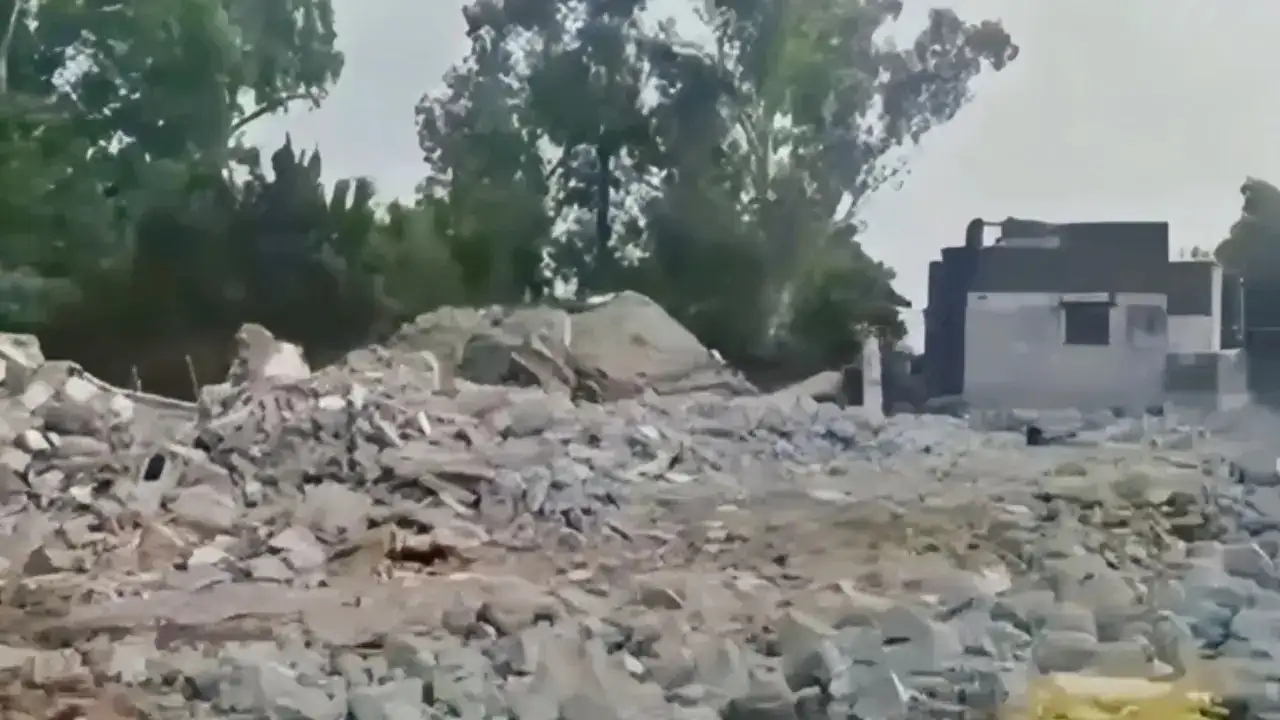

In a defiant and rapid effort to restore its operational capabilities, the terror group Lashkar-e-Taiba (LeT) is rebuilding its central headquarters, Markaz Taiba, in Muridke, Pakistan, just months after it was destroyed in an Indian air strike. An intelligence dossier reveals a clear timeline and strong evidence of Pakistani state complicity, raising concerns about the nation’s continued use of proxy terror groups against India.
The LeT headquarters, which included key residential, storage, and training facilities, was severely damaged on May 7 by an Indian Air Force (IAF) strike under a retaliatory campaign known as “Operation Sindoor.” The operation was launched in response to the deadly Pahalgam terror attack on April 22, which killed 26 tourists. According to the dossier, the strike rendered the Muridke complex “operationally defunct.”
However, the LeT did not abandon the site. Instead, a well-orchestrated demolition process began on August 18, with heavy machinery being used to completely raze the damaged structures. The rebuild is being fast-tracked with a target completion date of February 5, 2026, which coincides with “Kashmir Solidarity Day,” an annual event observed in Pakistan to express support for separatists in Jammu and Kashmir. The timing suggests the new headquarters will serve as a symbol of the group’s resilience and a powerful propaganda tool for its annual jihad convention.
The reconstruction is under the direct supervision of senior LeT commanders, including Maulana Abu Zar and Yunus Shah Bukhari, confirming the project’s high priority. To ensure uninterrupted operations, the group temporarily moved its training programs and cadres to other facilities.
The intelligence dossier further reveals the crucial role of the Pakistani state. Islamabad not only publicly pledged to fund the reconstruction of facilities belonging to LeT and other terror groups but also provided an initial disbursement of PKR 4 crore to LeT. To bridge the remaining funding gap for the multi-crore project, the terror group is using its well-established strategy of running “humanitarian” campaigns. The group has launched “flood relief” campaigns, a tactic it has used successfully in the past, including after the 2005 Pakistan earthquake, where a significant portion of humanitarian aid was diverted to build terror infrastructure. Visual evidence of LeT cadres staging relief activities alongside Pakistani Rangers and officials further underscores the state’s overt patronage.
This development highlights Pakistan’s continued double-standards on counter-terrorism and poses a significant risk of a renewed and heightened terror threat against India in the coming months.