

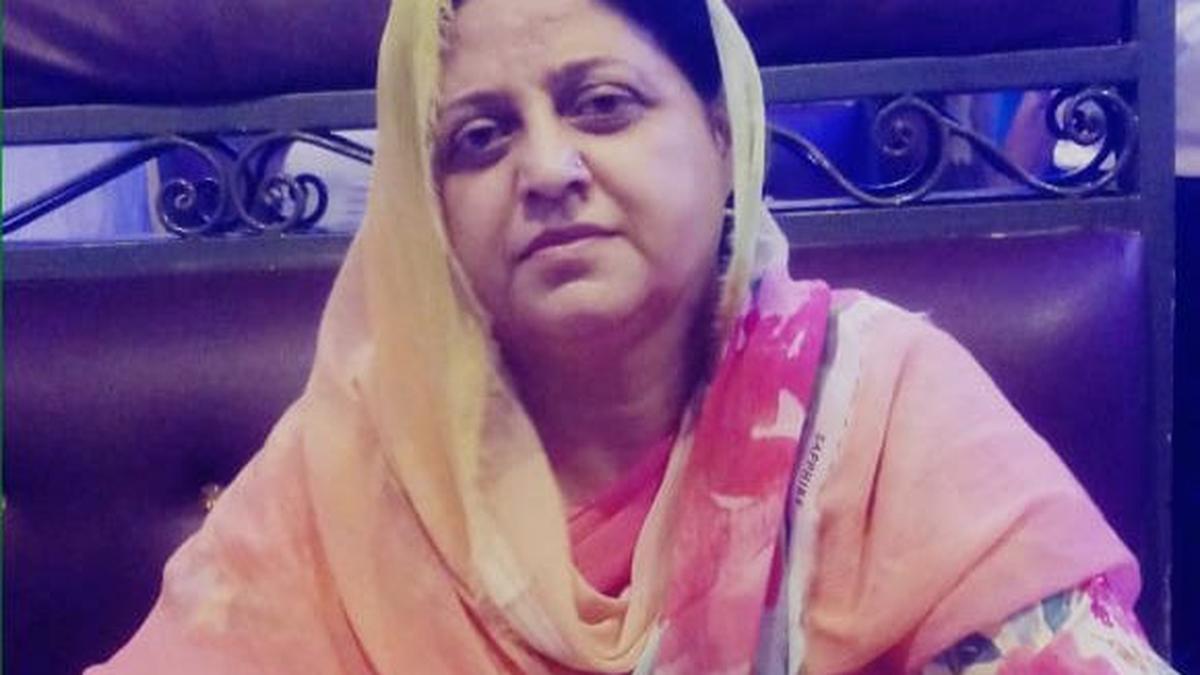

JAMMU, Jammu & Kashmir – In a big step forward, the Union Ministry of Home Affairs (MHA) has told the High Court of Jammu and Kashmir and Ladakh that it will give Rakshanda Rashid, a 62-year-old Pakistani woman who was deported in April after the Pahalgam terror attack, a guest visa. After marrying a local woman, Rashid had lived in Jammu for 38 years.
On Wednesday, a division bench of the High Court, made up of Chief Justice Arun Palli and Justice Rajnesh Oswal, awarded the authorities permission to provide the old woman a visitor’s visa.
Sheikh Zahoor Ahmed, chairman of the Muslim Front, Jammu, is married to Rakshanda Rashid. Advocate Ankur Sharma said, “The UT government and the Government of India had challenged a previous single-judge order that said Rakshanda had to be brought back from Pakistan within 10 days of her deportation.” The authorities have now agreed to give her a visiting visa.
Deportation During Increased Security
Rakshanda’s long-term visa (LTV) ran out in January, and she had asked for it to be renewed. The terrible Pahalgam terror incident happened on April 22, 2025, while her application was being processed. The Center resolved to punish Pakistan right away by deporting Pakistani citizens, among other things. So, Rakshanda was told to leave for Pakistan, and on April 29, 2025, she was sent back there.
She first came to India on February 10, 1990, with a 14-day tourist visa. She took a train through Attari to visit Jammu. She stayed in India after that because she got LTVs every year. During this time, she married an Indian citizen in Jammu.
The High Court stepped in and made a decision.
There were legal problems with the case. On June 6, 2025, a single-judge bench ordered her to return to India within 10 days. The Union Territory government and the Government of India later contested this decision.
Tushar Mehta, the Solicitor General of India, spoke for the Home Ministry and told the division bench that “after much deliberation and considering the peculiarity of facts… an in-principle decision was taken to grant a visitor visa to the respondent.” He told the court that the authorities will “process and give her a visitor visa as soon as possible.”
The court agreed to the deal but made it clear that it “shall not constitute a precedent in any manner,” stressing how special this instance is.
The division bench also said that Rakshanda might continue with her two pending applications with the authorities once she returned: one for Indian citizenship and the other for the renewal of her long-term visa. This choice provides a humanitarian solution to a complicated problem that got a lot of attention.