

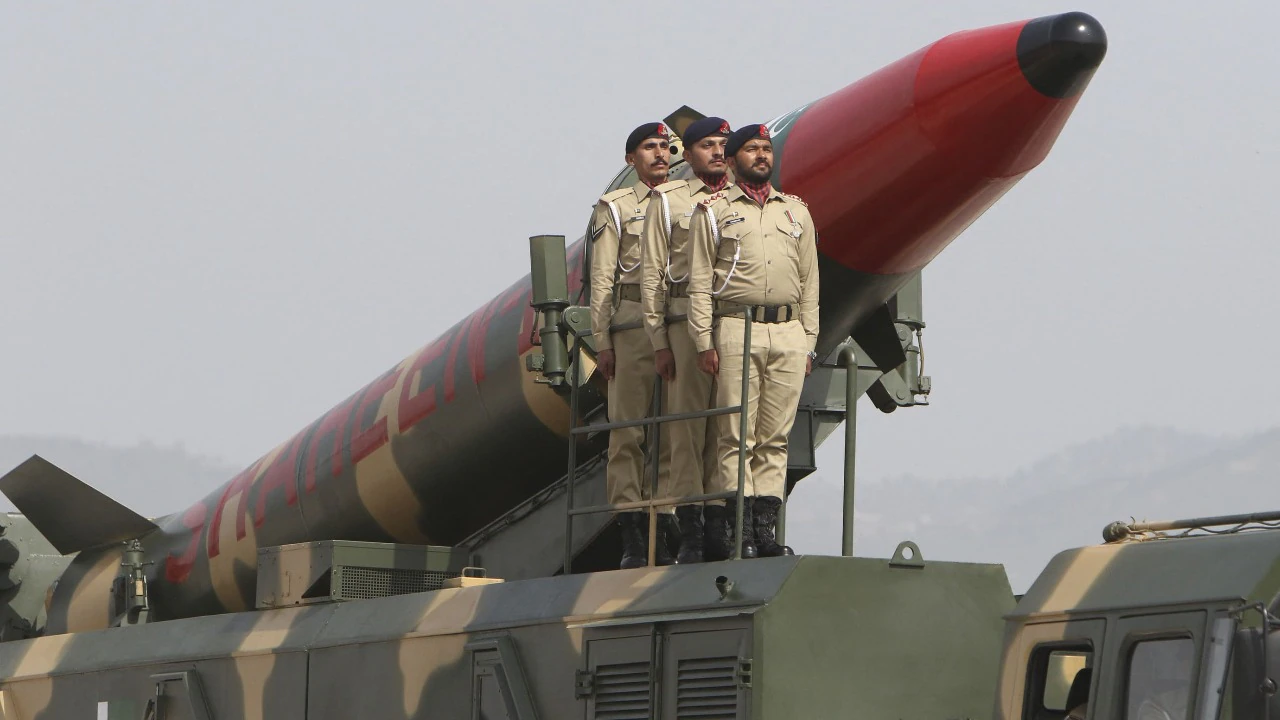

Washington: Pakistan is reportedly developing an intercontinental ballistic missile (ICBM) capable of reaching the United States, according to a report published by Foreign Affairs. The article claims that if Pakistan succeeds in acquiring or manufacturing such a missile, the US would be forced to view Pakistan as a nuclear adversary.
“If Pakistan acquires an ICBM, Washington will have no choice but to treat the country as a nuclear adversary. No other country with ICBMs that can target the United States is considered a friend,” the report quoted US officials as saying.
The report has surfaced amid rising tensions in the region, following India’s Operation Sindoor, and speculation that China is supporting Pakistan’s nuclear modernization efforts.
At present, the United States categorizes Russia, China, and North Korea as nuclear adversaries due to their ICBM capabilities. If Islamabad joins that list, it would mark a significant shift in global nuclear dynamics.
Pakistan has officially maintained that its nuclear program is focused solely on deterrence against India, with its current missile development centered around short- and medium-range systems. In 2022, it tested the Shaheen-III, a medium-range ballistic missile with a range of over 2,700 kilometers, capable of targeting most Indian cities.
However, ICBMs have a much greater reach—over 5,500 km—making them capable of striking the continental US. Pakistan currently does not possess any ICBMs, but the report suggests it may now be seeking such capability.
Why is Pakistan Pursuing an ICBM?
According to analysts, Pakistan may be developing an ICBM to deter any potential US attempt to neutralize its nuclear arsenal in a pre-emptive strike, especially in light of recent US military action on Iranian nuclear sites.
Additionally, possessing an ICBM might serve as a strategic shield, discouraging the US from siding with India or intervening militarily in case of future hostilities between the two neighbors.
US Reaction and Sanctions
The US government is reportedly viewing the development with serious concern. In 2023, Washington imposed sanctions on Pakistan’s National Development Complex, the defense agency responsible for missile programs, and three affiliated firms.
These sanctions froze any US-based assets of the entities and prohibited American companies from conducting business with them. Islamabad had slammed the sanctions, calling them “biased”.
It is worth noting that neither India nor Pakistan is a signatory to the Nuclear Non-Proliferation Treaty (NPT), which aims to prevent the spread of nuclear weapons and promote peaceful nuclear energy.