

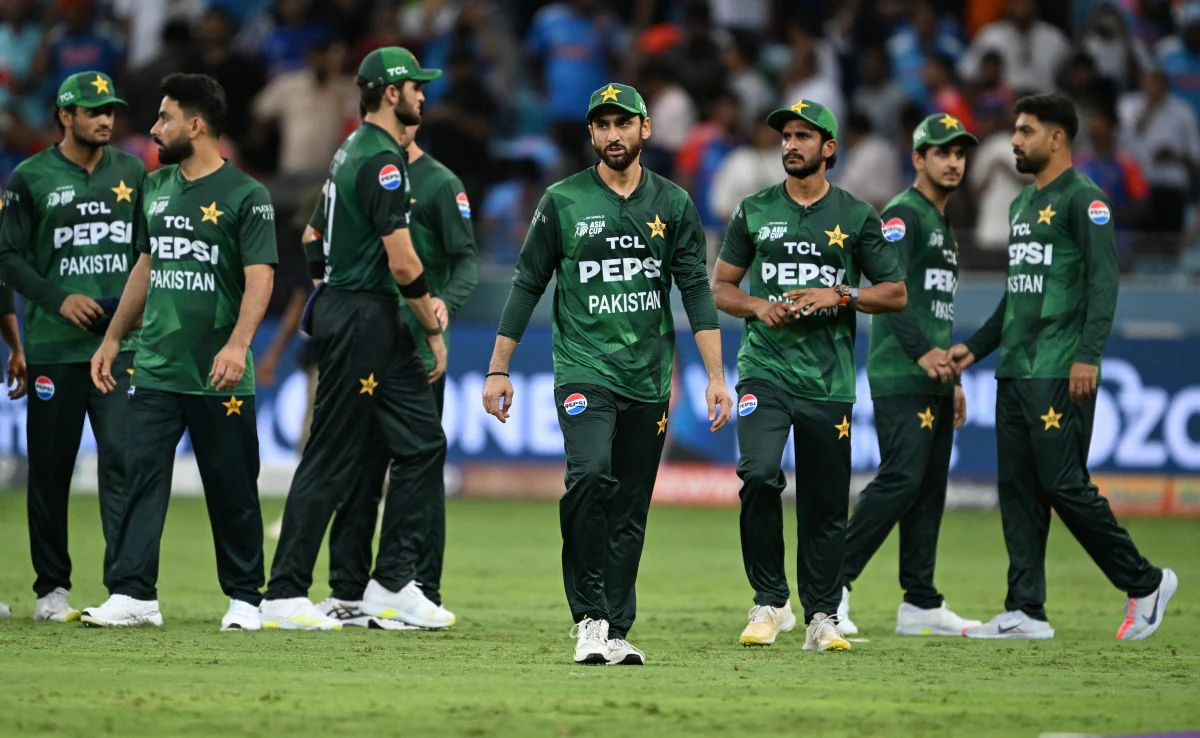

Former International Cricket Council (ICC) president Ehsan Mani has said that Pakistan is unlikely to face sanctions from the world body despite the government’s decision to boycott the February 15 T20 World Cup match against India.
Mani, who also previously served as chairman of the Pakistan Cricket Board (PCB), argued that Pakistan is acting under government instructions — a situation that, according to him, mirrors India’s refusal to travel to Pakistan for the 2025 ICC Champions Trophy.
Why Pakistan is boycotting the India match
While the Pakistan government has not officially stated the reason for skipping the high-profile India clash, the move is widely seen as an act of solidarity with Bangladesh. Bangladesh had sought to have its T20 World Cup matches shifted out of India, citing concerns, but the ICC rejected the request outright.
Following that decision, Pakistan announced it would not play India, even though the match was scheduled to be held at a neutral venue in Sri Lanka and the fixtures had been announced well in advance.
Ehsan Mani questions ICC’s double standards
Speaking to Sportstar, Mani said Pakistan should not be punished for complying with government directives, drawing a parallel with India’s stance during the Champions Trophy.
“There can’t be any sanctions against Pakistan if it follows government instructions. That was the basis on which India refused to play its 2025 Champions Trophy matches in Pakistan. You can’t have double standards,” Mani said.
He also criticised the ICC for failing to proactively manage political interference in cricket.
“Unfortunately, again I come back to the fact that instead of dealing with the problem, the ICC just stood there as a bystander,” he added.
Mani further pointed out that the situation is complicated by the fact that the current PCB chairman is also a serving government minister, making political involvement almost inevitable.
“You left the door open for any country to get its government involved — especially knowing that the chairman of the PCB is a serving minister of the government,” he said.
Why Pakistan’s case may be different
Despite Mani’s arguments, the ICC may view Pakistan’s boycott differently from India’s Champions Trophy stance.
During the Champions Trophy 2025, Pakistan was the designated host, and although India refused to travel to Pakistan, it did not boycott the tournament. Instead, India played all its matches — including one against Pakistan — at a neutral venue in the UAE, as arranged by the ICC.
In contrast, Pakistan is refusing to play India even at a neutral venue (Sri Lanka) for the T20 World Cup, despite having agreed to the schedule earlier. This distinction could weigh heavily when the ICC assesses whether Pakistan has breached tournament obligations.
What lies ahead
With tensions escalating and the ICC yet to announce its final position, Pakistan’s future in the tournament — and the broader implications for international cricket governance — remain uncertain. The controversy has once again highlighted the ICC’s ongoing struggle to balance politics, fairness, and consistency in global cricket events.