

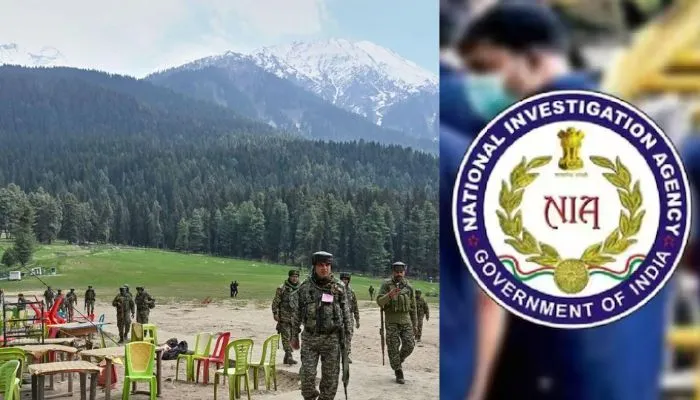

Srinagar/New Delhi: Pakistan’s role in the deadly Pahalgam terror attack has been formally established, with the National Investigation Agency (NIA) naming Sajid Saifullah Jutt, a Pakistani national, as the chief conspirator behind the assault that killed 26 tourists on April 22.
Jutt, a resident of Kasoor in Pakistan, heads The Resistance Front (TRF)—an offshoot of the Pakistan-based terror group Lashkar-e-Taiba (LeT). The NIA has announced a ₹10 lakh reward for information leading to his arrest and has declared him a proscribed terrorist under the Unlawful Activities (Prevention) Act (UAPA).
After nearly eight months of sustained investigation, the NIA filed a detailed chargesheet in a special court in the Jammu region, outlining the terror network responsible for the attack.
Pakistani Terrorists Named in Chargesheet
Along with Jutt, the chargesheet names three Pakistani terrorists—Suleimani Shah, Hamza Afghani and Jibran—who carried out the Pahalgam attack. All three were killed during Operation Mahadev in the Dachigam area on July 28, security officials confirmed.
Local Accomplices and Logistical Support
The chargesheet also names six other accused, including local accomplices:
- Bashir Ahmed Jothar
- Parvez Ahmed Jothar
- Mohammad Yusuf Katari
Investigators found that Bashir and Parvez Jothar sheltered the terrorists in a hut at Hill Park in Pahalgam on the night of April 21, a day before the attack.
Mohammad Yusuf Katari helped the attackers navigate the forest belt in South Kashmir, guiding them to the site of the assault.
The chargesheet includes the names of three additional accused, whose roles are also detailed in the investigation documents.
Massive Probe Uncovers LeT–TRF Network
During the seven-month-long investigation, the NIA questioned more than 1,000 people, uncovering a well-organised LeT-TRF terror network operating across the region.
According to the agency, the accused have been charged under provisions of:
- Bharatiya Nyaya Sanhita (BNS), 2023
- Arms Act, 1959
- Unlawful Activities (Prevention) Act (UAPA), 1967
The NIA has also invoked sections related to “waging war against the Government of India”, highlighting the gravity of the offence.
“This chargesheet clearly establishes the role of Pakistan-based terror handlers in planning and executing the Pahalgam attack,” the agency said in a statement.