

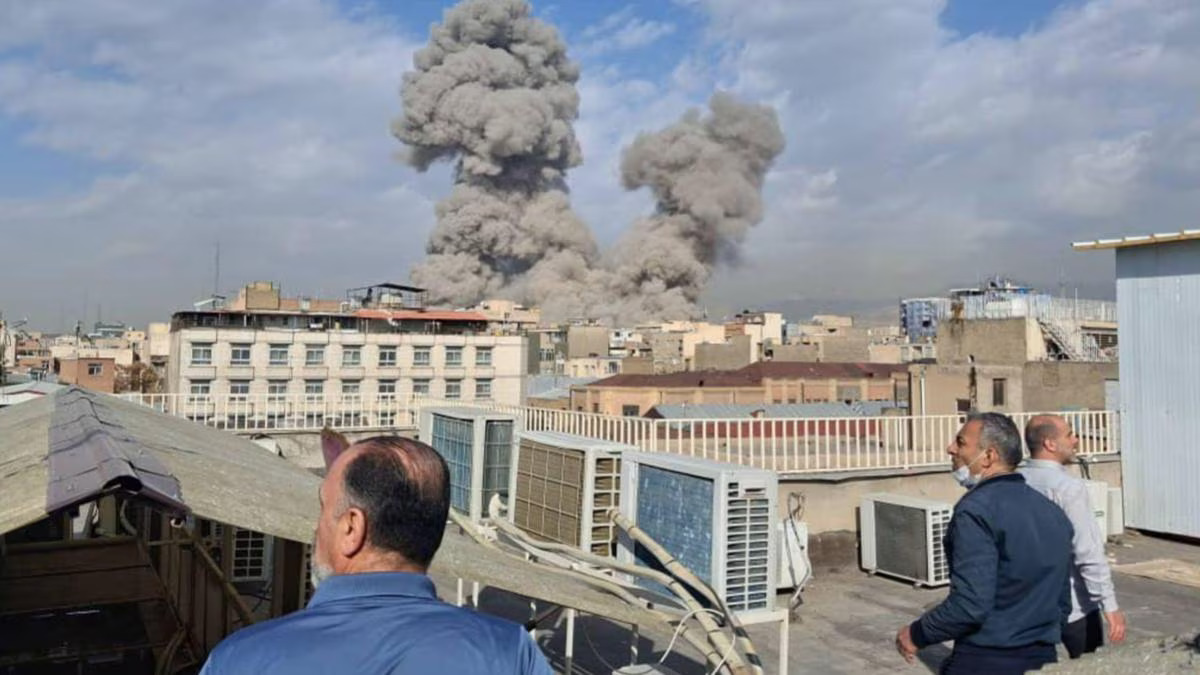

International crude oil prices jumped nearly 9 per cent after coordinated US and Israeli strikes on Iran triggered retaliatory action from Tehran, escalating fears of supply disruptions in West Asia. However, despite the sharp spike in global benchmarks, retail petrol and diesel prices in India are unlikely to be raised in the immediate term, according to sources familiar with the government’s thinking.
Brent Near $80, WTI Up Sharply
Global benchmark Brent crude climbed close to USD 80 per barrel, while US-traded West Texas Intermediate (WTI) rose 8.6 per cent to USD 72.79, up from roughly USD 67 at the end of last week. The rally reflects growing concerns over energy supply routes, especially through the strategically critical Strait of Hormuz.
For India — which imports nearly 88 per cent of its crude oil requirement — such price spikes typically translate into a higher import bill and potential inflationary pressures. Crude oil is refined domestically into fuels such as petrol and diesel, meaning international volatility directly impacts domestic energy economics.
No Immediate Retail Price Hike Expected
Despite the surge, retail fuel prices in India are not expected to be revised upward in the near future. Sources said the government continues to follow a calibrated pricing policy that allows public sector oil marketing companies (OMCs) to build margins when global crude prices are low and absorb shocks when they rise.
Petrol and diesel prices have effectively remained frozen since April 2022. State-run fuel retailers — Indian Oil Corporation, Bharat Petroleum Corporation Ltd, and Hindustan Petroleum Corporation Ltd — have alternated between absorbing under-recoveries during high crude phases and booking profits when prices ease.
This policy ensured that when global retail fuel prices climbed in response to high crude rates, Indian consumers were shielded. Similarly, when global crude softened, pump prices in India did not fall correspondingly, allowing OMCs to rebuild margins.
“The companies have enough cushion to sustain this kind of price spike,” a source said, pointing out that crude had surged to USD 119 per barrel in June 2022 after Russia’s invasion of Ukraine. Despite that, oil firms managed to stabilise finances over time.
In FY24, the three public sector oil companies posted a record combined profit of Rs 81,000 crore. In the current fiscal year, they reported Rs 23,743 crore in profit in the December quarter alone.
Election Factor at Play
With assembly elections approaching in politically significant states such as West Bengal, Tamil Nadu, and Assam, the government is unlikely to risk public backlash over fuel price hikes. Officials indicated that unless crude prices spike dramatically and sustain higher levels, the existing consumer-shielding policy will continue.
Government Monitoring Situation Closely
Amid the escalating Middle East conflict, Oil Minister Hardeep Singh Puri held a review meeting with senior officials and public sector executives to assess the situation concerning crude oil, LPG, and other petroleum products.
“We are continuously monitoring the evolving situation and all steps will be taken in order to ensure availability and affordability of major petroleum products in the country,” the ministry said in a post on X.
India imports roughly half of its natural gas requirement and nearly half of its crude oil shipments pass through the Strait of Hormuz — a narrow but vital maritime route. Iranian authorities have threatened to shut the strait following US and Israeli attacks on its facilities, raising concerns of prolonged disruption.
Strait of Hormuz: A Critical Chokepoint
Media reports suggest the conflict has effectively halted tanker movement through the Strait of Hormuz, which handles about one-third of global seaborne crude oil exports and nearly 20 per cent of liquefied natural gas (LNG) shipments.
Iran has reportedly warned ships to avoid the area, while insurers have withdrawn coverage — further disrupting tanker traffic. If the disruption continues, shipments may need to be rerouted via the Cape of Good Hope, increasing transit times and pushing up freight and insurance costs.
Analysts Warn of Energy Security Risks
According to Sehul Bhatt, Director at Crisil Intelligence, prolonged geopolitical instability could intensify procurement and pricing risks for both crude oil and LNG.
“If geopolitical issues ease, we expect prices to average USD 65–70 in CY2026. But prolonged conflict could push prices even higher,” Bhatt said. While Iran contributes roughly 4.5–5 per cent of global oil supply, the real vulnerability lies in potential disruptions at the Strait of Hormuz, which is critical for nearly half of India’s imports of crude and LNG.
Moody’s Analytics warned that the closure of Hormuz raises the risk of further disruptions across the wider Middle East and Red Sea corridor. Airspace closures have also added strain, affecting passenger and cargo traffic in one of the world’s most crucial trade regions.
Energy consultancy Wood Mackenzie cautioned that oil prices could cross USD 100 per barrel if tanker traffic through the Strait of Hormuz is not restored swiftly. The current disruption represents a “dual supply shock,” as both ongoing exports and OPEC+ spare capacity remain inaccessible while the waterway stays closed.
Outlook: Balancing Inflation and Energy Security
While Indian consumers may be shielded from immediate fuel price hikes, sustained high crude prices could eventually test the government’s fiscal and inflation management strategy. For now, strong oil company balance sheets and political considerations appear to be cushioning the impact.
However, with the West Asia conflict intensifying and the Strait of Hormuz under threat, India’s energy security and inflation outlook remain closely tied to developments in one of the world’s most volatile regions.