

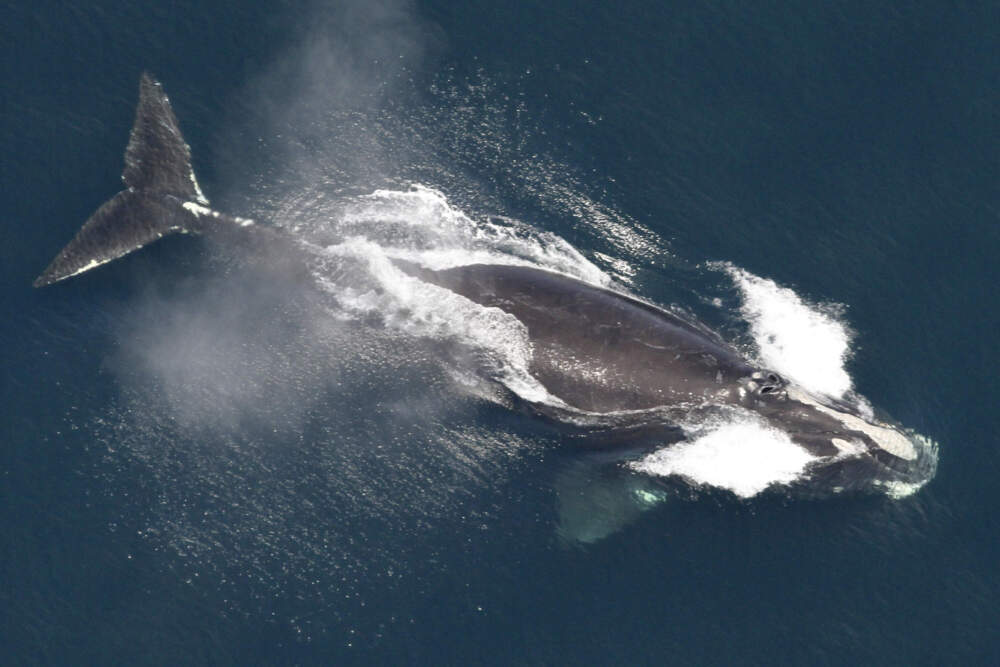

Portland: Thanks to stronger conservation efforts, the North Atlantic right whale, one of the rarest mammals on Earth, seems to be slowly recovering its population. The North Atlantic Right Whale Consortium says that the population is now thought to be 384 whales, which is eight more than last year.
The population has grown by more than 7% since 2020, which is a big change from the 25% drop that happened between 2010 and 2020, when these whales were in danger of being hit by ships and becoming caught in fishing gear.
Philip Hamilton, a senior scientist at the New England Aquarium’s Anderson Cabot Center for Ocean Life, which works with NOAA to keep an eye on the whales, said, “This small increase every year, if it keeps up, could lead to a big increase in the population.”
Conservation Efforts and Problems
New ways of managing things in Canada, especially in the Gulf of St. Lawrence, have been very important for keeping the whales safe. Scientists, on the other hand, say that recovery is still fragile. Injuries, not getting enough food, and low birth rates have all hampered population development in the past.
Four new mother whales gave birth this year, which is a good sign. Also, several of the older mothers delivered calves less often. Researchers had hoped for more than 11 calves, but the fact that fresh females are joining the reproductive pool is a good sign.
Heather Pettis, chair of the North Atlantic Right Whale Consortium, said, “We’re cautiously optimistic because the population has grown slightly and there have been no deaths and fewer injuries.” This group can change its mind quickly.
Threats in the past and migration
Commercial whaling almost killed off the whales, but they have been protected by the federal government for decades. Every year, they go from their calving grounds off the coasts of Florida and Georgia to their feeding grounds off the coasts of New England and Canada. Scientists say that ocean warming has made these migrations more risky, driving whales to leave safe areas in search of food.
Environmental groups stressed how important it is to have greater protections. Gib Brogan, Oceana’s senior campaign director, stated, “Attacks on the Marine Mammal Protection Act and efforts to weaken NOAA’s science-based protections put this fragile population at even greater risk.” To give right whales a fighting chance, Congress must keep these protections in place.