

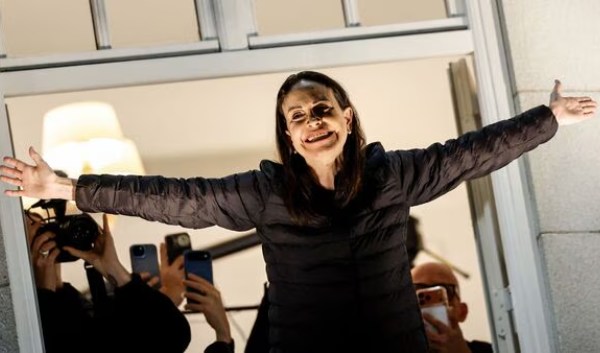

Nobel Peace laureate Maria Corina Machado has ended nearly a year of hiding, making a dramatic and surprise emergence in Oslo, Norway, on Thursday, where she received a hero’s welcome. The Venezuelan opposition leader, who won the prize for her decades-long struggle for democracy, vowed to return to her homeland to end the “tyranny” of President Nicolás Maduro.
A Highly Risky Journey to Norway
Machado, who has not been seen publicly since protesting Maduro’s inauguration in Caracas in January, first appeared on a hotel balcony in the Norwegian capital in the early hours of Thursday. Her appearance came just hours after her daughter collected the prestigious award on her behalf.
- Clandestine Escape: Her journey out of Venezuela was shrouded in secrecy and danger. Reports suggest the escape involved months of planning, a three-day journey, and a disguise (including a wig) to successfully navigate up to 10 military checkpoints. She was reportedly smuggled out of Caracas in a fishing vessel across the Caribbean Sea before reaching a waiting plane.
- Thanks to Rescuers: At a press conference, Machado specifically thanked those who “risked their lives” to get her to Oslo, but declined to give details of the escape, stating she did not want to put them at risk.
- Emotional Reunion: Machado shared the emotional toll of the past 16 months in hiding, saying she had missed major life events for her children and hadn’t been able to hug or touch anyone she loved. “Suddenly in the matter of a few hours I’ve been able to see the people I love the most, and touch them and cry and pray together,” she shared.
The Nobel Institute confirmed Machado did “everything in her power to come to the ceremony,” undertaking a journey of “extreme danger.”
Vow to Return and End the ‘Tyranny’
Despite the Venezuelan government warning that she would be considered a “fugitive” if she left the country, Machado was defiant about her next steps.
- Commitment: “I came to receive the prize on behalf of the Venezuelan people and I will take it back to Venezuela at the correct moment,” she told reporters outside the Norwegian parliament, vowing to do her “best” to return home.
- Secrecy: She kept the timing of her return deliberately vague, stating, “I will not say when that is or how it’s going to be,” but affirmed her desire “to end with this tyranny very soon and have a free Venezuela.”
- Political Risk: The decision to leave and then return carries immense political risk. Benedicte Bull, a professor specializing in Latin America, noted that while she is the “undisputed” leader of the opposition, she risks being arrested if she returns, and staying away for too long could cause her to lose political influence. Machado acknowledged the gravity of her decision: “I know exactly the risks I’m taking.”
Acceptance Speech and Geopolitical Alignment
In her acceptance speech, delivered by her daughter Ana Corina Sosa Machado on Wednesday, the laureate denounced kidnappings and torture under the Maduro regime, calling them “crimes against humanity” and “state terrorism, deployed to bury the will of the people.”
Machado won the prize for “her struggle to achieve a just and peaceful transition from dictatorship to democracy,” a claim made particularly potent after the Maduro regime banned her from running in the July 2024 election. Critics, however, have noted her controversial alignment with US President Donald Trump, to whom she dedicated her Nobel, and her support for US military actions in the Caribbean, which Maduro insists are aimed at toppling his government and seizing Venezuela’s oil reserves.