

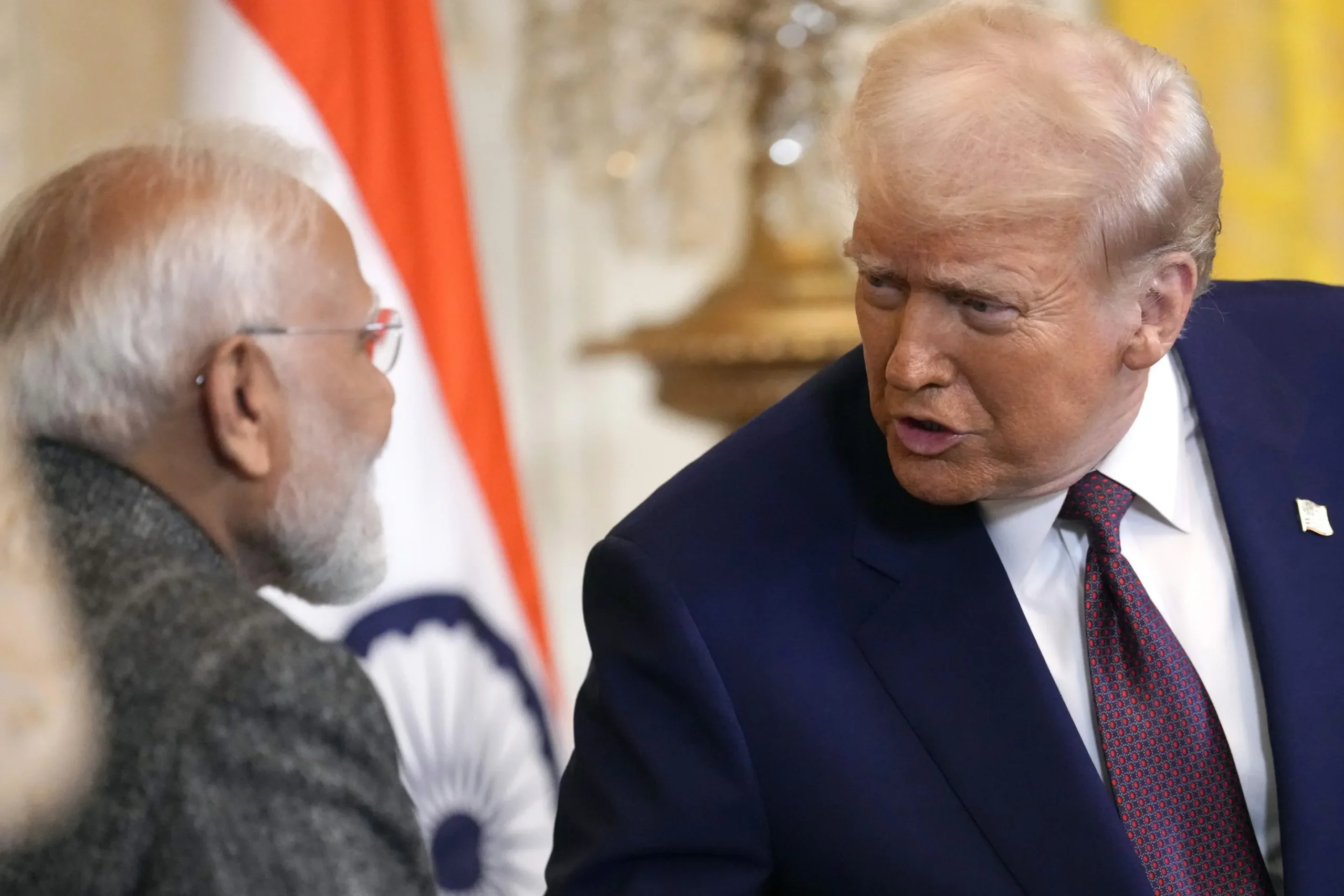

Days after US President Donald Trump claimed that India had agreed to halt its oil trade with Russia as part of a new India–US trade deal, Moscow has pushed back. On February 5, 2026, Russia’s Foreign Ministry spokesperson Maria Zakharova stated that Russia has “no reason to believe” its Indian friends have altered their strategic energy approach.
The Controversy: Trump’s Big Assertion
On February 2, 2026, President Trump announced a major trade agreement with New Delhi, slashing tariffs on Indian goods from 50% to 18%. However, he attached a massive caveat to the announcement:
- The Claim: Trump posted on social media that Prime Minister Narendra Modi agreed to “stop buying Russian oil” and switch to purchasing crude from the United States and Venezuela.
- The Context: Last year, Trump had imposed a 25% punitive tariff specifically because of India’s continued purchase of discounted Russian crude, which he argued was “funding the Russian war machine.”
Russia’s Reaction: “Dictating to Independent Nations”
Moscow was quick to dismiss the idea that India would abandon its long-standing partnership under Western pressure.
- Independence: Zakharova accused the US of trying to “dictate” the trade policies of an independent nation.
- Mutual Benefit: She emphasized that the oil trade remains “beneficial to both India and Russia” and contributes to global energy stability.
- The Kremlin’s Take: Press Secretary Dmitry Peskov was more pragmatic, noting that India is “free to buy oil from any country” and that diversification is a normal part of global energy markets, though he confirmed the Kremlin has received no official notice from New Delhi about stopping purchases.
India’s “Calculated Silence”
While PM Modi and the Ministry of External Affairs (MEA) have celebrated the 18% tariff reduction, they have remained conspicuously silent on the specific claim of a Russian oil ban.
- What India Confirmed: PM Modi thanked “dear friend” Trump for the tariff cuts and the $500 billion investment pledge into the US.
- What India Avoided: Official statements from the MEA have avoided mentioning a “stop” on Russian oil. Insiders suggest India may gradually scale back spot purchases while honoring existing long-term contracts, rather than implementing an immediate blanket ban.
- The “Nayara” Factor: Experts point out that refineries like Nayara Energy (49% owned by Russia’s Rosneft) cannot easily switch sources, making a total ban logistically and diplomatically complex.
The Trade Math: Group A and Energy
| Feature | Before Deal (2025) | After Deal (2026) |
| US Tariff on Indian Goods | 50% | 18% |
| Russian Oil Share | ~35-40% | TBD (Expected to decline) |
| US Energy Commitment | Moderate | High ($500bn total investment) |