

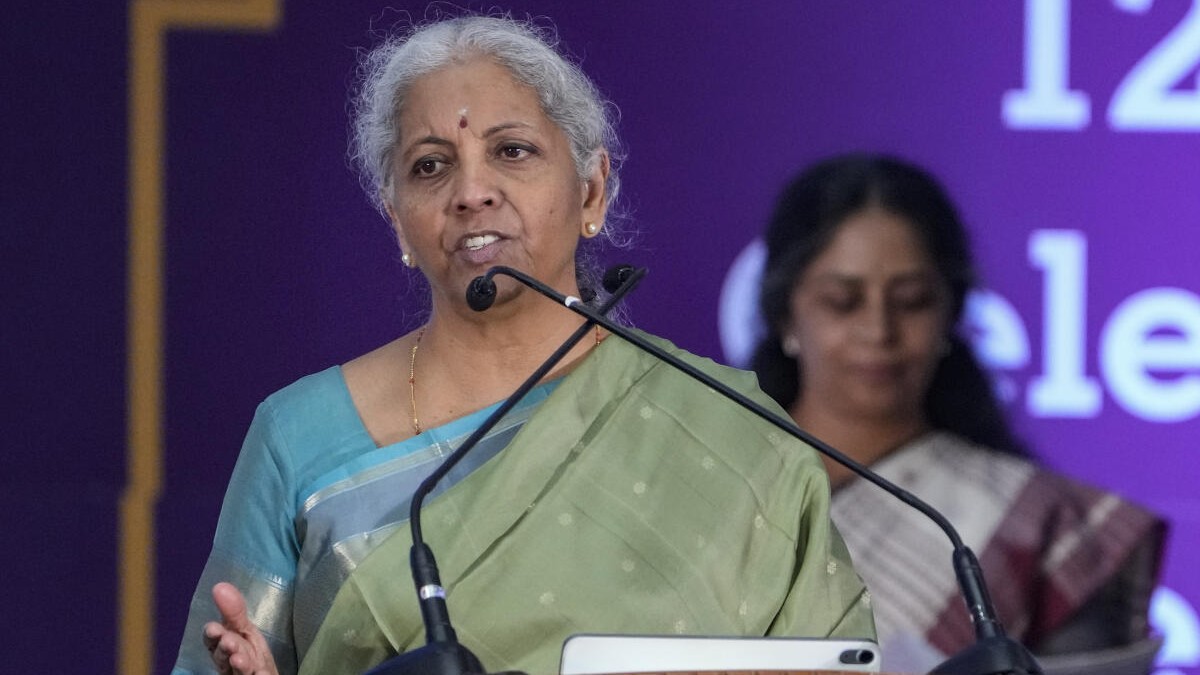

New Delhi: Union Finance Minister Nirmala Sitharaman has stated that the recently introduced GST reforms—the most significant overhaul to India’s tax regime since 2017—are designed to stimulate the economy and help offset the potential adverse effects of US tariffs.
In an interview with the Hindustan Times, the minister revealed that her next major focus will be to ensure the full transmission of the GST rate cuts to consumers. She emphasized that while the reforms were not motivated by the US tariffs, they could effectively help counter their impact.
Calling the changes “pro-people” and “pro-poor,” Sitharaman predicted a wave of consumer spending similar to the post-pandemic “revenge buying.” “In all likelihood, from September 22, people will go out and buy… that’s what the industry is telling us,” she said, expressing confidence that this increased consumption could help the government end the financial year without a major impact on revenue.
Dismissing Election Links and Crediting the People
When asked if the timing of the GST reforms was tied to upcoming state elections, particularly in Bihar, the minister dismissed the suggestion. She clarified that the reforms are for all of India’s 1.4 billion people, and not for a single state. “GST affects every person in some way. And there are people in Bihar also,” she added.
Sitharaman also addressed a question on whether she considers the GST reforms her biggest achievement. She humbly replied, “I don’t see this as my win. Unless the people of India respond to the changes being undertaken…and we are seeing them respond, that’s why you are seeing the Indian economy be so robust.”
The finance minister also maintained an optimistic long-term outlook for the country. “We will soon be the third-largest economy in the world. Our fundamentals are absolutely sound,” she added. The GST reforms are the latest in a series of tax overhauls, which included a simplified income tax regime introduced in the annual budget in February.