

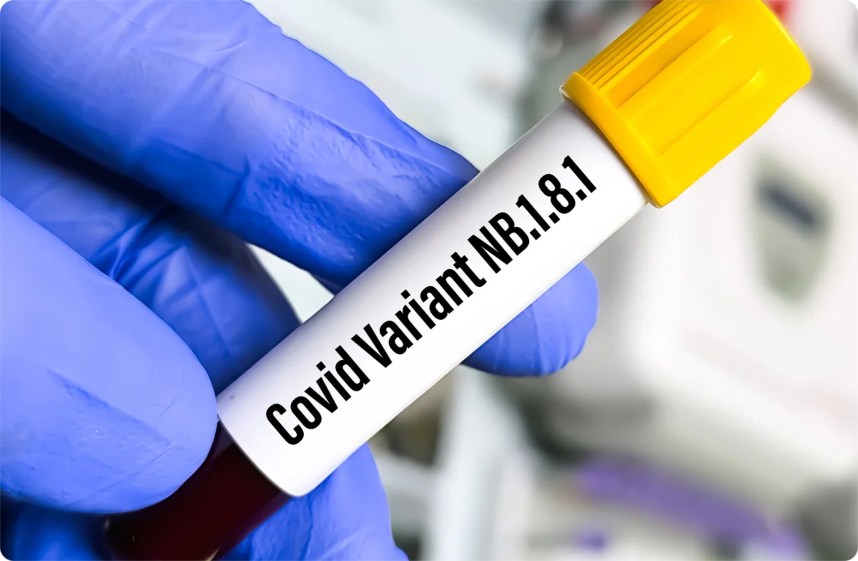

A new dominant Covid-19 strain is sweeping across the United States, raising concerns among health authorities. Officially known as NB.1.8.1, the variant has been nicknamed ‘Nimbus’ and is now the most commonly circulating version of SARS-CoV-2 in the country, according to the US Centers for Disease Control and Prevention (CDC).
The variant was first flagged in March 2025 through the CDC’s airport screening program, which collects nasal and wastewater samples at major entry points across the US.
What is Nimbus (NB.1.8.1)?
‘Nimbus’ is a subvariant of the Omicron lineage of the coronavirus, first detected in China earlier this year. It has since spread through Asia and Europe before becoming dominant in several US states, including Washington, New York, California, and Virginia.
As of the two-week period ending June 21, Nimbus accounted for 43% of all Covid cases in the US. Estimates now suggest it could make up between 13% and 68% of circulating variants — though experts caution that inconsistent testing and surveillance may affect the accuracy of these figures.
Symptoms of the Nimbus Variant
Many of the symptoms are similar to earlier Covid strains, but one distinctive feature reported by infected individuals is intense throat scratchiness, described by some as feeling like “razor blades in the throat.”
Other commonly reported symptoms include:
- Nasal congestion
- Fatigue
- Mild cough
- Fever
- Muscle aches
- Runny nose
- Loss of appetite
- Loss of taste or smell
“This variant may present itself like a bad cold, but for vulnerable groups, it still poses real risks,” says Rajendram Rajnarayanan, a Covid researcher at the New York Institute of Technology.
Is Nimbus More Dangerous?
According to the CDC, the variant is under close watch, but no current data suggests that Nimbus poses a higher public health risk than previous variants. The World Health Organization (WHO) has also stated that it does not consider Nimbus a variant of concern at this time.
However, surveillance limitations in many regions — including the US — may mean the true scale and impact of the variant are still unclear.
How Is the US Monitoring the Variant?
The CDC continues to monitor Nimbus through airport screenings, collecting nasal swabs and wastewater from international travelers. Health officials are encouraging vigilance, booster uptake, and testing — especially for vulnerable individuals or those in close-contact settings.
A spokesperson from the Department of Health and Human Services emphasized that while “awareness of increasing detections is important,” no drastic measures are yet warranted.
Global Spread
Apart from the US, cases of the Nimbus variant have also been confirmed in:
- Australia
- United Kingdom
- Select countries across Asia and Europe
With international travel rebounding, health agencies globally are advised to remain alert and continue variant tracking.
Bottom Line:
The NB.1.8.1 ‘Nimbus’ variant is now dominant in the US, but so far, does not appear to be more dangerous than previous strains. Still, individuals are urged to stay cautious, follow local guidelines, and watch for distinctive symptoms such as severe throat pain or unusual fatigue.