

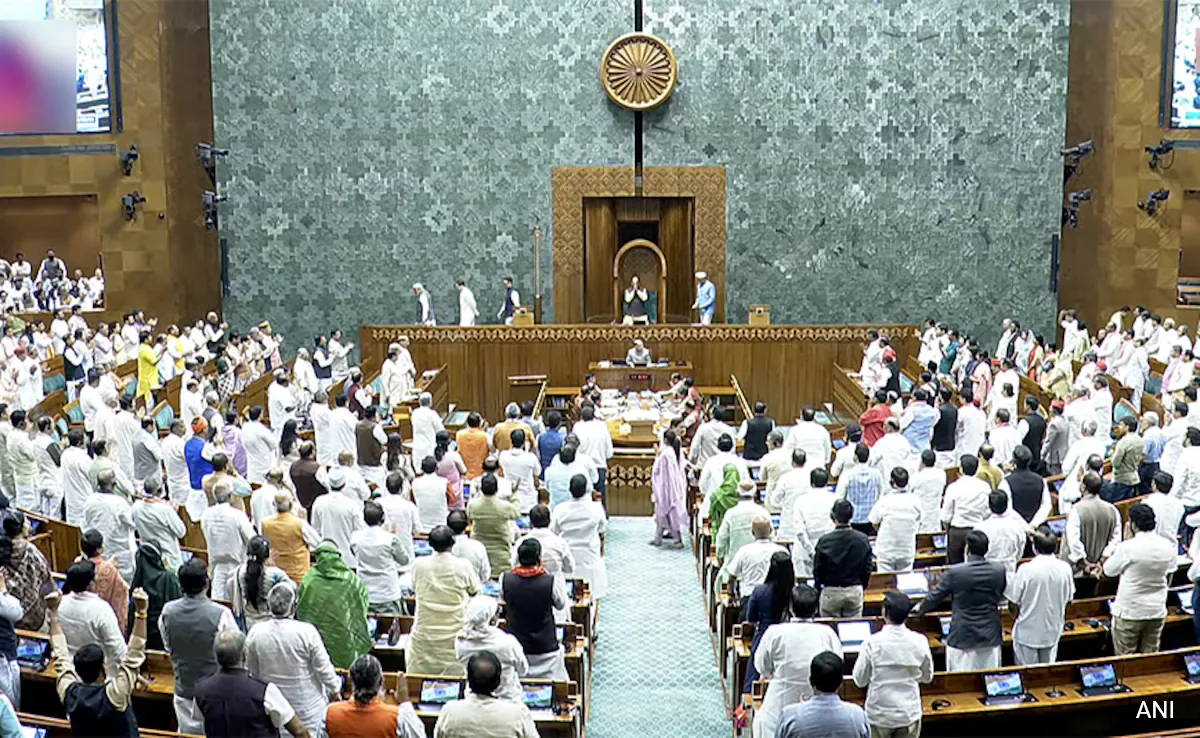

NEW DELHI – On Saturday, Parliamentary Affairs Minister Kiren Rijiju tried to calm fears about the withdrawal of the Income Tax Bill, 2025, from the Lok Sabha on Friday. He said that Finance Minister Nirmala Sitharaman would introduce a new and improved version of the bill on Monday, August 11.
Some media outlets speculated that all the work that had been done on the bill would be thrown away because it was pulled. Rijiju, on the other hand, made it clear that this was not the case. “It is being assumed that there will be a completely new bill, ignoring the old one that a lot of work went into. All the work and time spent will go to waste,” he said.
He said that when a lot of changes have been recommended and accepted by the administration, it is “normal convention” to take the law back and then bring it back again. This process helps Parliament look at and pass the measure more easily and without confusion. Rijiju said, “On the contrary, the hard work and suggestions of each person will be reflected in the new Income Tax Bill.”
The initial Income Tax Bill, 2025, which was meant to replace the Income Tax Act of 1961, which had been in effect for 60 years, was sent to a Select Committee for review. The committee, led by BJP MP Baijayant Panda, wrote a long report with several suggestions for how to make the law easier to understand and get rid of any confusion.
The new measure, which will be introduced on Monday, is likely to include most of these suggestions. Some of the most important modifications are:
TDS Refunds: Taxpayers can still get TDS refunds even beyond the deadline for filing their income tax returns.
Vacant Commercial Properties: Making sure that company properties that are temporarily empty aren’t unfairly taxed as “house property.”
Deduction for Pre-Construction Interest: This change allows the deduction for pre-construction interest to apply to rental homes as well, which was only available for properties that were lived in by the owner in the prior draft.
The bill’s reintroduction is a procedural procedure meant to make it easier for it to pass and make sure that the final law is both complete and easy to understand.