

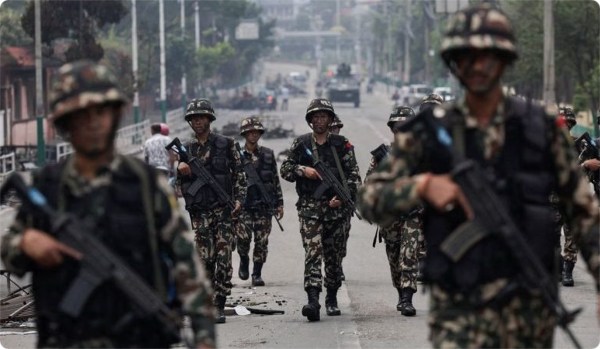

KATHMANDU – The Himalayan country of Nepal is still on high alert. Soldiers are still patrolling the streets, and there is a curfew from 7 PM to 7 AM. The increased security measures are a direct response to a growing crisis caused by violent rallies against corruption. These disturbances have allowed criminals to get their hands on weapons stolen from police armories and a large number of inmates to escape from jails in several areas.
The Nepal Police haven’t given an official number of the escaped convicts yet, but people who know what’s going on say the number is huge—between 13,000 and 15,000. These mass jailbreaks took advantage of the disorder caused by the revolt, which started as a “Gen Z” campaign against corruption and a ban on social media.
An army commander stationed near the burned-down Nepali Parliament building in Bageshwor said, “The main worry is not the protesters but those who have stolen guns and ammo from police stations.” Another concern is the prisoners who escaped from jail. The offenders may not care that the demonstrators had one of their requests met. The police said that the fugitives would probably use the stolen guns to steal things, so he told people to stay inside at night until the guns are found and the inmates are back in jail.
There have been jailbreaks all around the country. Authorities in Kathmandu’s Nakkhu jail have asked more than 600 escaped prisoners to turn themselves in, pledging that no action would be taken against them if they did so within 24 hours. There have been reports of similar escapes from places as far away as the Bhimphedi regional jail, where at least 450 prisoners got away, and Rajbiraj, which is close to the Bihar border, where inmates set part of the facility on fire while they were escaping.
The issue has also made India, which is next door, worry about its safety. The Sashastra Seema Bal (SSB), a paramilitary group that protects the border between India and Nepal, has increased its patrols. Since September 11, they have caught at least 60 prisoners trying to enter the border illegally. An SSB officer said that three of these people were apprehended in Bihar on Friday.
Former Prime Minister K.P. Sharma Oli resigned and fled his official residence during the political unrest that led to this security crisis. At least 51 people died in the deadliest violence since the end of the civil war in 2008. The protests started because of a restriction on social media, but they quickly grew into a full-fledged campaign against systemic corruption. This led to the burning of official facilities, such as the parliament and the presidential mansion.
In an effort to bring back stability, Sushila Karki, Nepal’s first female Chief Justice, was sworn in as the temporary prime minister on Friday. She is in charge of getting the country ready for elections in six months. The Nepalese army and the population are nevertheless very worried about the immediate threat posed by armed criminals and thousands of released inmates, even though this new government gives them some hope for a political solution.