

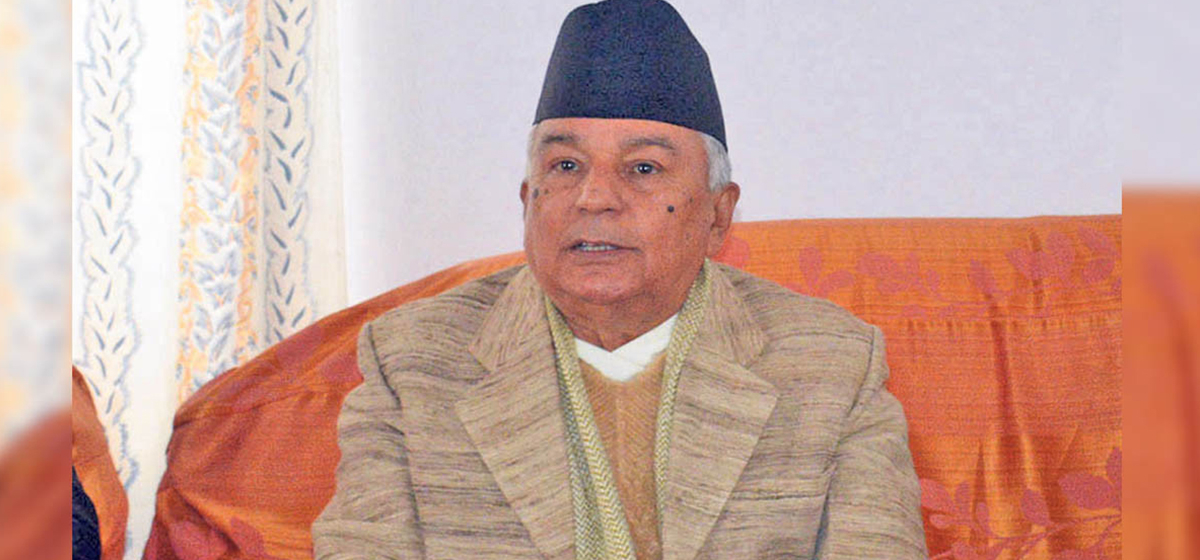

KATHMANDU, NEPAL — Nepal’s President Ramchandra Paudel has asked all political parties to work together to organize new elections for the House of Representatives on March 5, 2026. This is a big step toward restoring political stability. This plea comes after a week of violent protests that forced Prime Minister K.P. Sharma Oli to step down and appointed Sushila Karki, the country’s first female prime minister, as his replacement.
President Paudel dissolved the House of Representatives on Friday at the request of the newly sworn-in Prime Minister Karki. Paudel said in a statement on Saturday that the election is a “hard-earned opportunity” to go forward on the road of a progressive democracy. He said, “The only way for the country to get out peacefully was to go through a very important, difficult, and dangerous situation.” He told the people that the “constitution and parliamentary system are safe and the federal democratic republic is still there.”
The current political unrest was caused by a restriction on social media sites, which led to widespread rallies spearheaded by “Gen Z” against government corruption and the ban on social media sites. At least 51 people, including an Indian citizen, died in the protests, which became violent. During the two-day protest, the Prime Minister’s Office at Singhdurbar Secretariat was set on fire. Government sources say that a new structure in the complex is being developed to be the new Prime Minister’s Office.
On Friday, Sushila Karki, who used to be the Chief Justice, took the oath of office as the interim prime minister. The President, military officials, and leaders of the protest movement all had to agree on her appointment. They saw Karki as an impartial and honest person. She is likely to put together a small cabinet and be in charge of several important ministries, such as Home, Foreign Affairs, and Defense. On Saturday, Prime Minister Karki went to the Civil Hospital in Kathmandu to see the people who were hurt in the recent protests.
But the president’s choice to dissolve parliament has been criticized by Nepal’s major political parties and the country’s top lawyers’ organization, which have called the move “unconstitutional” and “arbitrary,” and a devastating blow to democracy. The main whips of the dissolved House of Representatives have also made a joint statement against the dissolution of Parliament. Even though there is opposition, the interim government is now in charge of bringing back order and getting ready for the elections.