

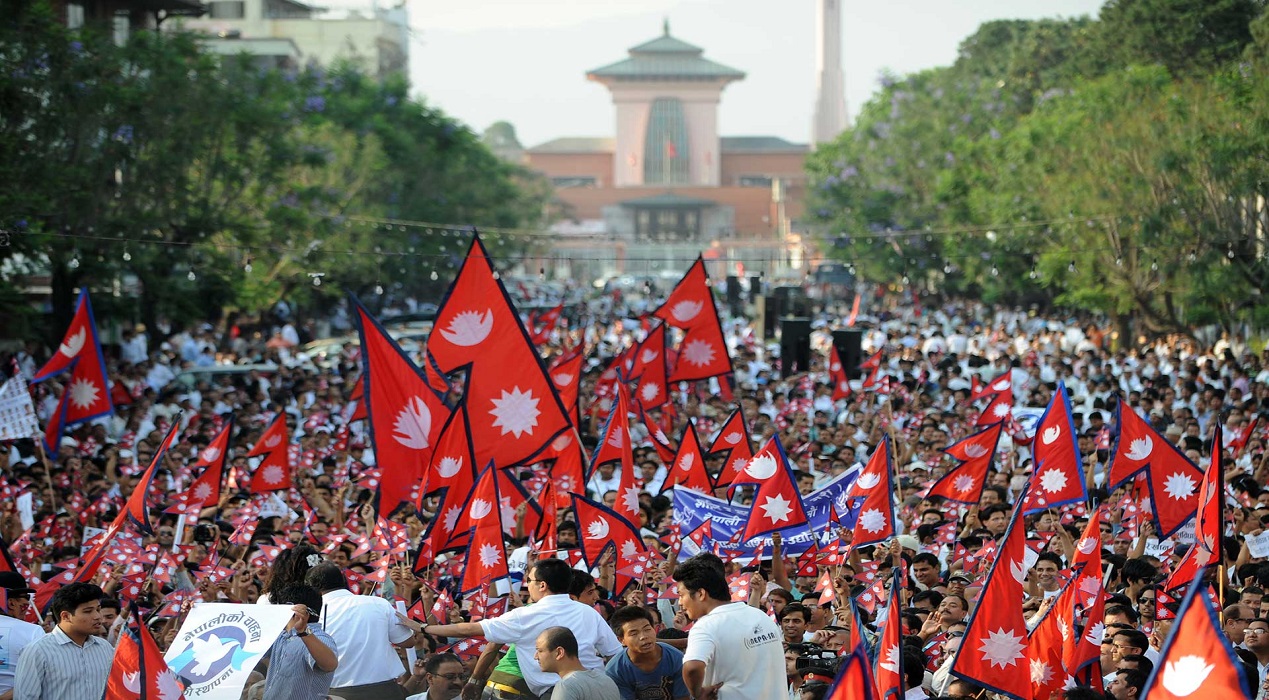

NEW DELHI — New Delhi is very worried about the resignation of Nepal’s Prime Minister KP Sharma Oli on September 9, 2025, during a wave of violent protests against the government. India has strong economic and strategic ties with its landlocked neighbor, thus the political instability is a complex problem that could affect commerce, investment, and regional stability.
Risk to Trade and Investment Between Two Countries
India is Nepal’s biggest commercial partner, and the upheaval might cut off the important economic link between the two countries. The political unrest has already made people worry that the supply chain will be badly affected. There could be delays at major border crossings like Raxaul-Birgunj and Sunauli-Bhairahawa. This would affect both Indian exporters and Nepali consumers who rely on imports of important goods like food, automobiles, and fuel products.
Indian investment in Nepal is also in danger, not only trade. More than 150 Indian businesses make up more than 35% of Nepal’s total foreign direct investment. Because of the current instability, the investment climate is not good and is not clear. Companies in India that work in areas like manufacturing, telecommunications, and power could lose money and have to wait a long time for big projects to be finished.
Put Energy Cooperation at Risk
The energy industry, which is an important part of contemporary India-Nepal collaboration, is one of the most dangerous areas. Both countries have made a lot of progress on cross-border hydropower projects. Indian companies are investing a lot of money to assist Nepal make the most of its huge hydroelectric potential.
But the increased political uncertainty could put these projects at risk by delaying development and making it harder for India to reach its strategic aim of getting up to 10,000 MW of power from Nepal in the next ten years. Joint ventures to build important cross-border transmission lines, like the Dododhara-Bareilly and Inaruwa-Purnea lines that were agreed upon in April 2025, may also run into big problems.
Effects on Geopolitics and Regional Security
Nepal’s internal political turmoil has significant geopolitical ramifications, particularly in relation to the escalating competition between India and China. If things stay unstable for a long time, Beijing may be able to gain more political and economic power in Nepal. India has been fighting hard to stop China’s expanding footprint, especially in the energy and infrastructure sectors. If there is a political vacuum, India’s position could become weaker.
Also, the long and open border between India and Nepal could become a security issue. A long period of turmoil could make it easier for criminals to cross borders and commit crimes like smuggling and other dangers to security. India has already increased security along the border as a proactive move to lower these threats.
The chaos also has a direct effect on several parts of the Indian economy. The tourism industry, which sees a lot of religious and ordinary travel between the two countries, might be hurt. The political situation in Nepal could also impede the flow of remittances from the vast number of Nepalese people who work in India.
A Way to Move Forward
The full scope of the impact is still unknown, but the situation demands for a deliberate and measured reaction. India and China will both be keeping a careful eye on things as they try to defend their political power and economic interests.
Even while there are imminent dangers, there is still a chance to bring stability back through good diplomacy. India’s declared “Neighbourhood First” policy and the recent high-level talks in August 2025 show that the country is committed to working together. Both countries will need to keep diplomatic channels open and focus on common economic goals, especially in the areas of energy and infrastructure, in order to deal with the aftermath and lessen the bad effects of the current political crisis.