

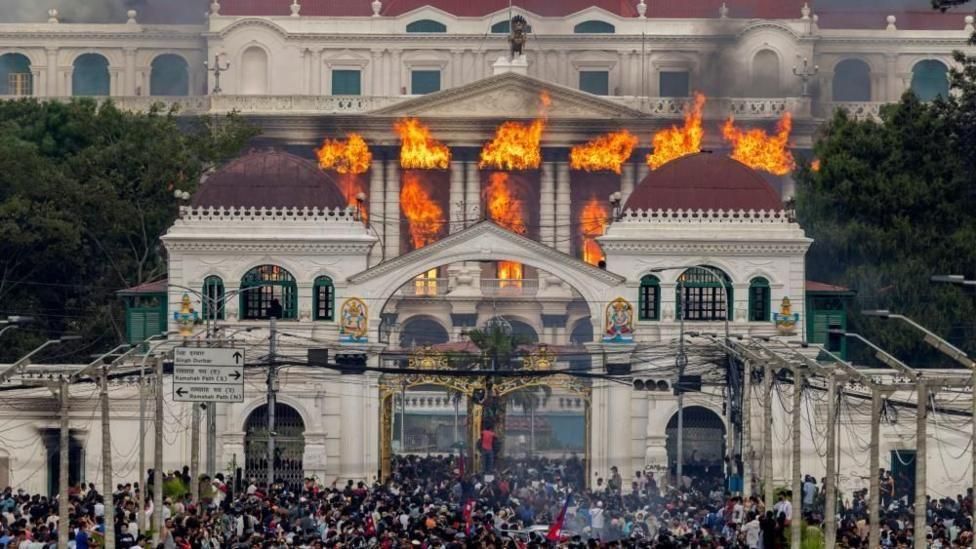

As Nepal cautiously returns to normalcy, the country’s government has set a definitive timeline for a democratic transition. President Ramchandra Paudel announced on Saturday that elections for the House of Representatives will be held on March 5, 2026. This decision follows a week of violent, youth-led “Gen Z” protests that resulted in 51 deaths, over 1,300 injuries, and mass prison breaks across the country.
The protests, initially sparked by a government ban on 26 social media platforms, quickly evolved into a broader anti-corruption movement. The demonstrations, which led to the burning of government buildings, including the parliament, ultimately forced the resignation of Prime Minister K.P. Sharma Oli. Former Chief Justice Sushila Karki was then appointed as the interim Prime Minister, with a mandate to stabilize the country and oversee the transition to new elections.
President Paudel, in a statement, appealed to all political parties to cooperate in the election process, calling it an opportunity to “move forward on the path of a more advanced democracy.”
The announcement was made as Nepal began to show signs of recovery. A nationwide curfew was lifted, allowing public transportation to resume and residents to move around the city. On Saturday, a candle march was held in Kathmandu in memory of those who lost their lives in the violence.
Meanwhile, interim Prime Minister Karki made her first official appearance, visiting a civil hospital to meet with injured protesters and their families. The Ministry of Health and Population has confirmed the death toll, noting that victims included an Indian national and three police personnel.
The recent political turmoil has drawn international attention, with Indian Prime Minister Narendra Modi congratulating Karki on her appointment and expressing confidence in her ability to “guide Nepal toward peace and stability.”