

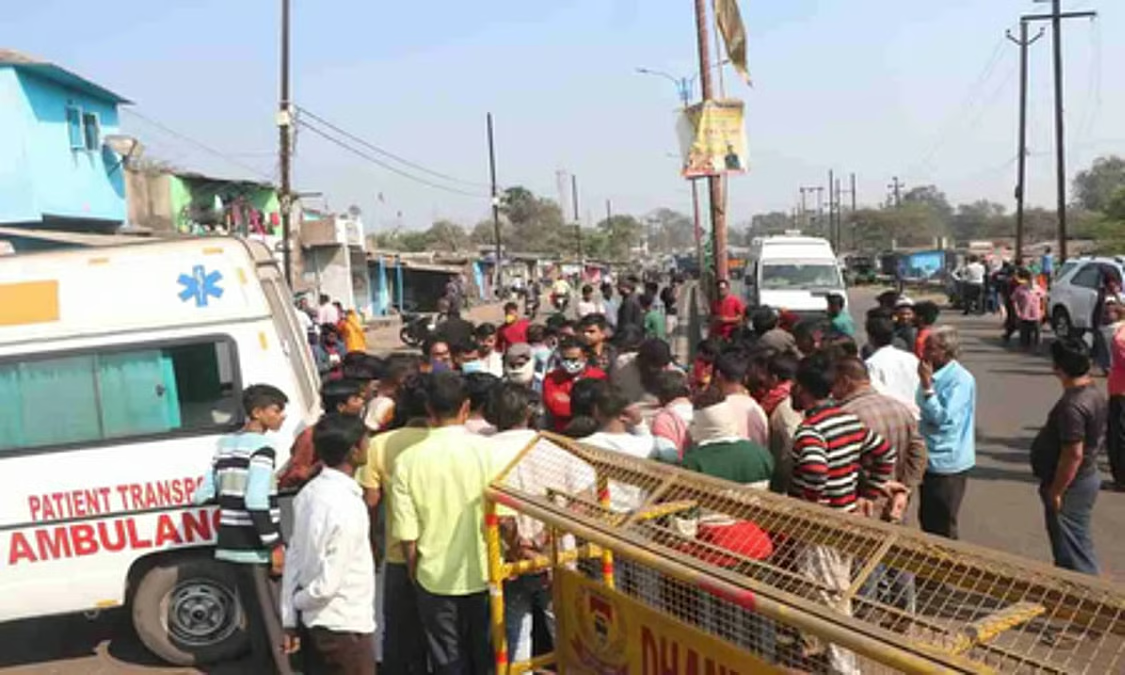

DHANBAD, JHARKHAND: A team from the National Disaster Response Force (NDRF) arrived in Dhanbad on Sunday to assess the level and nature of poisonous gas emissions leaking from underground coal mines, an incident that has already claimed the lives of two women and hospitalized over two dozen residents.
The team visited Rajput Basti in the Putki Balihari (PB) colliery area of Bharat Coking Coal Limited (BCCL), where the toxic gas, confirmed to be carbon monoxide, was first reported on Wednesday. Emissions have also been detected in Muslim Muhalla and near the Kenduadih police station building.
Dangerously High Gas Levels
The situation remains critical due to the concentration of the deadly, odorless gas:
- On Saturday, carbon monoxide (CO) levels in the air were recorded as high as 1,500 parts per million (ppm).
- This reading is approximately 30 times higher than the permissible workplace limit of 50 ppm averaged over an eight-hour shift.
- The high levels of CO, which affect the blood’s ability to carry oxygen, led to the deaths of two women and the hospitalization of mostly children and women at local medical facilities.
Protests and Relocation Efforts
As the NDRF team began its assessment—to determine the gas type, leakage level, and mitigation strategies—residents staged strong protests and attempted to obstruct the work.
- Eviction Allegations: Local resident Lal Bahadur Singh alleged that BCCL is using the gas leak crisis as a pretext to evict locals for a large-scale coal project.
- Relocation Viewings: Meanwhile, district administration and police personnel escorted residents to Belagadia Township to view quarters proposed for their relocation. This township was developed by the Jharia Rehabilitation and Development Authority (JRDA) specifically for people living in underground mine fire zones.
Despite the protests, officials are continuing efforts to address the emergency. Kenduadih police station officer-in-charge Prabodh Pandey confirmed the NDRF’s task: “The team is assessing the level of gas leakage, the type of gas being emitted, and how to mitigate it.”