


NEW DELHI — The controversy surrounding the swift withdrawal of the Class 8 Social Science Part 2 textbook has opened a window into the fragmented approval process at the National Council of Educational Research and Training (NCERT). While the textbook was intended to align with the National Education Policy (NEP) 2020, internal reports suggest that the final academic sign-off was bypassed by digital convenience and administrative silence.
The book, released on February 23, 2026, was pulled within 24 hours following a Supreme Court intervention regarding a chapter titled ‘The Role of Judiciary in Our Society’, which contained a section on judicial corruption.
1. The Three-Stage Approval Process
The creation of textbooks following the National Curriculum Framework-School Education (NCF-SE) 2023 is designed to pass through three layers of rigorous scrutiny:
- Stage 1: Textbook Development Team (TDT): The core writing group. For this book, it included Professor Michel Danino, Suparna Diwakar, and legal researcher Alok Prasanna Kumar.
- Stage 2: Curricular Area Groups (CAGs): Subject-wise bodies that oversee multiple TDTs. The CAG for Social Science is also headed by Professor Danino.
- Stage 3: National Syllabus and Teaching-Learning Material Committee (NSTC): A 19-member apex body responsible for the final academic approval. Its members include high-profile figures like Sudha Murthy, Shankar Mahadevan, and Sanjeev Sanyal.
2. The Breakdown: WhatsApp Approvals & “Digital Silence”
Investigation reveals that the “final” approval for the controversial text did not occur in a formal session.
- Flagged Concerns: During a hybrid meeting in September 2025, NCERT Director Dinesh Prasad Saklani reportedly flagged the section on “Corruption in Judiciary.” However, the TDT maintained the text, citing academic freedom.
- The Meeting That Never Was: The NSTC has not met formally since June 2025. Instead of a sit-down review, the draft was shared via WhatsApp and email.
- Assumed Consent: Many busy NSTC members—some based in the US and Canada—did not respond to the digital drafts. This silence was interpreted by the administration as “no objection,” allowing the book to move to the publication division in January 2026.
3. The Supreme Court Affidavit
In its affidavit to the Supreme Court on Wednesday, March 11, NCERT admitted that the draft was never formally placed before the NSTC, stating it was only “circulated digitally among a few members.”
- The Foreword Irony: Despite the internal debate, Director Saklani’s foreword in the book originally praised it for being “rooted in the Indian cultural context” and “fostering natural curiosity.”
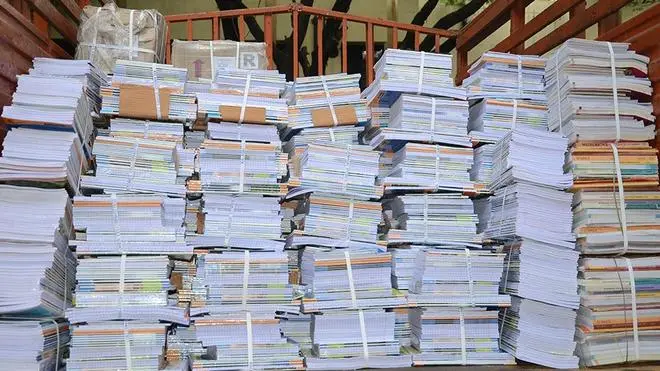
- The Recall: Of the 82,440 copies printed, only 38 were sold before the recall was initiated. All sold copies have since been retrieved following the Court’s February 27 order.
Key Stakeholders in the Textbook Row
| Committee | Key Figure(s) | Role in the Row |
| NSTC (Apex) | Sudha Murthy, Sanjeev Sanyal | Did not formally meet to approve the final draft. |
| CAG (Social Science) | Michel Danino | Forwarded the book for printing despite internal flags. |
| NCERT Director | Dinesh Prasad Saklani | Flagged corruption section but signed the foreword. |
| Education Ministry | Union Officials | Confirmed “systemic issues” in oversight will be fixed. |