

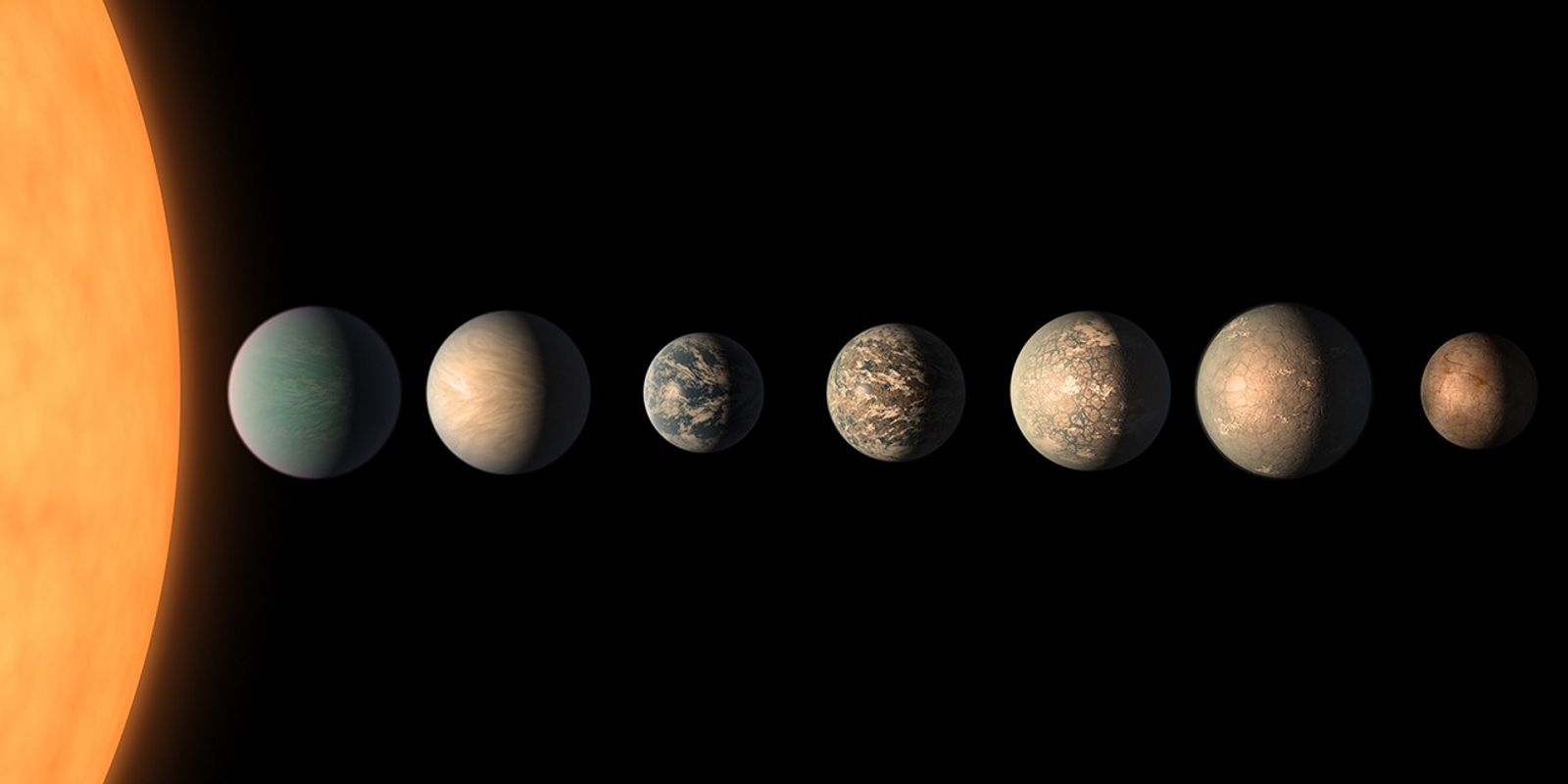

Throughout our galaxy, astronomers have found several different types of “super-Earth” exoplanets. These are worlds that are a few times bigger than Earth. These planets are a novel and interesting type. They are bigger than Earth but smaller than Neptune, and they can be rocky, gaseous, or a mix of the two. Even if there are a lot of them, we don’t know what they really are because none have been located in our solar system.
Studies backed by NASA have showed that these super-Earths are very different from one other. Some of these might be “water worlds” with deep oceans that cover the whole planet. Some, like TOI-715 b, Kepler-62 e, and Kepler-452 b, are in their stars’ habitable zones, where liquid water could be present. People sometimes nickname Kepler-452 b “Earth’s Cousin” because it circles a star that is similar to our Sun. It is thought to be rocky, although it may be too hot for life.
But not all super-Earths are peaceful. Some, like Kepler-725 c, have very eccentric orbits and only spend part of their time in temperate zones. Some, like LHS 3844 b, are thought to be tidally locked, which means that one side is always heated and the other is always freezing. They probably don’t even have an atmosphere.
The finding of super-Earths is incredibly important for science because they don’t fit into the usual classifications of terrestrial and gigantic planets. The fact that they are so common makes us wonder about our own solar system, which doesn’t have any of these planets. Researchers are confident that upcoming missions like PLATO and the James Webb Space Telescope (JWST) will help make it clearer which super-Earths are rocky, liquid, or gaseous, and maybe even show evidence of life.