

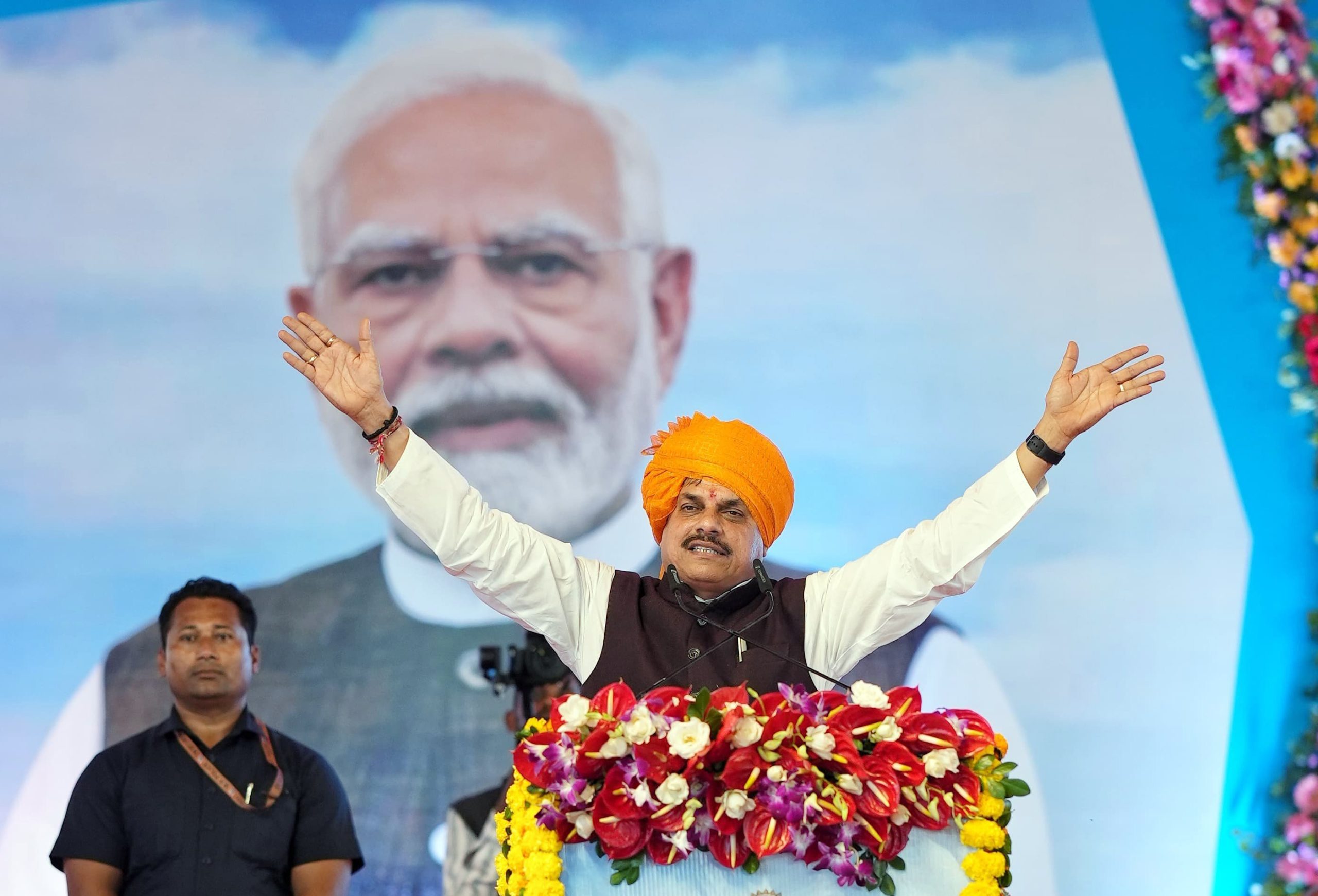

In a landmark development that marks the most significant breakthrough in India’s decades-long battle against Maoist insurgency, Madhya Pradesh and Maharashtra—two pivotal states in the Red Corridor—have officially declared themselves Maoist-free. The announcement comes months ahead of the government’s self-imposed deadline of March 31, 2026, signalling a decisive collapse of Maoist dominance across central India.
This early declaration is being hailed as a historic step toward ending the Red Terror that once gripped regions like Balaghat, Gadchiroli and other forested belts. For decades, these areas were synonymous with violence, parallel administrations run by Maoist cadres, and deadly ambushes targeting security forces. Today, the echo of gunfire that once reverberated through these jungles is fading fast.
The Turning Point: Assurance Followed by Action
The momentum towards this breakthrough began on November 1 in Patna during NDTV’s Powerplay interaction, where Editor-in-Chief and CEO Rahul Kanwal questioned Union Home Minister Amit Shah on the government’s promise to eliminate Maoism by the 2026 deadline and how top Maoist commanders, including Madvi Hidma, had managed to evade security forces for years.
Amit Shah responded by highlighting the dramatic shrinking of the Red Corridor. Maoist influence, he said, had reduced from nearly 130 districts to just 11, with active violence limited to only three. He emphasised that most Maoist leaders had been neutralised, arrested, or forced to surrender—leaving only remnants of the once-potent insurgency.
That assurance soon translated into decisive ground action. The killing of Maoist commander Madvi Hidma—just 12 days before the November 30 deadline—became a defining moment. Hidma’s elimination was seen as a symbolic and strategic shift, signalling that the Maoist hierarchy was crumbling.
A Corridor in Collapse
The MMC zone—comprising the tri-junction of Madhya Pradesh, Maharashtra and Chhattisgarh—has witnessed a rapid weakening of Maoist presence. Following the surrender of senior Maoists Ramdher and Anant, NDTV reported that only six Maoists remained active in the region, including the notorious Chhota Deepak. Within a day, both Deepak Uike and Rohit surrendered in Balaghat, further accelerating the collapse.
In the last 42 days alone, 42 Naxalites with cumulative bounties of ₹7.75 crore have surrendered in the MMC zone. These were cadres who once operated with impunity in the forests, running their own shadow governance and targeting state authority.
Political Leadership Responds
Madhya Pradesh Chief Minister Dr Mohan Yadav credited the achievement to the leadership of Prime Minister Narendra Modi and the strategic guidance of Home Minister Amit Shah. He highlighted the courage and sacrifice of security forces, noting that the Balaghat Police offered its “final salute” on December 11 after completing the anti-Maoist mission.
Maharashtra Chief Minister Devendra Fadnavis echoed similar sentiments, stressing that coordinated interstate operations played a critical role in dismantling Maoist infrastructure and networks.
The Situation in Chhattisgarh
Chhattisgarh, once the epicentre of Red Terror, continues to face residual threats, but its transformation is equally striking. Years ago, more than 12,000 armed Maoists operated across Bastar. Today, only a few squads remain, and they are under immense pressure. Intelligence inputs suggest only a handful of senior leaders are still active, including Battalion No. 1 chief Barse Deva alias Sainath, who carries a ₹25 lakh bounty and is believed to command a shrinking cadre of 100–150 fighters.
Key leaders of the once-powerful Dandakaranya Special Zonal Committee—formerly home to over 30 dreaded commanders—are now reduced to a small, ageing group such as Paparao (Chandranna), Mangu Dada, and Vasudev Rao of Telangana. The Maoist Central Committee, once consisting of 21 members, now has only four leaders of operational significance.
Security Forces: “Surrender or Face Action”
Bastar IG Sundarraj P has delivered a clear message: Maoism is in its final phase. He said that the remaining cadres have only two choices—surrender and join the mainstream, or face the consequences of intensifying operations.
A State That Has Paid a Heavy Price
Chhattisgarh’s journey through 25 years of violence has been long and painful. Government data (till October 2025) reveals:
- 3,404 encounters
- 1,541 Maoists killed
- 1,315 security personnel martyred
- 1,817 civilians killed
- 7,826 Maoists surrendered
- 13,416 arrested
This staggering toll highlights the scale of conflict the region has endured.
A Historic Shift Toward Peace
Today, the Red Corridor—once considered India’s most significant internal security challenge—is on the brink of becoming history. With commanders neutralised, cadres surrendering, and territories reclaimed, the narrative of these jungles is being rewritten.
Areas where establishing a police camp once meant certain death now witness regular movement of development vehicles. Roads, schools, health centres, and economic activity are slowly replacing landmines and gunfire.
India stands at an inflection point: after decades of violence, fear and sacrifice, large parts of central India are finally witnessing the return of peace and development.