


New Delhi: Union Minister of State for External Affairs and Textiles Pabitra Margherita concluded a successful official visit to New Zealand and Fiji from May 8–12, reaffirming India’s commitment to strengthening bilateral relations in the Indo-Pacific under the Act East Policy.
In New Zealand, Margherita held a bilateral meeting with Deputy Prime Minister and Foreign Minister Winston Peters, where both leaders discussed the entire spectrum of India–New Zealand ties. He also met Prime Minister Christopher Luxon on the sidelines of the India-New Zealand Business Council (INZBC) Dialogue 2025.
Delivering the Keynote Address as Guest of Honour at the INZBC Dialogue on May 9, Margherita emphasized India’s growing trade and strategic cooperation with New Zealand. He also held talks with Todd McClay, Minister for Trade and Agriculture, in Auckland.
At the Mahatma Gandhi Cultural Centre, Margherita addressed the Indian community, appreciating their role in deepening people-to-people ties and reaffirming India’s strong support for its global diaspora.
Fiji: Honouring Shared History and Future Cooperation
In Fiji, Margherita participated as Guest of Honour at the 146th Girmit Day commemoration in Labasa on May 12, commemorating the arrival of indentured Indian labourers. Fijian Prime Minister Sitiveni Rabuka was the Chief Guest.
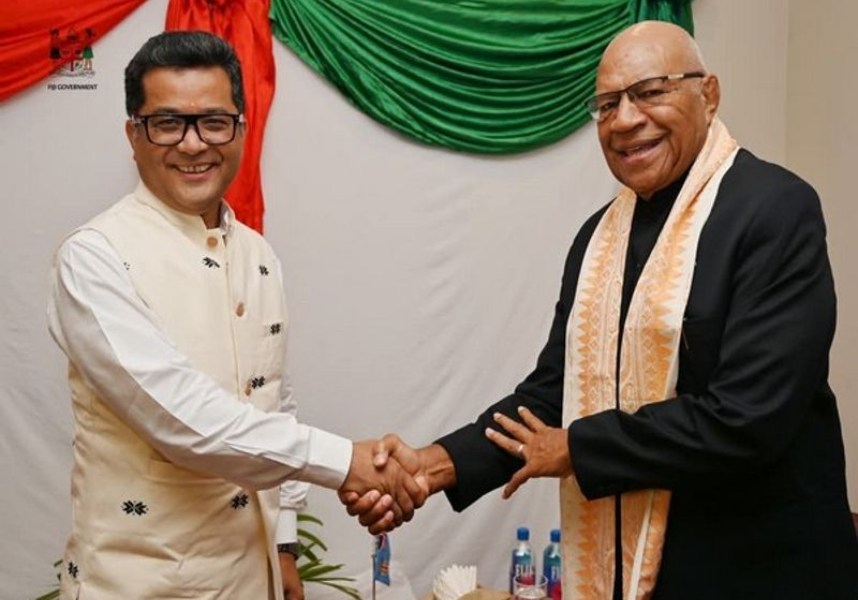
Margherita also called on Fijian President Ratu Naiqama Lalabalavu, Prime Minister Rabuka, and Deputy PM Biman Prasad. Discussions spanned economic cooperation, development partnership, and people-centric initiatives.
A key highlight was the signing of a Memorandum of Understanding on Pharmacopeial Cooperation, witnessed by Margherita, marking a step forward in health collaboration between India and Fiji.
He also virtually inaugurated a Yoga Centre in Seaqaqa along with Fijian Minister Agni Deo Singh and interacted with alumni of the ICCR and ITEC programmes, underlining India’s enduring cultural and educational outreach.
Strategic Significance
The Ministry of External Affairs noted that the visit was “very well received” and significantly contributed to enhancing bilateral ties with both nations. It aligns with India’s broader diplomatic outreach in the Indo-Pacific and its Act East Policy, aiming to strengthen economic, cultural, and strategic partnerships across the region.