

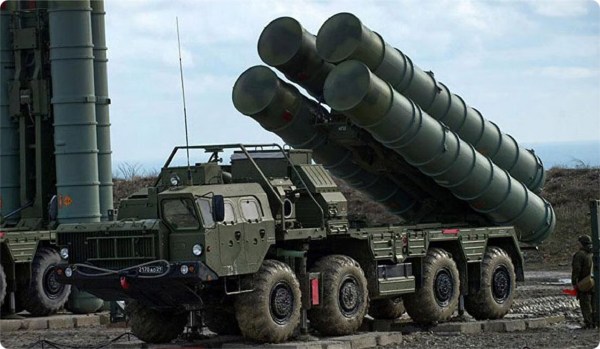

NEW DELHI— Prime Minister Narendra Modi’s unveiling of Mission Sudarshan Chakra on Independence Day is the plan for a new, multi-layered air defense network for India. The system is meant to protect all of the country’s important, civilian, and religious sites. Not only is it a way to protect yourself, but it also has an offensive part to scare off enemies.
National security strategists say that the system will use a lot of different technologies that work together in a complicated way:
Long-range radars to find dangers that are coming in.
Satellites, planes, and unmanned aerial vehicles (UAVs) send in surveillance data.
Long-range missiles that can stop threats from the air.
This whole security plan was thought up after recent wars, especially Operation Sindoor, when Pakistan fired about 1,000 missiles against India. Some of these threats were stopped by current anti-aircraft and surface-to-air missile systems, while others were stopped by jamming command and control networks. The effectiveness of Israel’s Iron Dome system, which stopped 498 of the 500 ballistic missiles fired by Iran this year, showed that a stronger and more complete system is needed.
Fighting against threats that are becoming more complex and changing
The creation of Mission Sudarshan Chakra is also a response to the changing nature of Pakistan’s missile arsenal, which has been shaped by China and Turkey. Pakistan’s Ababeel surface-to-surface ballistic missile, which has a range of 2,200 km and MIRV (Multiple Independently Targetable Reentry Vehicles) warheads, is a big problem. The new technology is meant to safeguard India’s large population from dangers like small Kamikaze drones and advanced ballistic missiles.
Pakistan employed Fatah I and Fatah II missiles, as well as Chinese CM 400 AKG missiles fired from JF-17 jets and Turkish Yiha drones, during Operation Sindoor. India’s present air defense systems were able to stop all of these threats, but the large number and variety of the attack showed that an improved, integrated system is needed.
Long-Term Vision and Offensive Capabilities
Mission Sudarshan Chakra will not only be able to defend itself well, but it will also be able to attack well. India is working on short-, medium-, and long-range ballistic and cruise missiles, such the Pralay and Nirbhay, that can get past enemy defenses and radars and provide India a “massive retaliation capability.” The Indian Navy is also working on long-range missiles that can hit enemy ships from both land and sea.
The project is a long-term one, and the Cabinet Committee on Security has already approved the DRDO’s Project Kusha, which intends to create long-range interceptors for the Indian Air Force and Navy by 2030. The purpose of Mission Sudarshan Chakra is to create a national security shield that will cover all public locations by 2035.