

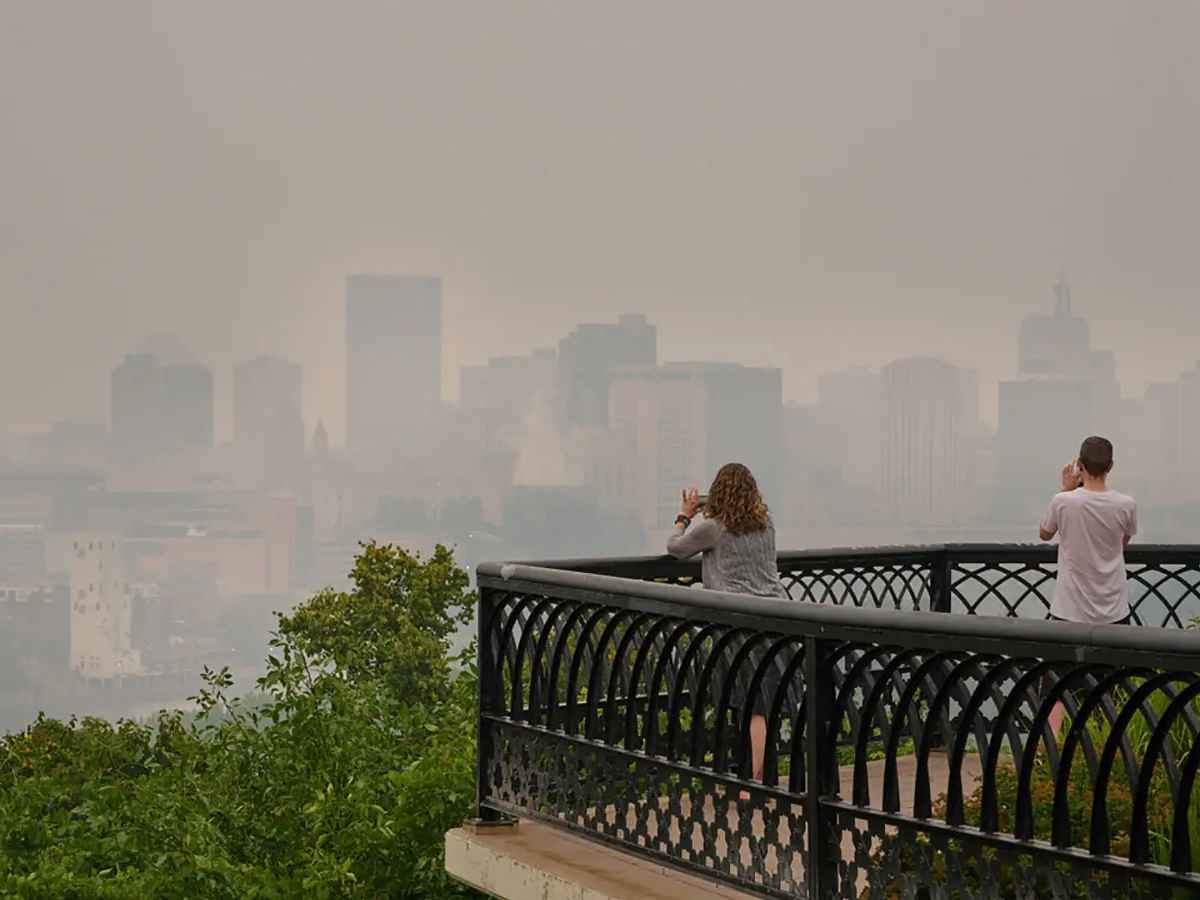

August 3, 2025: Minneapolis has recorded the second-worst air quality in the world, with its Air Quality Index (AQI) reaching 159 on Friday, ranking just below Kinshasa, Democratic Republic of the Congo. The unhealthy air, caused by thick smoke from Canadian wildfires, has created a hazardous environment for all residents, according to IQAir.
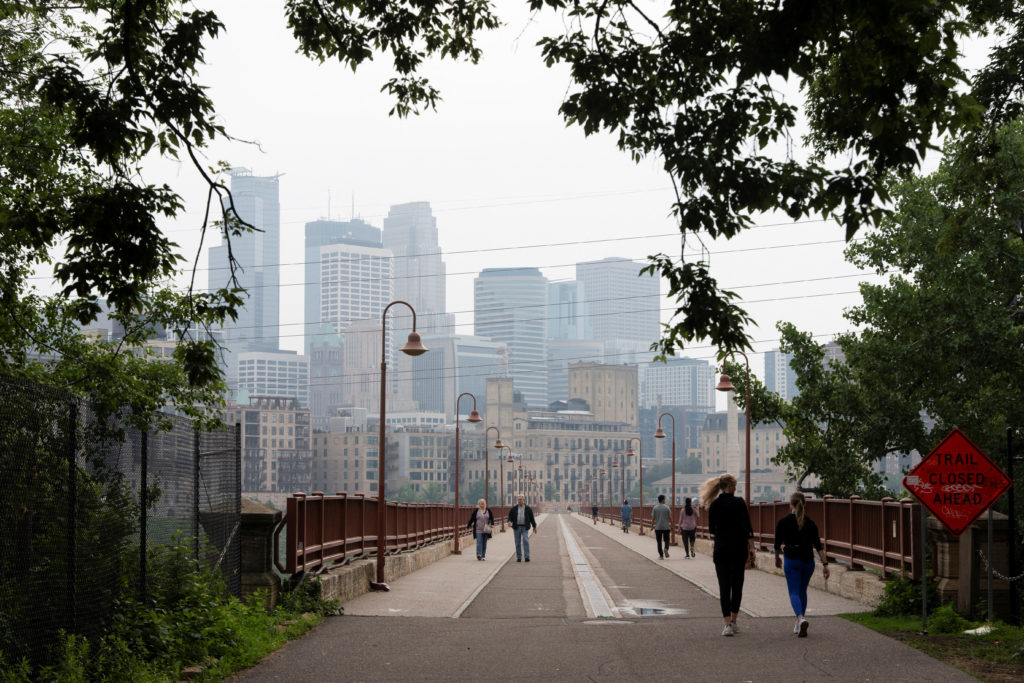
The smoky haze, carried south by northerly winds, has affected a large swath of the US Midwest, prompting statewide air quality alerts in Minnesota and several other states. While Chicago’s air quality improved to 17th globally, Minneapolis’s worsened, with some neighborhoods reaching an AQI of 170.
This situation highlights the growing cross-border impact of climate change-fueled wildfires. The fine particulate pollution (PM2.5) from the smoke can penetrate deep into the lungs and bloodstream, posing significant health risks, especially to vulnerable populations. Health experts have warned of an increased risk of asthma attacks, cardiovascular stress, and eye irritation.

In response, the National Weather Service and health officials have urged residents to take protective measures, including limiting outdoor activities, keeping windows closed, and wearing N95 masks when outside for extended periods. The crisis has also reignited debates about environmental preparedness and public health policy in the US.