

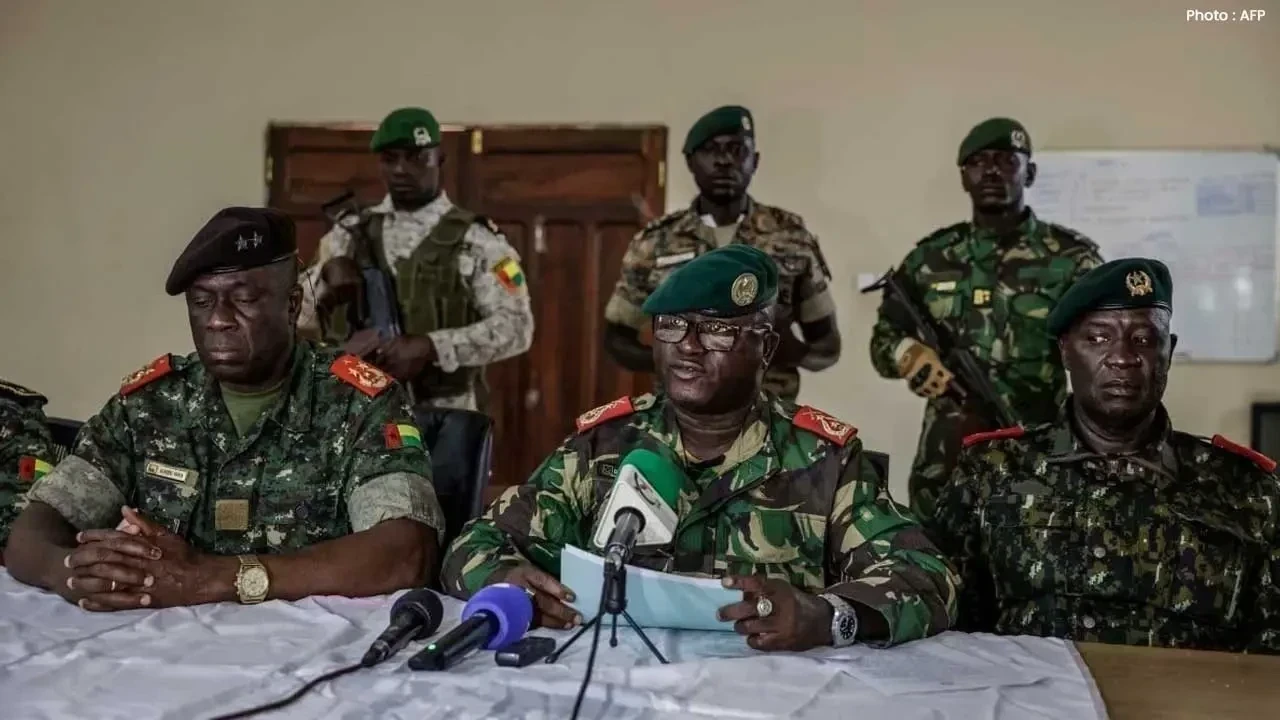

Soldiers in Guinea-Bissau staged a coup d’état on Wednesday, November 26, 2025, just a day before the scheduled release of results from the presidential and legislative elections held on November 23. The military, identifying itself as the ‘High Military Command for the Restoration of National Security and Public Order,’ has seized state power, suspended all constitutional institutions, and arrested President Umaro Sissoco Embaló.
Rationale for the Coup
The military officers, led by figures like Brigadier General Dinis N’Canha (also known as Dinis Incanha), stated they acted to prevent an alleged plot to manipulate the election results and destabilize the country.
- Claimed Plot: The junta asserts that the takeover was in response to the discovery of an “ongoing plan” orchestrated by “certain national politicians” and “well-known local and foreign drug barons” to alter the constitutional order.
- Political Context: Both incumbent President Embaló and his main challenger, Fernando Dias, had prematurely claimed victory from the closely contested vote. This heightened tension and the country’s history of political instability, deeply intertwined with its role as a transit hub for cocaine from Latin America to Europe.
- Counter-Claim: Dias and the opposition party, which was barred from running but supported him, accused President Embaló of staging a “false coup” to avoid defeat and prevent the release of results.
Immediate Actions by the Junta
The military has taken swift and decisive control of the West African nation:
- Leadership Change: President Embaló has been deposed and arrested.
- Government Control: The junta announced it will “exercise the powers of the state effective immediately.” On Thursday, General Horta N’Tam was sworn in to lead the High Command as a transition president for one year.
- Institutions Suspended: All state institutions and the ongoing electoral process have been immediately suspended.
- Security Measures: Land, air, and sea borders have been closed, and an overnight curfew has been imposed across the nation.
Instability and International Reaction
This reported coup is the latest in a long series of coups and attempts in Guinea-Bissau since its independence from Portugal in 1974, with drug trafficking often cited as a core factor deepening political instability.
International bodies, including the African Union and the regional bloc ECOWAS, have unequivocally condemned the military takeover. They have called for the immediate and unconditional release of President Embaló and all detained officials, urging a return to the constitutional order and democratic process.