

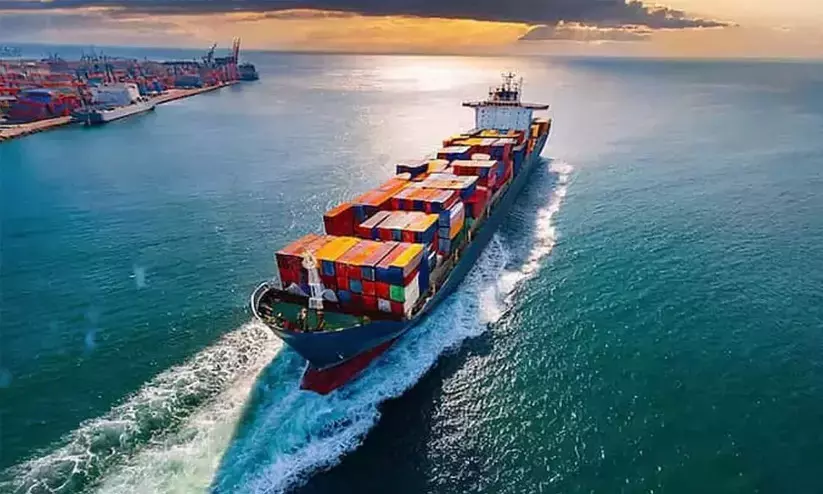

The ongoing conflict in the Middle East is starting to disrupt food supply chains in the United Arab Emirates, raising concerns for import-dependent Gulf economies even as supermarket shelves remain largely stocked.
Inside a Japanese restaurant at a five-star hotel overlooking the skyline of Dubai, frozen fish stocks are still sufficient for now. However, the restaurant’s manager says the weekly delivery of fresh seafood has already stopped, with no clear timeline for when shipments will resume.
Across the UAE, food retailers are working to maintain supplies by rerouting shipments, increasing air cargo deliveries and relying on existing reserves.
Strait of Hormuz Disruptions Hit Global Trade Routes
The strain on supply chains comes as the Strait of Hormuz, one of the world’s most important maritime chokepoints, faces disruption due to escalating tensions following military strikes by United States and Israel on Iran.
Iran retaliated with drone and missile attacks across the Gulf, targeting cities including Dubai and other regional hubs. The conflict has disrupted shipping lanes used to transport food products ranging from Indian rice and Australian meat to Indonesian coffee.
Shipping delays have already left several cargoes stranded or rerouted, affecting both suppliers and retailers.
UAE Imports Around 90% of Its Food
The situation is particularly sensitive for the UAE, which imports around 90% of its food.
Although supplies remain stable for now, experts warn that a prolonged disruption to maritime routes could create significant challenges.
Eckart Woertz, director of the GIGA Institute for Middle East Studies in Hamburg, said the global impact could be significant if shipping routes remain blocked.
“Everybody loses when shipping via the Strait of Hormuz is interrupted,” Woertz said, adding that current reserves could keep the system stable for a few months if the conflict does not escalate further.
Retailers Turn to Air Cargo to Maintain Supplies
Major retailers are already adapting their logistics strategies.
Retail giant Lulu Group International has started chartering cargo flights to maintain food supplies, according to CEO Saifee Rupawala.
The company has flown in meat, fruits and vegetables from India, while arranging additional cargo flights from South Africa, Sri Lanka and Kenya. Each aircraft operated by Etihad Airways is carrying roughly 80 tons of goods.
Lulu has also dispatched a cargo ship from Mumbai carrying around 500 containers of staple foods, including rice.
The UAE government is reportedly supporting these efforts by subsidising logistics costs where necessary.
Export Bans and Shipping Delays Add Pressure
The supply chain challenge has been compounded by new restrictions from Iran.
Iran, one of the UAE’s largest suppliers of fresh fruits and vegetables, has temporarily banned exports of food and agricultural products, according to the semi-official Tasnim News Agency.
Meanwhile, the UAE’s imports of Brazilian poultry — which totalled nearly 480,000 tons last year — have also faced disruptions.
The Brazilian Animal Protein Association (ABPA) said shipping companies initially suspended bookings to the Middle East following the first strikes on Iran. Although some shipments have resumed to neighbouring countries such as Saudi Arabia, Oman and Yemen, cargo destined for the UAE may need to be transported by land.
ABPA President Ricardo Santin warned that rising logistics costs could eventually push up food prices in the region.
Rice and Coffee Shipments Also Delayed
Indian exporters have also reported difficulties shipping basmati rice to the Middle East.
According to Satish Goel, president of the All India Rice Exporters Association, nearly 400,000 tons of basmati rice are currently stuck at ports or in transit due to shipping disruptions.
Elsewhere, coffee shipments from Indonesia are also facing delays.
Two containers carrying 38 tons of coffee beans bound for Jebel Ali Port in Dubai are currently stranded in Oman while exporters consider rerouting options.
UAE Government Says Food Reserves Are Stable
Despite the challenges, UAE authorities say the country has sufficient reserves to weather short-term disruptions.
Abdulla Bin Touq Al Marri, the UAE’s Minister of Economy, said the country maintains strategic reserves of essential food items for four to six months.
Officials are also closely monitoring retail prices and have instructed supermarkets not to increase prices unnecessarily.
At premium supermarket chain Spinneys, marketing and e-commerce chief Warwick Gird said no price increases have been passed on to consumers so far.
Local Food Production Offers Some Buffer
The UAE has also been expanding domestic agriculture as part of its food security strategy.
Companies such as Pure Harvest Smart Farms operate high-tech greenhouses producing vegetables like tomatoes locally.
CEO Sky Kurtz said current production could continue uninterrupted for several weeks. However, prolonged disruptions could eventually affect supplies of imported inputs such as fertilisers and pollination insects.
“Even if sea freight remains disrupted, alternatives such as land and air routes exist,” Kurtz said. “The real question is how much it will cost.”