

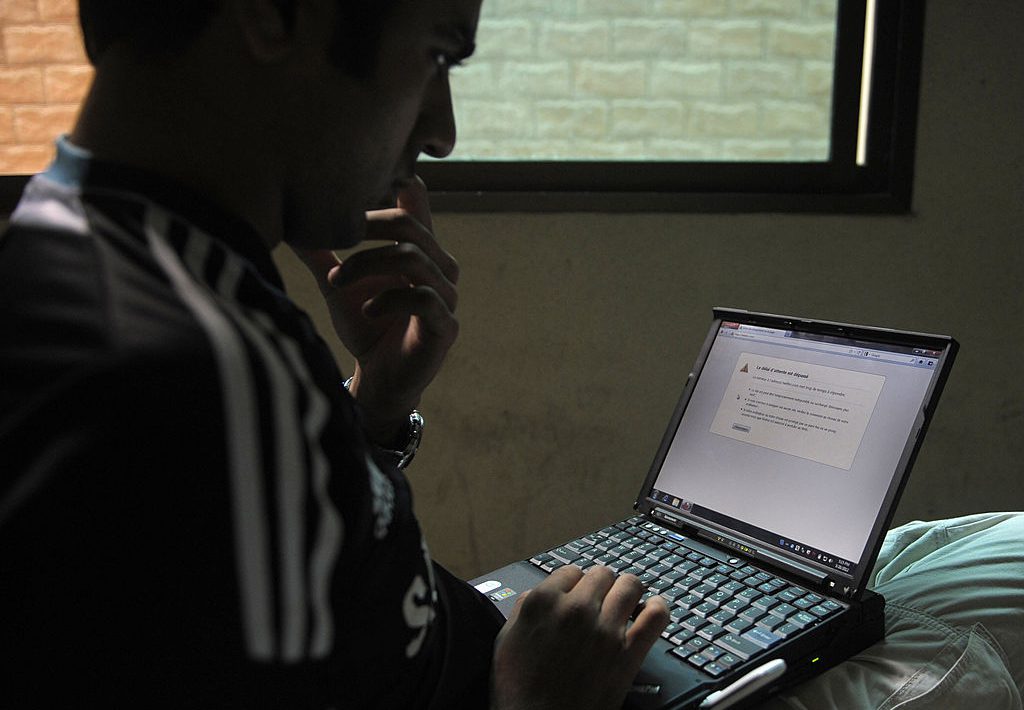

ISLAMABAD — Amnesty International released a study on Tuesday that says Pakistani officials are allegedly spying on millions of its own citizens, including well-known politicians and journalists. The year-long research, called “Shadows of Control: Censorship and Mass Surveillance in Pakistan,” explains how Pakistan’s large monitoring network has grown with the use of equipment bought from private foreign corporations.
The report, which was put together with help from Paper Trail Media, The Globe and Mail, and other international partners, says that Pakistan’s “illegal mass surveillance and censorship expansion is powered by a network of companies based in Germany, France, the UAE, China, Canada, and the United States.”
According to Amnesty International, the Armed Forces and the Inter-Services Intelligence (ISI) are employing two main systems for their spying: the Lawful Intercept Management System (LIMS) and the Web Monitoring System (WMS 2.0), which is a new firewall.
The Global Supply Chain for Watching
The analysis shows that there is a secret worldwide supply network that has given Pakistan advanced capabilities for spying and censorship.
The Pakistan Telecommunications Authority (PTA) requires private enterprises to implement the Lawful Intercept Management System (LIMS) on all telecommunications networks. It lets the Armed Forces and the ISI listen in on and see a lot of consumer data, like phone calls, text messages, and visits to websites. The report says that the LIMS uses technology from the German business Utimaco, which was bought by the Emirati company Datafusion.
Web Monitoring System (WMS 2.0): The report shows how this firewall has changed over time. In 2018, the first version (WMS 1.0) was set up utilizing technology from the Canadian business Sandvine (now AppLogic Networks). After Sandvine sold off its business in 2023, a new and better version (WMS 2.0) was made. The report says that this new system employs technology from Geedge Networks, a company based in China. Amnesty thinks that this is a commercialized version of China’s “Great Firewall.” Niagara Networks from the US and Thales from France are said to be the ones who develop the hardware and software for WMS 2.0.
A Dystopian World
Agnès Callamard, the Secretary General of Amnesty International, called the situation a “dystopian reality.” She remarked, “In Pakistan, your texts, emails, calls, and internet access are all being watched.” “This constant surveillance… makes it very hard to express yourself and get information.”
Jurre van Bergen, a Technologist at Amnesty, says that the analysis shows that the LIMS and WMS 2.0 are sponsored by public money and use international technology, but they are being used to crush dissent and create “severe human rights harms” against the people of Pakistan.
In practice, LIMS is used for illegal and random spying. State agents, including ISI personnel, may easily find out where a person is by entering their phone number into the system. They can even see their calls and text messages. Unencrypted HTTP sites let people see their content, but encrypted HTTPS connections show which sites people visit. The research says that the LIMS may be used to spy on more than four million people at once because there aren’t enough technical and legal protections in place.
The WMS 2.0 is far more powerful than before because it lets authorities block VPNs and any website that they think has “unlawful” content. Amnesty International says that Pakistan’s legal system doesn’t really protect people from this extensive surveillance.
The report ends by telling the international firms involved to accept responsibility for their part in making these surveillance systems possible. It says that “human rights limitations to the search for profit in markets… have all been ignored.”