

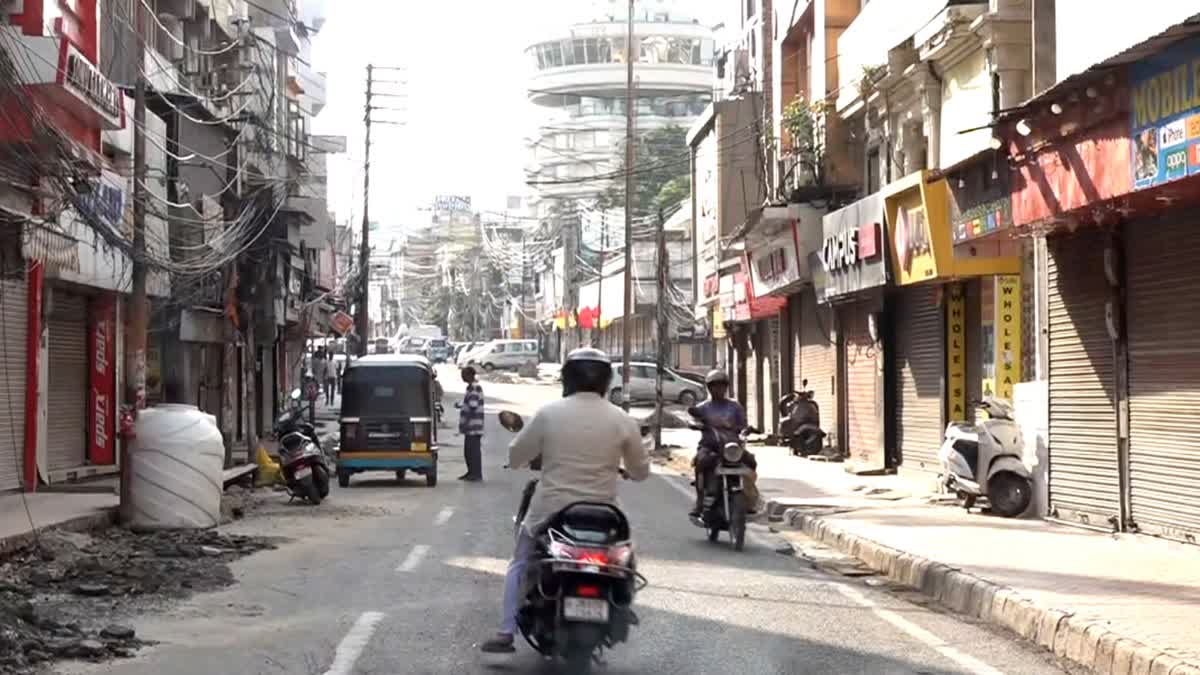

Following the May 10 ceasefire understanding between India and Pakistan, life is gradually inching back to normal in the Rajouri district of Jammu and Kashmir. Although fear continues to grip residents, signs of daily activity have started to re-emerge as shops reopen and people resume routines.
Locals who had endured intense cross-border shelling over the past weeks are slowly reclaiming their lives, even as uncertainty remains.
Speaking to media, Neeras Sin, a local hotel worker, shared the emotional toll of the recent violence.
“When the shelling started, we closed our shops and went home. Even now, we shut shops by 4 or 5 pm and return early in the morning. Earlier, we used to open around noon, and customers would come in regularly, but footfall is still very low.”
He noted that while the market has shown some signs of recovery, schools and madrasas remain closed, with many children sent back to their villages.
“The market is not yet back to normal,” he added.
Another resident, Khalilur Rahman, echoed these sentiments.
“Shops have opened, and essential goods are being bought, but people are still scared. There’s hope that if the atmosphere remains peaceful, normalcy will fully return.”
Rahman also pointed out the economic hardships faced by middle-class families, particularly those dependent on daily income.
“Middle-class families who earn and eat daily are struggling. For such people, this kind of instability is very difficult. In times of shelling, everything collapses. For people who earn during the day and eat at night, survival becomes very hard,” he said.
An 85-year-old resident from the border area delivered an emotional appeal for long-lasting peace:
“I have lived through the wars of 1947, 1965, and 1971, but I’ve never seen such terrifying shelling in my lifetime. We just want to live without fear. People have started opening their shops again, but the fear still lingers in our hearts. Labourers have left, work is halted, and children are unable to attend school. Only peace can bring life back to normal here.”
In construction zones, work remains halted. Ravid Ahmed, employed in a road and bridge project, explained the disruption:
“When shelling started, workers left. Labourers from outside, including Bihar, haven’t returned yet. Work on the canal bridge is still suspended.”
He added, “I had gone home too. I’ve returned, but the labourers haven’t. Until they come back, work can’t restart.”
The fragile calm follows Operation Sindoor, India’s military response to the April 22 Pahalgam terror attack, which killed 26 people. The operation, launched on May 7, led to the elimination of over 100 terrorists linked to groups like Jaish-e-Mohammed, Lashkar-e-Taiba, and Hizbul Mujahideen.
In retaliation, Pakistan launched cross-border shelling and attempted drone strikes along the Line of Control and border areas in Jammu and Kashmir. In response, India carried out a coordinated counterattack, damaging radar systems, communication centers, and airfields across 11 Pakistani airbases.
An understanding for cessation of hostilities was announced on May 10, bringing relative calm — but not yet complete normalcy — to the border region.