

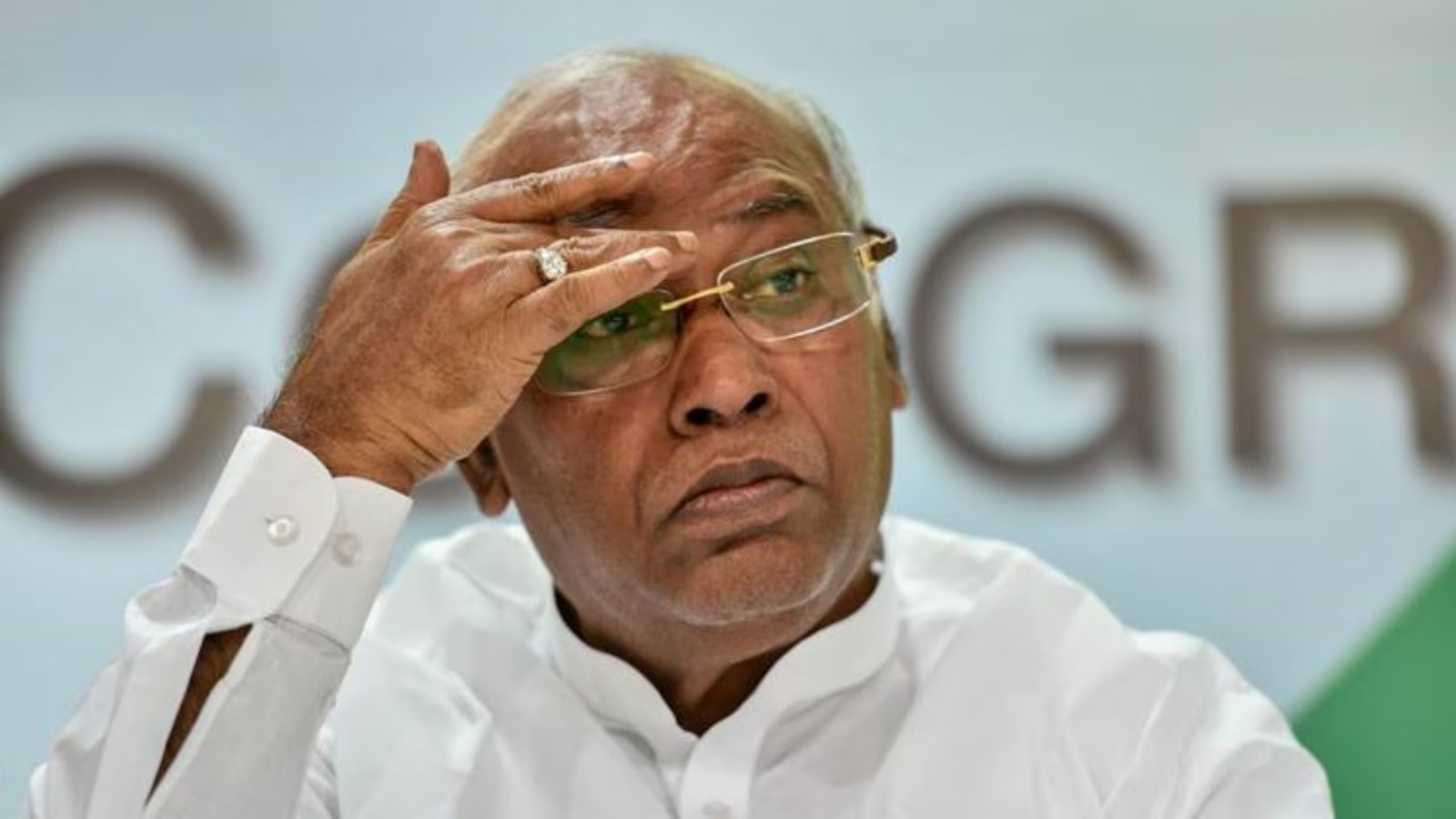

Bhubaneswar (Odisha), July 11: Congress President Mallikarjun Kharge launched a scathing attack on the BJP-led central government during the ‘Samvidhan Bachao’ rally in Odisha, accusing it of dividing the country along religious and societal lines. He urged the youth of India to “wake up” and safeguard the Indian Constitution.
“I urge the youth to wake up, rise, and protect the Constitution. Only then will you be safe. BJP is dividing society and religion. They want to divide us,” Kharge declared.
🔥 Attack on BJP & RSS Over Constitutional Ideals
Kharge criticised both the BJP and its ideological parent, the Rashtriya Swayamsevak Sangh (RSS), accusing them of disrespecting the poor and undermining constitutional values, especially the principles of secularism and socialism.
“BJP says they follow the Constitution, but they want to remove the words ‘secular’ and ‘socialist’. Even their party constitution mentions these values — do they follow it?”
⚖️ Context: RSS Leader’s Controversial Comments
Kharge’s remarks come in response to RSS General Secretary Dattatreya Hosabale’s recent comments on June 26, where he questioned the inclusion of ‘secular’ and ‘socialist’ in the Preamble during the Emergency (1975–77), arguing they were inserted forcibly and should be reconsidered.
Hosabale stated that the Emergency was not just misuse of power but an attack on civil liberties and democratic values.
He added, “Those who imposed the Emergency have never apologised — not even on behalf of their ancestors.”
🧭 Kharge’s Political Message: Save the Constitution, Save Yourself
Framing the BJP’s alleged actions as a threat to constitutional democracy, Kharge emphasized the need for public vigilance, especially from the younger generation.
“This isn’t just about politics, it’s about the future of the nation. The youth must defend the Constitution to protect their own future.”
🗳️ Backdrop: Rising Political Polarisation Ahead of State Elections
Kharge’s strong rhetoric is part of the Congress’s ongoing campaign to position itself as a protector of the Constitution, especially amid growing concerns over electoral transparency, freedom of expression, and religious polarisation — key issues as multiple states head into elections.