

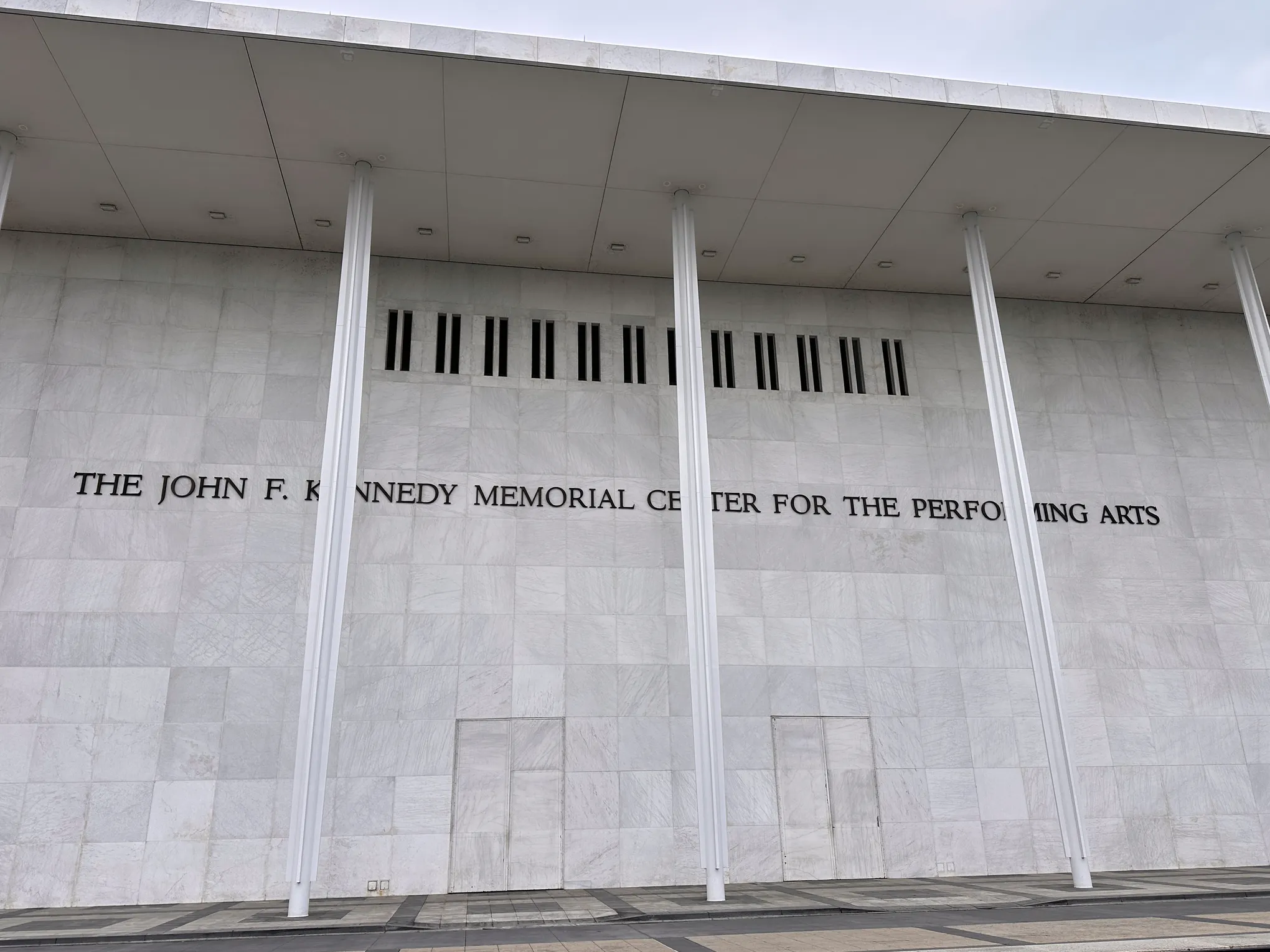

Washington’s most prestigious performing arts venue, the Kennedy Center, will be renamed the Trump-Kennedy Center following a vote by its board — a move that marks an unprecedented step for a living US president and has ignited political controversy.
The White House confirmed on Thursday that the decision was taken by the Kennedy Center’s board, members of which were largely appointed by President Donald Trump earlier this year after his return to power. The centre, originally named after former US president John F. Kennedy, has stood as a cultural landmark since its opening in 1971.
Announcing the decision on X, White House Press Secretary Karoline Leavitt said the board had voted unanimously to approve the name change, citing President Trump’s role in “saving the building” through financial support, reconstruction efforts and what she described as restoring the institution’s reputation.
“Congratulations to President Donald J. Trump, and likewise congratulations to President Kennedy, because this will be a truly great team long into the future,” Leavitt wrote.
President Trump later told reporters he was “surprised and honoured” by the move, despite having previously floated the idea of renaming the centre on multiple occasions. Trump, who is also the head of the Kennedy Center board after appointing himself earlier this year, has made reshaping the institution a key part of his broader campaign against what he has labelled “woke” cultural spaces.
However, the claim of a unanimous vote was quickly disputed. Democratic Congresswoman Joyce Beatty of Ohio, who sits on the board by congressional mandate, said she was muted during the meeting and not allowed to voice her opposition. She also claimed the renaming proposal was not included on the meeting’s agenda.
“For the record, this was not unanimous,” Beatty wrote on X.
The decision has drawn sharp reactions in Washington, where the Kennedy Center has long been regarded as a non-partisan cultural institution. Trump’s relationship with the venue has been strained since his first term, during which he skipped the annual Kennedy Center Honors gala after several artists openly criticised his policies.
In his second term, Trump moved swiftly to assert control over the institution. He removed Democratic appointees from the board, dismissed its president, and replaced them with political allies. He has also taken a hands-on role in renovations, frequently praising the white marble being installed during refurbishment works.
Earlier this year, Trump personally presented the Kennedy Center Honors to actor Sylvester Stallone, disco icon Gloria Gaynor and rock band KISS — a departure from tradition that further underscored his influence over the venue.
The renaming also comes amid a series of ambitious architectural and symbolic projects announced by Trump, including plans for a $400-million ballroom at the White House and the construction of a large triumphal arch in Washington.
Critics argue that renaming the Kennedy Center after a sitting president risks politicising a space meant to celebrate artistic excellence across ideologies. Supporters, however, say Trump’s involvement has revitalised the institution financially and structurally.
As debate continues, the decision represents one of the most striking examples yet of Donald Trump imprinting his personal legacy on America’s public institutions.