

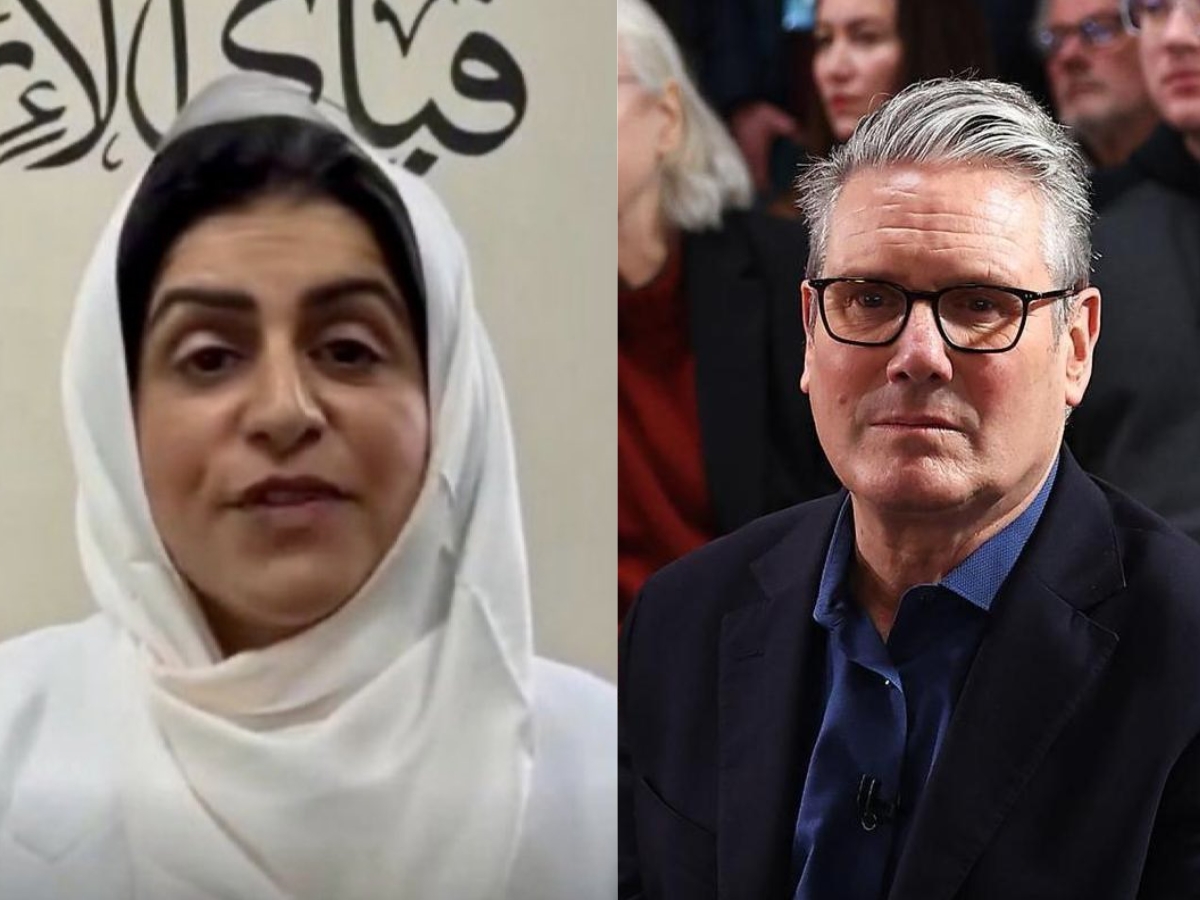

UK Prime Minister Keir Starmer’s leadership is reportedly facing a serious crisis, with political turmoil in Westminster fuelling speculation about potential successors. Among the names gaining attention is Home Secretary Shabana Mahmood, who is being viewed as a leading contender to take over the Labour Party leadership—a move that would make her the United Kingdom’s first Muslim prime minister.
The renewed focus on Labour’s leadership comes amid fallout from the release of the Epstein files in the United States, which have triggered political shockwaves across Europe and beyond. The controversy has intensified scrutiny on Starmer’s leadership and raised questions about his political future.
Who Is Shabana Mahmood?
Shabana Mahmood is a 45-year-old lawyer and senior Labour politician who is considered a close ally of Keir Starmer. Within the Labour Party, she is known as a persuasive speaker and a strategic operator, often positioned on the party’s right wing.
She was born in Birmingham to parents Zubaida and Mahmood Ahmed, who have roots in Pakistan and Mirpur in Pakistan-occupied Kashmir. Mahmood studied law at Lincoln College, Oxford, graduating in 2002, and completed the Bar Vocational Course at the Inns of Court School of Law in 2003 to become a barrister.
In 2010, she became one of the first female Muslim Members of Parliament, alongside Rushanara Ali and Yasmin Qureshi. Since joining the Home Office in 2025, she has been tasked with managing the UK’s border security and immigration policies.
Political Positioning and Stance on Migration
Mahmood’s political identity has drawn both praise and criticism. As a Muslim politician, she is seen as having the potential to reconnect Labour with Muslim voters and pro-Palestine supporters who distanced themselves from the party in recent years over its stance on Israel’s military actions.
At the same time, she is regarded as a hardline policymaker on immigration. As Home Secretary, she recently proposed controversial reforms to limit the pathway to permanent residency, arguing that indefinite leave to remain should be treated as a “privilege, not a right.”
Her most significant policy proposal is doubling the qualifying period for permanent residency from five years to ten years for most migrant workers. She has defended the reforms, citing an “unprecedented” surge in migration that requires government intervention.
However, the policy has sparked internal dissent. Around 40 Labour MPs have criticised the retrospective nature of the changes, calling them “un-British” and warning that the reforms could worsen labour shortages, particularly in the healthcare sector.
Starmer’s Premiership Under Pressure Over Epstein Files
Speculation about Mahmood’s rise comes after a turbulent week for Keir Starmer, triggered by the appointment of Peter Mandelson as the UK’s ambassador to Washington. Mandelson’s past association with convicted sex offender Jeffrey Epstein has sparked outrage within Labour.
The crisis deepened when Starmer’s Chief of Staff, Morgan McSweeney, resigned to take responsibility for the appointment, in an apparent attempt to shield the Prime Minister. However, critics argue Starmer must personally take responsibility.
With approval ratings reportedly at historic lows and opinion polls describing Starmer as “weak and vulnerable,” insiders suggest his leadership is increasingly uncertain, with some aides reportedly giving him a “50-50” chance of surviving the political storm.
Other Labour Leadership Contenders
While Mahmood is a prominent dark-horse candidate, she faces competition from several established Labour figures:
- Angela Rayner: The former Deputy Prime Minister is currently considered the favourite, despite resigning in September over a tax investigation related to a home purchase. She remains popular with Labour’s left wing and played a key role in forcing policy reversals within Starmer’s government.
- Wes Streeting: The Health Secretary is seen as a strong media performer with leadership ambitions, though his links to Mandelson and support for private sector involvement in the NHS have alienated some on the left.
- Ed Miliband: The Energy Secretary and former Labour leader has regained popularity among the party’s “soft left,” but carries the legacy of Labour’s 2015 election defeat.
- Andy Burnham: The Greater Manchester Mayor is popular nationally but does not currently hold a parliamentary seat, which complicates his path to party leadership under Labour rules.
Where Shabana Mahmood Stands
Mahmood’s rise is built on a reputation for being tough on crime, security, and immigration—qualities some Labour strategists believe are needed to counter the growing appeal of Nigel Farage’s Reform UK.
Beyond immigration, she has taken strong positions on policing and security. She recently rejected calls for Welsh police powers and supported the expansion of facial recognition technology across UK police forces, despite concerns from civil liberties groups.
Her ability to appeal to both Labour’s right wing and Muslim voters has positioned her as a potentially unifying figure, though her hardline immigration stance has also created internal divisions.
What Are Her Chances?
Bookmakers currently place Mahmood’s odds at around 9/1, implying roughly a 10% probability of becoming the next Labour leader. Analysts describe her as a “formidable dark horse” who could bridge Labour’s ideological and demographic divides.
However, her path to the premiership depends on whether Starmer resigns or faces a successful leadership challenge, which would require backing from at least 81 Labour MPs. Her future prospects will likely hinge on public reaction to her immigration reforms and her ability to position herself as a stabilising yet decisive alternative to the current leadership.