

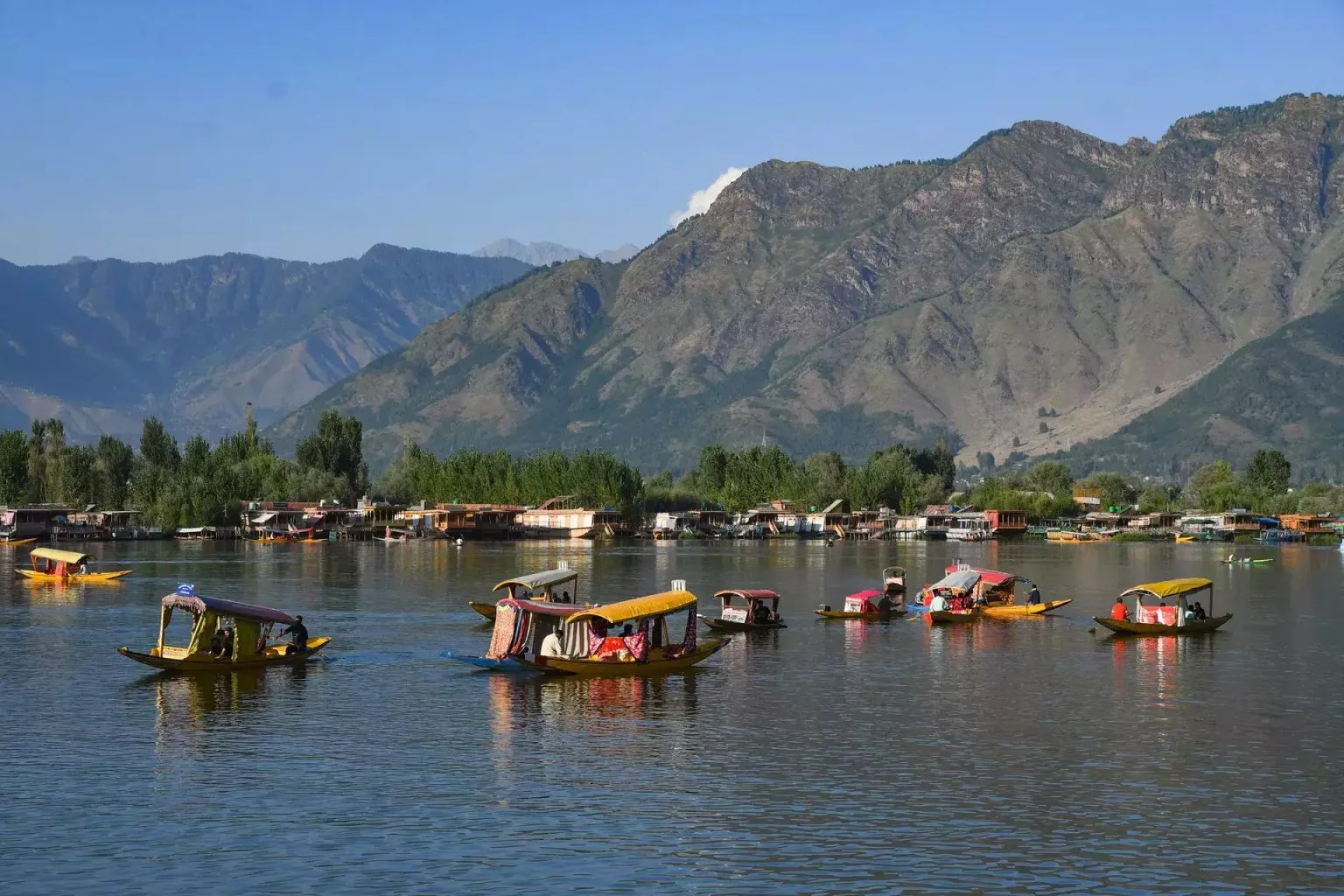

Kashmir experienced its hottest February day on record on Saturday as temperatures soared to 21 degrees Celsius, breaking all previous records and marking an alarming deviation from typical winter conditions in the region.
In Srinagar, the maximum temperature climbed more than 11 degrees above normal, making it the warmest February day ever recorded in the Kashmir Valley. Earlier records of 20 degrees Celsius were registered in 1940 and 2016, but this year’s heat surpassed those benchmarks.
Even popular hill stations such as Gulmarg, usually known for freezing temperatures and heavy snowfall in February, recorded unusually high readings. The maximum temperature in Gulmarg reached 11.5 degrees Celsius, while the minimum temperature settled at minus 0.4 degrees Celsius. Typically, Gulmarg records a maximum of around 2 degrees Celsius and a minimum of minus 6 degrees Celsius during this period.
According to the Meteorological Department, the warming trend is expected to continue.
“It was the hottest February day in recorded history in Kashmir. We expect temperatures to rise another one or two degrees in the coming days,” said Mukhtar Ahmad, Director of the Meteorological Department.
He also noted that no rainfall or snowfall is forecast for the remainder of the month, with February remaining exceptionally dry so far.
Independent weather expert Faizan Arif said the current weather conditions resemble spring rather than winter.
“Kashmir is presently witnessing temperatures similar to those normally recorded in mid-April,” he said.
The sudden spike in temperatures has raised serious concerns among farmers, environmentalists, and climate experts. February is usually characterised by extreme cold and heavy snowfall, which plays a crucial role in maintaining water levels, agriculture cycles, and glaciers. The absence of winter conditions this year could have long-term ecological and agricultural impacts on the region.