

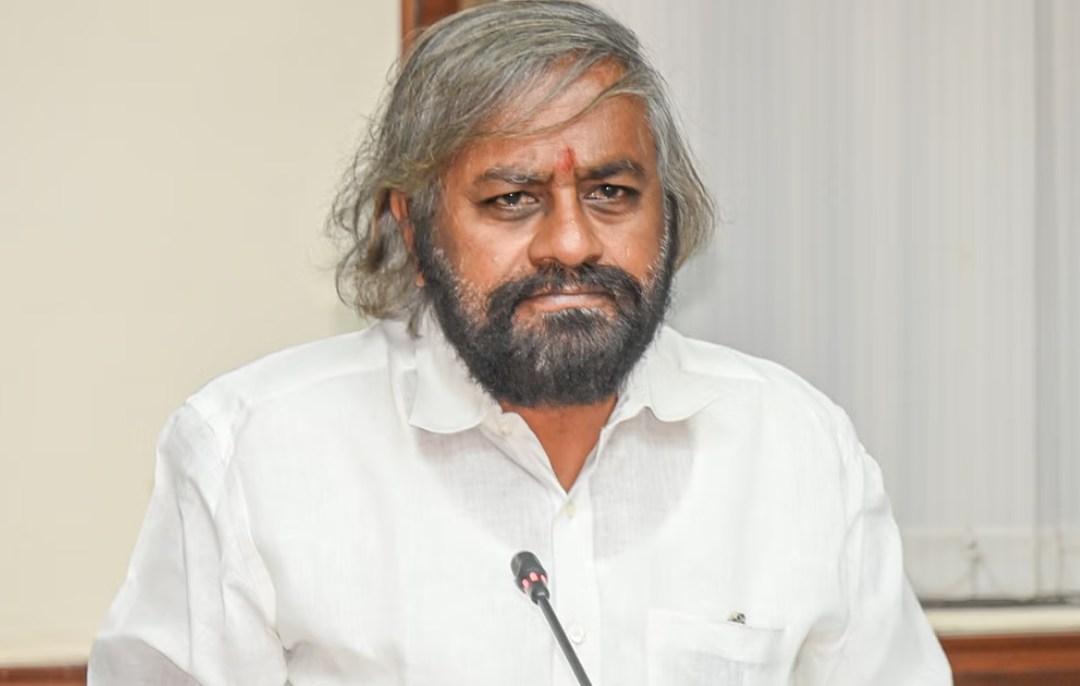

Karnataka Minister Eshwar Khandre on Saturday welcomed the Central Government’s decision to include caste enumeration in the upcoming national census, saying it would provide a comprehensive understanding of India’s social structure and promote informed policymaking.
“We welcome this decision. We have discussed this in the Mahasabha. There are 90-100 sub-castes in Karnataka, and all of them have been codified and brought to the government’s attention,” Khandre said, underlining the state’s readiness for an inclusive caste-based enumeration.
Census activities fall under Article 246 of the Constitution, listed as item 69 in the Union List of the Seventh Schedule, making it a Union subject. The Centre’s decision comes amid increasing demand for a nationwide caste-based census to update decades-old data.
Centre Questions Transparency of State-Level Surveys
Union Minister Ashwini Vaishnaw, while announcing the Cabinet Committee on Political Affairs’ decision on April 30, stated that various caste surveys conducted by individual states lacked uniformity and objectivity.
“Some states conducted these surveys purely from a political angle, creating doubts in society,” he noted.
“To ensure our social fabric remains free from political distortion, it has been decided that caste enumeration will be conducted within the framework of the main census and not through standalone state-level surveys.”
States That Have Moved Ahead
Despite the Centre’s initial reluctance, Bihar, Karnataka, and Telangana have already conducted their own caste surveys. Telangana notably implemented a 42% reservation for backward classes based on its findings. Karnataka has completed its Socio-Economic and Educational Survey, with the State Commission for Backward Classes submitting its report to the Siddaramaiah-led cabinet.
If released, Karnataka’s caste census will become the second such report by a Congress-ruled state, following Telangana.
Why It Matters
Calls for a national caste census have grown louder in recent years, particularly from backward communities and social justice advocates who argue that accurate, updated data is essential for fair resource distribution, welfare schemes, and reservation policies.
The Centre’s decision is seen as a significant policy shift, potentially paving the way for data-driven governance, provided the enumeration is transparent, inclusive, and politically neutral.