

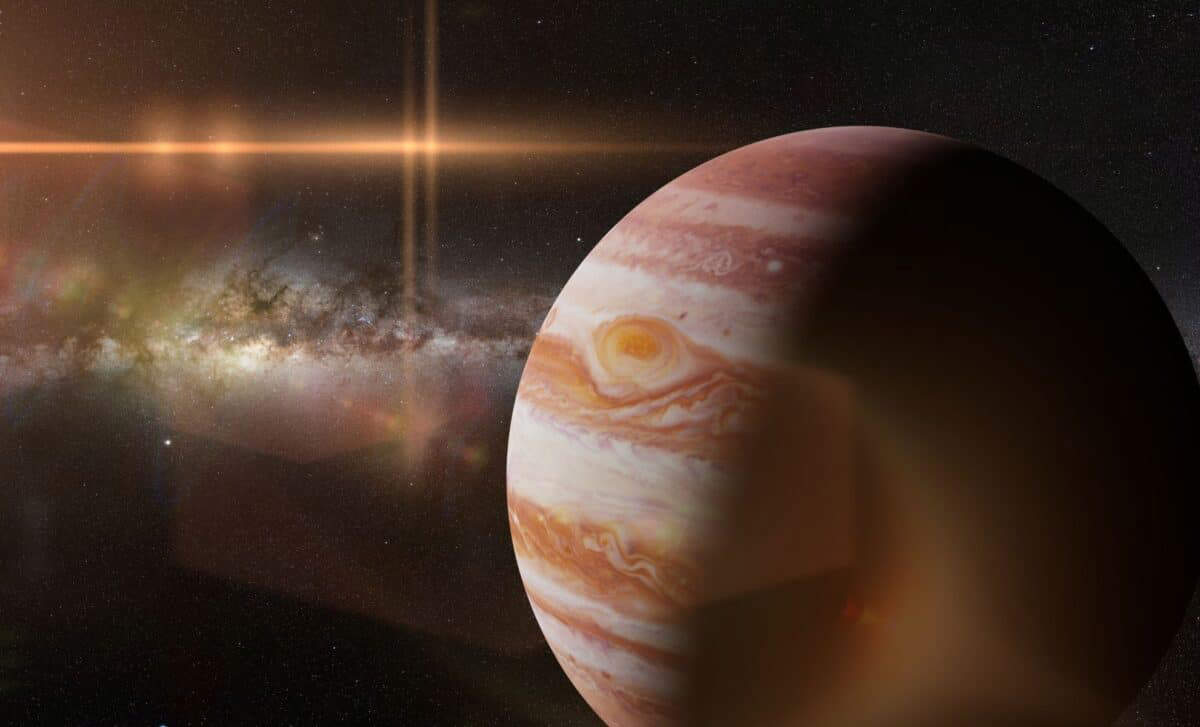

Stargazers across the world are in for a spectacular celestial treat on January 10, 2026, as Jupiter is set to light up the night sky in its most dazzling form of the year. On this date, the gas giant will reach “opposition,” a rare astronomical alignment that makes Jupiter appear brighter, larger and clearer than usual.
According to NASA, opposition occurs when Earth is positioned directly between Jupiter and the Sun, placing Jupiter opposite the Sun in the sky. This straight-line alignment allows sunlight to fully illuminate Jupiter facing Earth, making it shine at its absolute peak brightness.
To witness this phenomenon, NASA suggests looking towards the eastern sky after sunset. Jupiter will remain visible throughout the night and will be easiest to observe around midnight, when it sits highest in the sky. The planet will be located in the constellation Gemini, making it easy to spot as one of the brightest objects in the sky—surpassed only by the Moon and Venus.
NASA explained in a blog post:
“Jupiter will be one of the brightest objects in the night sky (only the Moon and Venus will be brighter). Look to the east in the evening, and you’ll be able to enjoy its best view of the year.”
When And Where To Watch Jupiter Opposition 2026
📅 Date: January 10, 2026
🕛 Time: Visible all night; best visibility around midnight
📍 Direction: Look east after sunset
🌌 Constellation: Gemini
👀 Visibility: Easily visible to the naked eye; no telescope required
Jupiter will shine with an impressive magnitude of –2.7, meaning it will outshine nearly every other night-sky object. Its apparent disk size will expand to 45.6 arcseconds, offering breathtaking detail through binoculars or a telescope.
Those with professional telescopes or powerful amateur equipment may also enjoy an added bonus — the chance to see Jupiter’s four largest moons:
- Io
- Europa
- Ganymede
- Callisto
These are collectively known as the Galilean moons, discovered by astronomer Galileo Galilei in 1610.
This celestial spectacle is considered a must-watch astronomical event, offering a rare opportunity for sky lovers, science enthusiasts and casual observers alike to witness Jupiter at its brightest and most majestic form.