

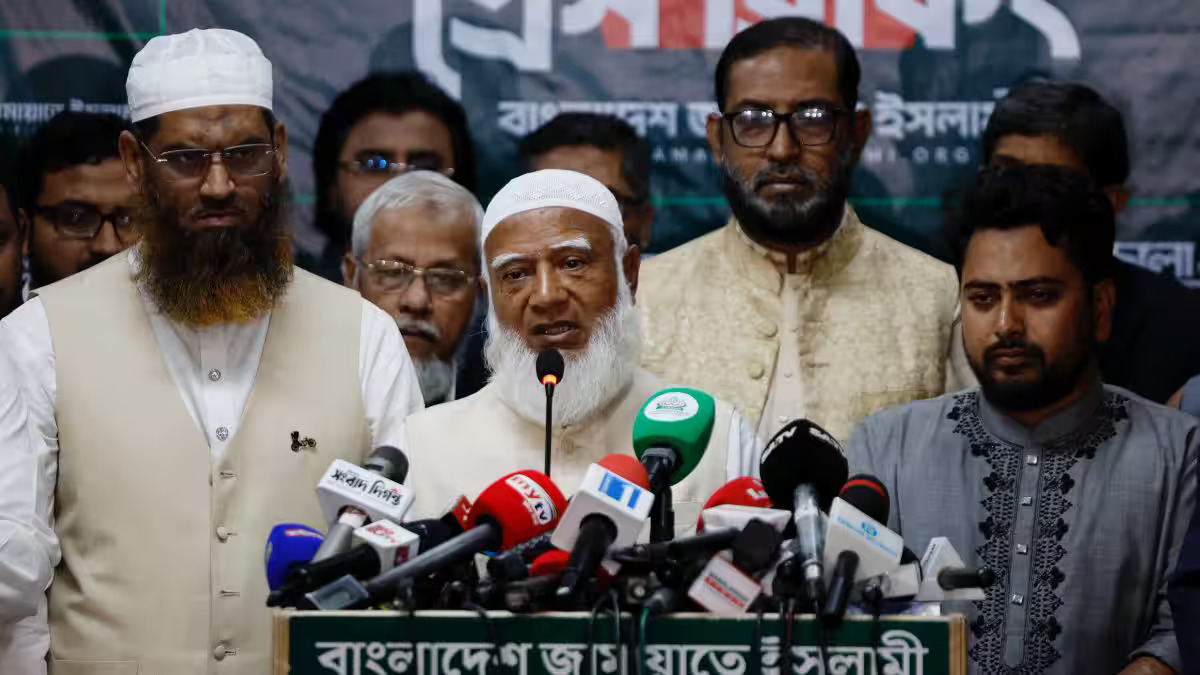

Bangladesh’s political landscape witnessed fresh turmoil on Tuesday after Jamaat-e-Islami announced it would boycott the newly formed cabinet’s oath-taking ceremony, citing disagreements with the ruling Bangladesh Nationalist Party (BNP) over constitutional reform commitments.
Jamaat leader Shafiqul Islam Masud confirmed the decision, stating that the party would not attend the ceremony in protest of BNP lawmakers refusing to take an additional oath as members of the Constitutional Reform Council.
“The party has decided not to participate in the cabinet oath-taking ceremony. Jamaat is boycotting the event in protest against the BNP’s refusal to take oath as members of the Constitutional Reform Council,” Masud said.
Second Oath Controversy
Members of Parliament were expected to take a second oath linked to the Constitutional Reform Council, an institution designed to implement governance changes outlined in the ambitious “July National Charter.” However, after Chief Election Commissioner AMM Nasirudin administered the standard parliamentary oath to BNP lawmakers at the Jatiya Sangsad Bhaban, the party’s MPs declined to take the additional pledge.
Jamaat’s deputy chief, Abdullah Mohammad Taher, strongly criticised the move, arguing that the parliament would lose its significance without constitutional reforms.
“We will take no oath unless BNP MPs take oath as members of the Constitution Reform Council alongside regular parliament members,” Taher said, adding that a parliament without constitutional reform is “meaningless.”
BNP Defends Decision
Salahuddin Ahmed, a member of the BNP standing committee, said the refusal to take the second oath was made on the instructions of newly sworn-in Prime Minister Tarique Rahman.
“We have not been elected as members of the Constitution Reform Council; no provision of the council is yet to be incorporated in the Constitution,” Ahmed said, defending the party’s stance.
BNP chairman Tarique Rahman took oath as Prime Minister during a ceremony at the National Parliament building in Dhaka on February 17, 2026, following the party’s landslide victory in the general elections.
National Citizen Party Also Boycotts
The controversy extended beyond Jamaat, with the National Citizen Party (NCP) also announcing its boycott of the swearing-in ceremony. NCP spokesperson Asif Mahmud Shojib Bhuyain argued that proceeding without the Constitutional Reform Council was equivalent to maintaining the status quo under ousted Prime Minister Sheikh Hasina.
He said taking the oath without forming the council would effectively uphold the existing constitutional framework without reform.
What Is the July National Charter?
The July National Charter 2025 emerged from the student-led uprising in July 2024 that led to Sheikh Hasina’s removal from power. The charter was later put to a referendum, where around 70% of voters reportedly backed the reform agenda.
The charter proposes 84 major reform points aimed at restructuring the state and preventing excessive concentration of executive power. Of these, 47 proposals require constitutional amendments, while the remaining 37 can be implemented through legislation or executive orders.
A Constitutional Reform Council is expected to execute the reforms within 270 working days, fundamentally reshaping Bangladesh’s governance framework.
BNP’s Electoral Mandate
BNP secured a decisive mandate in the February 12 general elections, with its alliance winning 212 seats in the 300-seat parliament. However, the oath controversy highlights growing friction among political parties over the pace and scope of constitutional reforms, signalling potential political instability in the early days of the new government.