

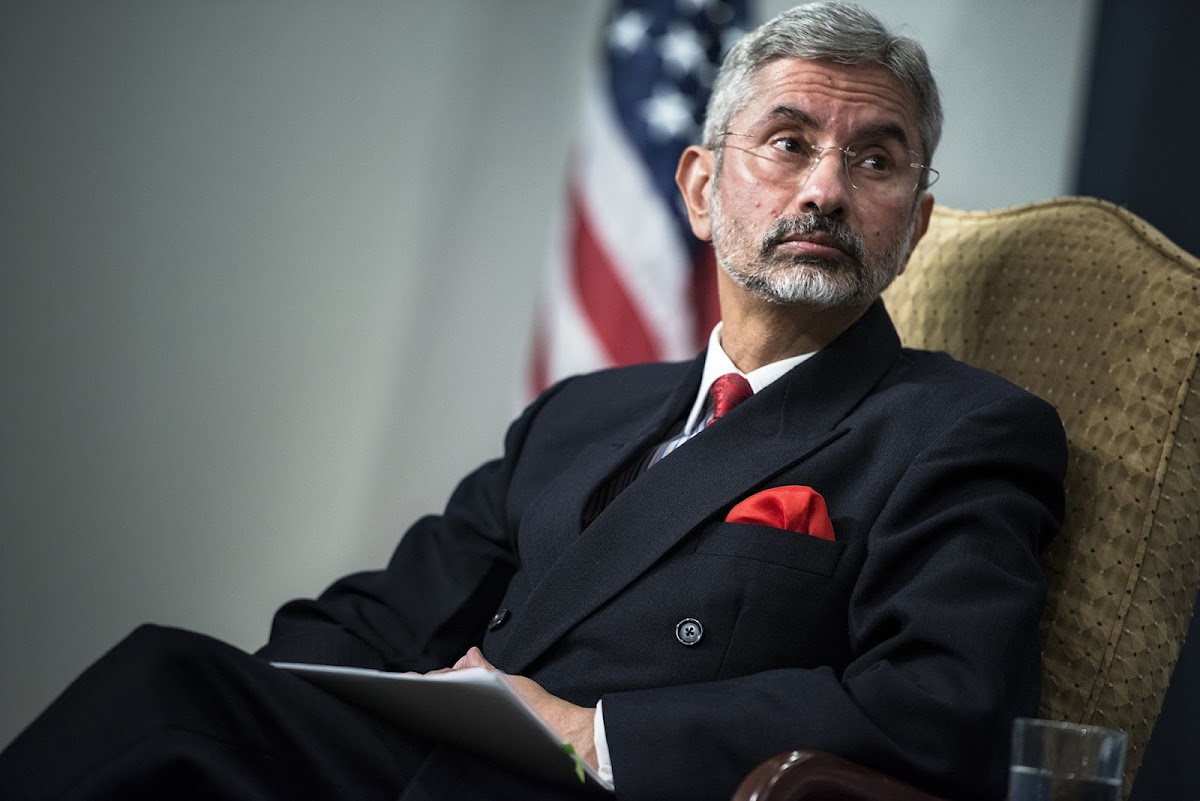

Addressing the Munich Security Conference on February 14, 2026, External Affairs Minister S. Jaishankar reinforced India’s commitment to “strategic autonomy,” even as the Trump administration asserts that New Delhi has pledged to halt Russian oil imports.
The debate follows a landmark trade reset on February 2, 2026, which slashed U.S. tariffs on Indian goods from 50% to 18%. In return, President Trump has claimed—and formalized via Executive Order—that India will pivot its energy sourcing to the U.S. and potentially Venezuela.
Jaishankar’s Stand: Market Factors Over Political Pressure
In a panel discussion with German Foreign Minister Johann Wadephul, Jaishankar pushed back against the narrative that India had “surrendered” its sovereignty for trade gains.
- Commercial Logic: He emphasized that Indian oil companies make decisions based on a “complex matrix” of availability, cost, and risk, similar to their European counterparts.
- Independent Mindset: “If the bottom line of your question is—would I remain independent-minded and make my decisions… yes, it can happen,” Jaishankar stated, signaling that India may not always align with Western expectations.
- A “Calculated” Landscape: He noted that in a world of “unprecedented changes,” every nation is performing its own “recalculations.”
The Trade Deal “Give and Take”
The current friction stems from the specific terms of the February 2026 interim agreement. While the Indian government has neither officially confirmed nor denied the total “halt” of Russian oil, the U.S. has already operationalized the following:
| US Policy Change | Status (as of Feb 2026) |
| Reciprocal Tariff | Reduced from 25% to 18% |
| Punitive Tariff | 25% penalty removed (previously tied to Russian oil) |
| Effective Rate | Dropped from ~50% to 18% for most sectors |
| Monitoring Panel | US Secretary of Commerce to monitor India’s oil compliance |
Geopolitical Balancing Act
Despite the U.S. claims, analysts point out that India remains deeply tied to Russia for defense (60–70% of military hardware). Jaishankar’s “afterglow” comment regarding recent successful deals with the EU and Germany suggests that India is attempting to diversify its economic partnerships to avoid becoming over-dependent on a single “hegemonic” power.