

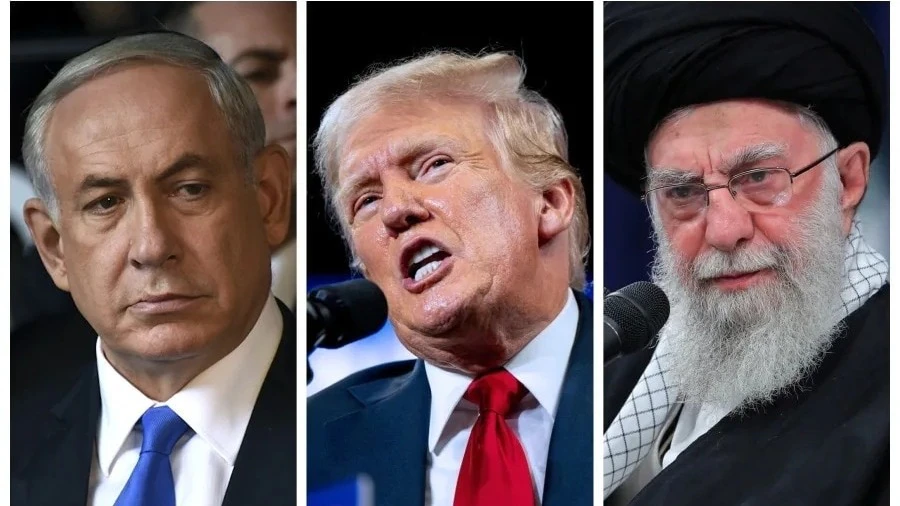

June 25, 2025 — In a dramatic turn of events, Israel and Iran have officially agreed to a ceasefire, putting a pause to 12 days of intense and unprecedented conflict. The truce, brokered by former U.S. President Donald Trump, followed a volatile day marked by retaliatory strikes, regional airspace shutdowns, and rising fears of all-out war in the Middle East.
🇺🇸 Trump Steps In as Self-Styled ‘Peacemaker’
On Tuesday, Trump took to Truth Social to declare:
“THE CEASEFIRE IS NOW IN EFFECT. PLEASE DO NOT VIOLATE IT!”
Shortly after, Israel, Iran, and the U.S. released statements confirming the deal. Trump’s administration, after a brief but impactful military intervention in Iran, positioned itself as the architect of peace. Despite mass protests and threats of impeachment back home for his unilateral military action, Trump claimed he had delivered “world peace.”
🇮🇱 Israel Claims Victory Over Iran’s Nuclear Threat
Israeli Prime Minister Benjamin Netanyahu declared the conflict a success, emphasizing that the IDF had “controlled Tehran’s skies” and degraded Iran’s nuclear and missile infrastructure. Key Israeli gains included:
- Direct U.S. military support, a decades-long strategic goal
- Temporary diversion of global attention from the humanitarian crisis in Gaza
- Psychological warfare with strong messages sent to regional enemies
Yet, the reality remains that tensions with Hamas persist and hostilities continue on the Lebanon border, where an Israeli airstrike killed one person just hours after the ceasefire was announced.
🇮🇷 Iran Declares Moral and Strategic Victory
Despite absorbing significant damage, Iran too has claimed victory, portraying itself as resilient and tactically astute:
- It notified Qatar ahead of its missile strike on the Al Udeid airbase, allowing the U.S. to evacuate without casualties
- Continued missile retaliation until moments before the ceasefire
- Maintained symbolic defiance with Khamenei directing attention toward Israel, not the U.S.
Although three nuclear sites were hit by U.S. bunker-busting bombs, analysts suggest Iran may have safeguarded much of its nuclear capability ahead of time.
🌍 Regional Impact: Tensions High Despite Truce
The lead-up to the ceasefire saw a dramatic shutdown of airspace across Qatar, Iraq, Bahrain, Kuwait, and the UAE, reflecting the scale of alarm across the Gulf.
According to Ali Vaez, Iran Director at the International Crisis Group,
“All three players can claim some form of victory… but this truce is extremely fragile.”
While the ceasefire holds for now, the broader geopolitical crisis is far from over:
- Gaza conflict enters its third year with daily casualties
- US-Iran nuclear deal remains off the table
- Israeli-Lebanese border tensions rise again
🔍 Looking Ahead: Peace or a Pause Before the Next Storm?
This ceasefire may offer temporary relief, but it also underlines just how volatile the region remains. Trump’s intervention has reshuffled the diplomatic deck, but with hostilities ongoing in Gaza, Lebanon, and Ukraine, the chances of sustained peace are slim.
As each power stakes its version of “victory,” the real battle may now shift to diplomacy, with renewed calls to revisit the US-Iran nuclear deal, de-escalate in Gaza, and stabilize a deeply fractured Middle East.